
A nearly forgotten trick from our grandparents’ day can make all the difference.
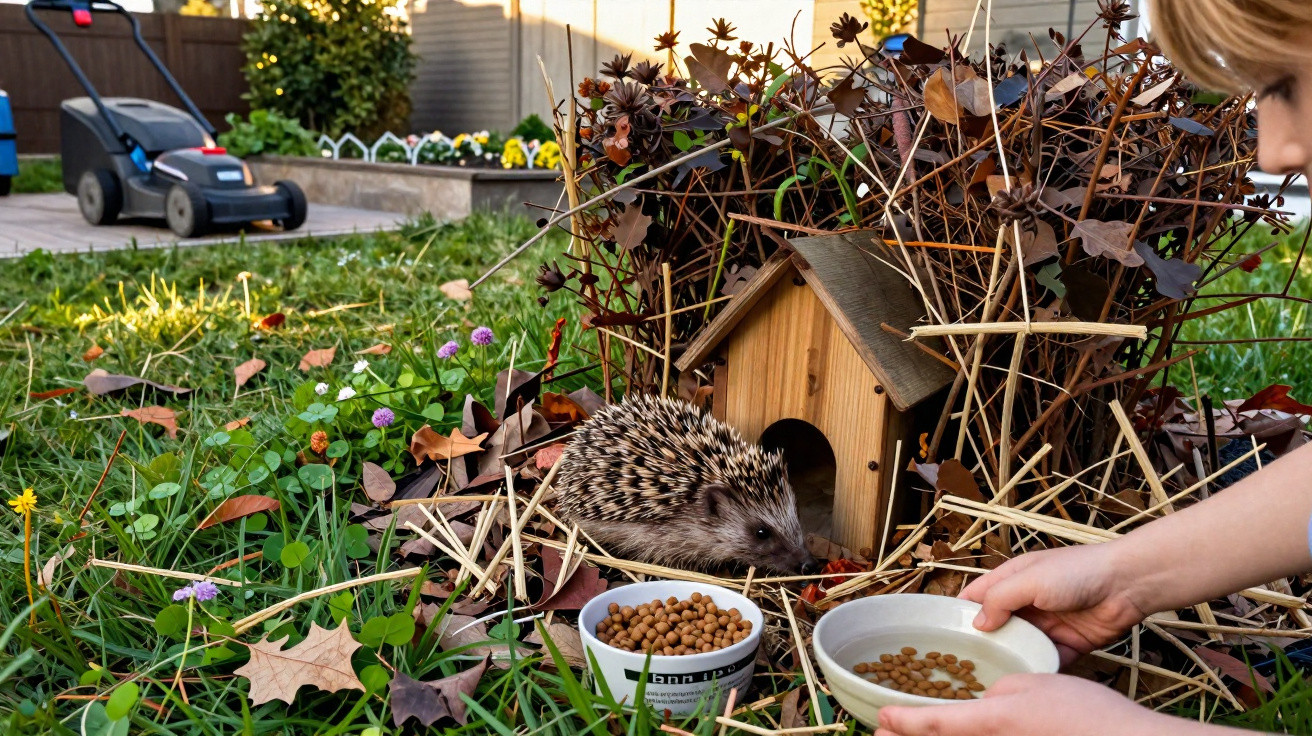
Before robotic lawnmowers and ornamental gravel became commonplace, traditional cottage gardens often contained a slightly chaotic corner: piles of leaves, leftover branches and tall grass. Many people today would simply call it ‘untidy’. In reality, it was a simple, almost ingenious approach – and it is still more effective than any garden-centre pesticide when it comes to protecting and attracting hedgehogs.
Why an ‘untidy’ garden corner becomes a hedgehog paradise
Hedgehogs are nocturnal insect-eaters that tirelessly hunt for slugs, beetles and other small creatures. They need shelter, cover and plenty of food. A neatly swept garden with closely mown lawn offers virtually none of this.
“Wherever there is rustling, decay and crackling, a hedgehog feels at home. Human ideas of tidiness are pure stress for it.”
Without needing biological terminology, our grandparents generally understood what worked: they left a ‘wild’ patch at the back of the garden. It would contain:
- heaps of fallen autumn leaves
- branches and twigs of varying thicknesses
- nettles and other so-called ‘weeds’
- taller islands of grass that were not mown constantly
This apparent jumble delivered several benefits at once:
- A hiding place and sleeping spot: Hedgehogs can curl up within the dense material, keeping themselves safe from predators.
- Winter shelter: Leaves and hay provide excellent insulation, making them ideal for hibernation.
- A natural larder: Slugs, worms and beetles gather in moist, partly shaded areas – providing hedgehogs with food in abundance.
Experts describe the hedgehog as an ‘umbrella species’: where hedgehogs are present, birds, amphibians, bats and numerous insects usually live too. A hedgehog-friendly garden acts like a magnet for wildlife as a whole.
The forgotten method: a wild corner with leaves, hay and hedges
The principle behind this old technique is remarkably straightforward: deliberately allow nature to take over one area of the plot. Rather than clearing everything away regularly, create purposeful untidiness.
How to create a hedgehog corner properly
Start by choosing a quiet spot in the garden. Ideally, this should be an area:
- along the edge of a hedge or wall
- away from the patio or barbecue area
- partly shaded rather than exposed to full sun all day
- somewhat protected from strong winds
A small ‘nature pile’ can gradually develop there:
- Rake up fallen leaves in autumn, but pile them up instead of putting them into bags.
- Place pruned twigs and branches there rather than disposing of all of them.
- Leave one or two square metres of grass largely or completely unmown.
- Remove emerging nettles or thistles only in part; do not pull them all out across the area.
Anyone who prefers a little more structure can also make a simple shelter: stack several thicker pieces of wood or logs into a kind of ‘hut’, with an entrance at ground level. Leave the interior empty, as hedgehogs make their own nests using leaves and grass.
“Even a leaf pile around 50 centimetres in diameter can mean the difference between life and death for a hedgehog in winter.”
How much space hedgehogs need – one garden alone is not enough
Many people underestimate the size of a hedgehog’s territory. Depending on how much food is available, the animal ranges across several hectares – considerably more than a single domestic garden.
Small gaps in fences help hedgehogs travel safely from one property to the next. Recommended opening sizes are:
| Type of passage | Recommended size |
|---|---|
| Hole in a fence | at least 12 cm in diameter |
| Cut-out in a wooden board | approx. 15 x 15 cm |
| Gap beneath a garden gate | at least 10–12 cm high |
When several neighbours take part, individual gardens can become one connected habitat. This is precisely what is missing in many new-build developments, where uninterrupted low fences or walls divide every plot.
Modern hazards: why many gardens become traps
Although the old leaf-pile technique is easy to put into practice, modern gardens contain numerous dangers that few people consider.
Robotic mowers, strimmers and more
Automatic robotic lawnmowers may be convenient, but they pose a serious risk to hedgehogs. Rather than running from danger, a hedgehog curls into a ball – which is exactly what makes rotating blades so dangerous.
- Only run robotic lawnmowers during the day, between 10 am and 5 pm.
- Check leaf piles and tall grass before every use of a strimmer or brushcutter.
- Protect pools, basement light wells and steep cellar steps with escape ramps or covers.
Lawn edging stones where hedgehogs can become wedged, along with fine-mesh sports nets, can also become deadly traps. Simple measures can help, such as bringing nets in overnight or securing them flat against the ground.
Pesticides and slug pellets: a silent killer in flowerbeds
Slug pellets and other chemical treatments do not affect only the intended pests. If a hedgehog eats poisoned slugs, it absorbs the poison through its food. Even small quantities can cause internal damage.
Natural alternatives are better:
- Avoid beer traps, as they also kill beneficial creatures.
- Use barriers of coarse sand or rock dust around vulnerable beds instead.
- Collect slugs by hand early in the morning.
- Choose plants that are less prone to slug damage, such as herbs and many perennials.
Feeding hedgehogs properly: good intentions can often be dangerous
Many people want to help hedgehogs by leaving milk and bread on the patio. This does more harm than good. Hedgehogs cannot tolerate milk and may suffer severe digestive problems.
“The best ‘diet’ for hedgehogs: a living garden full of insects and a shallow dish of fresh water.”
Only in exceptional circumstances – for instance, young animals in autumn or weakened hedgehogs after a dry summer – may it be appropriate to offer additional species-suitable food. Suitable options include:
- specialist dry hedgehog food mixes from pet or garden retailers
- high-quality cat food without gravy
- never seasoned leftovers or fruit
Anyone who finds an injured, severely underweight or daytime-active hedgehog should contact a wildlife rescue centre or vet promptly, rather than trying to deal with it themselves.
Why a ‘wild’ garden also benefits people
At first glance, a natural hedgehog garden may look less tidy, but it also reduces the workload considerably. There is less mowing, less garden waste to dispose of, and less need for fertiliser and pesticides – while bringing more life to the doorstep.
Many gardeners report that, after one or two years with leaf piles, dead wood and fewer chemicals, the biological balance improves noticeably: less slug damage, more songbirds and more butterflies. Children can encounter animals directly rather than only reading about them in books.
If you are concerned that neighbours might see the ‘wild corner’ as neglect, frame it visually with a small hedge, a woven fence or a few perennials. The area will then look intentionally designed – even though, inside, it belongs entirely to the hedgehog.
Ultimately, attracting and protecting hedgehogs does not require expensive specialist products. A peaceful part of the garden, a pile of leaves, a few branches, openings in fences and avoiding pesticides – that is all there is to this almost forgotten gardening trick from our grandparents. In return, you gain a quiet, prickly garden helper that devours slugs night after night and turns the garden into a thriving natural space.



Comments
No comments yet. Be the first to comment!
Leave a Comment