
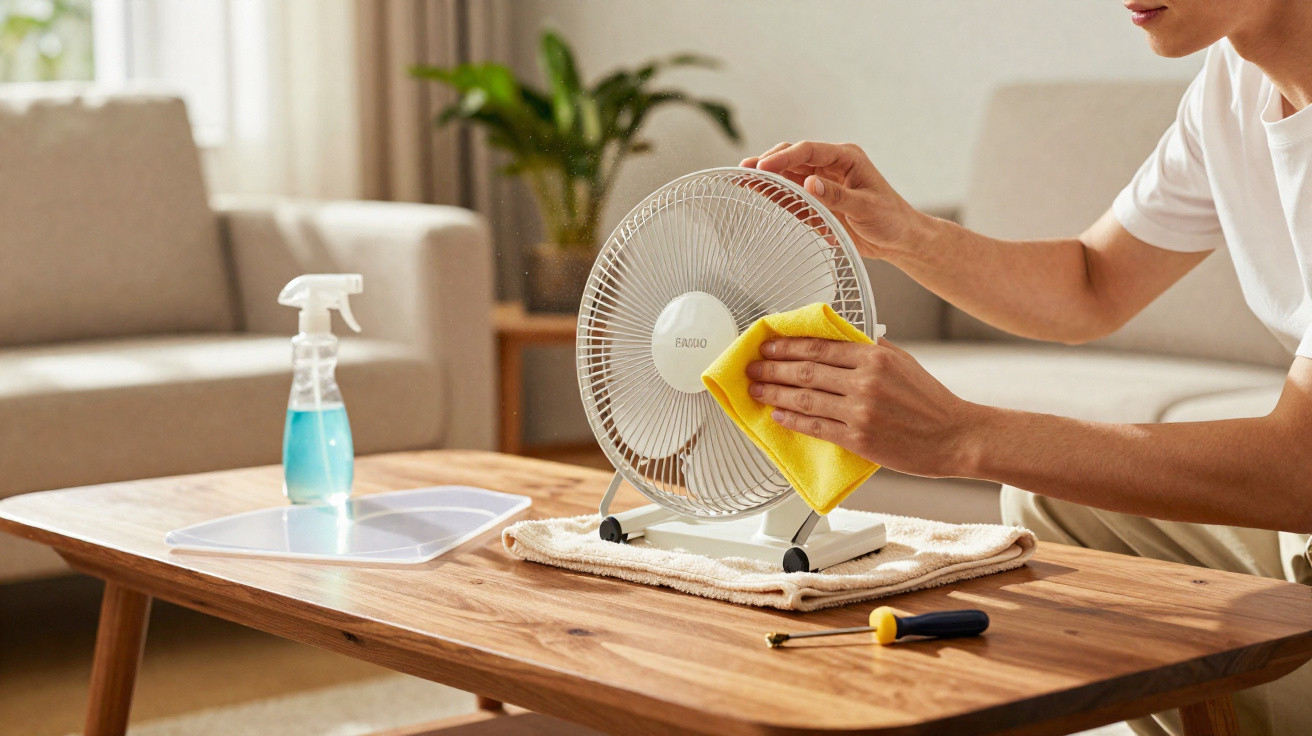
Regularly cleaning fans is no longer simply a household-organising task; it is an important way to look after both your health and your home. When an appliance is covered in dust, every turn of its blades sends particles into the room, potentially reducing air quality and increasing discomfort, particularly in enclosed spaces and for people with rhinitis, sinusitis or other respiratory allergies.
Why is it important to keep a fan clean?
Dust that builds up on a fan’s blades and grille is released into the air whenever the appliance is switched on, dispersing dust mites and other invisible particles around the home. This precaution is even more important in households with children, older people, pets or anyone with respiratory conditions, as it can help prevent airway irritation and allergic flare-ups.
As well as supporting a healthier home, keeping the fan clean can extend its working life and help it operate more efficiently. Dust around the motor and internal parts may lead to overheating, unwanted noise and weaker airflow, while also affecting energy use over time.
How to clean a fan safely and easily
To learn how to clean a fan without spreading even more dust around the house, first unplug it and identify its type: desk, pedestal, wall-mounted or ceiling fan. Each model requires particular care, but where possible, removing the blades makes thorough cleaning easier and stops dirt from reaching the motor.
For ceiling fans, use a damp cloth or suitable duster, taking extra care because of the height and electrical components. Always avoid abrasive products and excessive water. Here is a straightforward step-by-step guide to safely cleaning desk or pedestal fans:
- Switch off the fan and unplug it from the socket.
- Remove the front grille, following the clips or screws specified by the manufacturer.
- Carefully take off the blades, noting their position so they can be refitted correctly.
- Wipe the blades and grilles with a soft cloth lightly dampened with water and mild washing-up liquid.
- Dry every part thoroughly before reassembling the fan.
How does a protective fan cover reduce dust build-up?
Using a protective fan cover has become a common way to limit dust build-up on the blades and grille, especially in dustier places. Placed over the fan while it is switched off, the cover creates a physical barrier against dust and means deep cleaning can be carried out at slightly longer intervals.
In the home, this accessory is a helpful addition rather than a replacement for conventional cleaning, although it can make everyday routines much easier. To get the greatest benefit from it, follow a few simple use and care measures:
- Remove the cover completely before switching on the fan.
- Wash the cover according to the manufacturer’s instructions, either by hand or on a delicate cycle.
- Check for dust inside the cover and clean it whenever needed.
- Store the fan covered during long periods without use, such as winter.
How often should you clean a fan at home?
The right frequency for cleaning a fan depends on how often it is used and how dusty the room is. However, in very dusty spaces or where it is used heavily every day, a more thorough clean every two or three weeks is usually enough. In better-ventilated rooms with less airborne dirt, intervals of one to two months can work well, provided it is checked visually on a regular basis.
A few practical signs indicate that it is time to clean the fan: a visible layer of dust on the grilles, noises that differ from normal, a dusty smell when the appliance is switched on, or airflow that feels weaker. A simple routine that combines cleaning the blades, paying attention to the motor and occasionally using a protective fan cover creates a more comfortable space, with less dust circulating and fans lasting through many more summers.



Comments
No comments yet. Be the first to comment!
Leave a Comment