
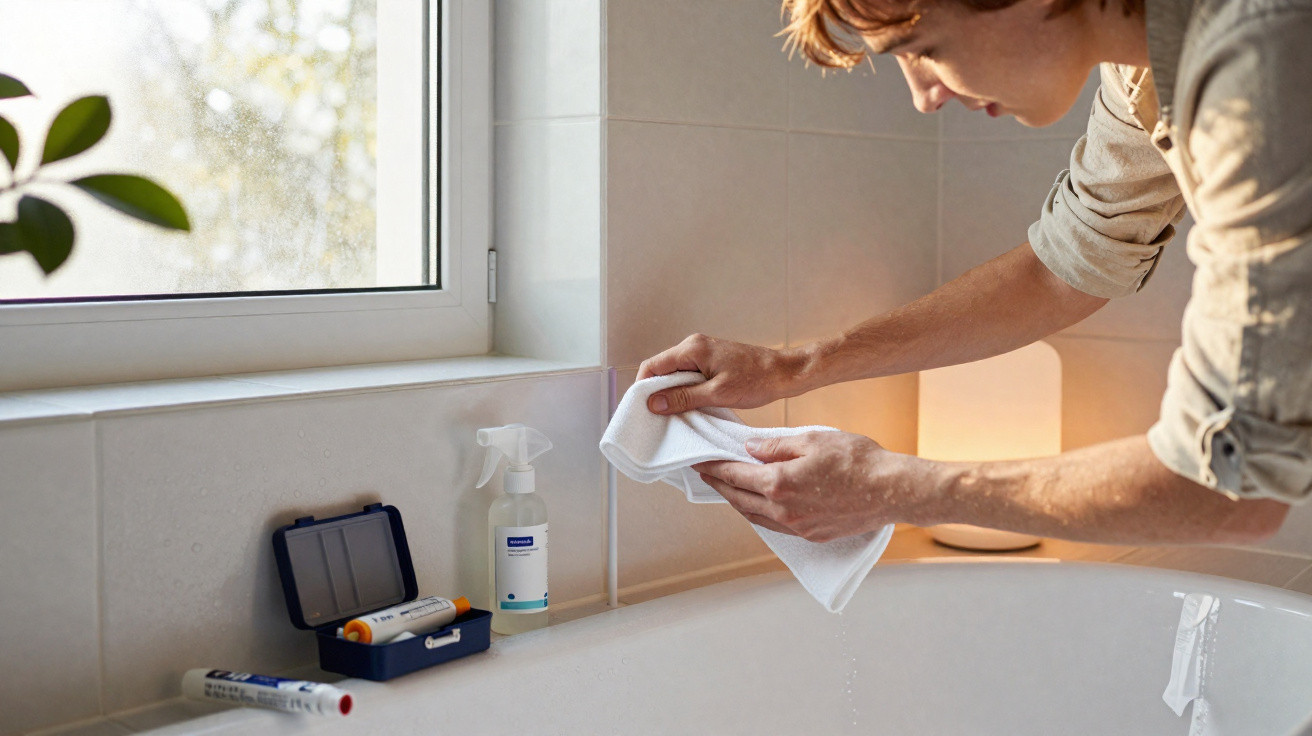
Anyone who simply turns off the water after showering and leaves the bathroom behind creates the perfect breeding ground for mould. Specialists agree that the inconspicuous silicone seals around showers and baths, in particular, are far too often overlooked – with consequences for hygiene, appearance and health.
Why bathroom seals become a risk
Silicone seals are considered watertight, flexible and easy to maintain. In reality, however, they are continually exposed to warmth and moisture – ideal conditions for fungi and bacteria. Water collects in tiny hollows, remains there for anything from minutes to hours, and penetrates the upper layer of the silicone.
Over time, this usually leads to the following:
- dark dots and stains along the edge of the seal
- a grey-yellow film instead of bright white silicone
- a musty smell throughout the bathroom, especially after showering
- rising levels of mould spores in the room air
People with asthma, allergies or sensitive airways, as well as households with children, often react more strongly to this exposure. Every shower releases tiny particles, which spread through the room with the water vapour.
“Anyone who leaves silicone seals permanently damp is gradually cultivating an invisible germ and mould trap in the bathroom.”
The one step almost everyone forgets
Experts in building services and mould prevention consistently stress that the crucial point is immediately after a shower or bath. This brief window determines whether moisture disappears quickly or remains trapped in seals and gaps.
Rather than just walking out of the bathroom, they recommend this straightforward routine, which takes very little time:
- Use a shower squeegee (rubber blade) to draw water down from tiles and glass screens.
- Squeegee areas containing silicone seals particularly thoroughly so that water cannot collect there.
- Then wipe the seals with a dry cloth, especially where the shower floor meets the wall.
The entire process generally takes less than a minute. There is no need for costly cleaning products or specialist equipment – a basic bathroom squeegee and an old cotton cloth are enough.
Dry silicone seals, less mould and lower costs
Anyone who follows this short routine every day after showering will see clear benefits within a few weeks:
- Silicone stays white for longer instead of becoming yellowish or grey.
- Black mould marks develop far less often.
- The typical “old bathroom smell” disappears or never develops in the first place.
- Strong mould removers containing chlorine and harsh fumes can often be avoided altogether.
Many households only take action once mould is already clearly visible on the seals. By then, it is usually expensive: either tradespeople need to cut out and replace the silicone, or powerful chemical treatments are used. These may clean the surface, but they affect indoor air quality and often work only temporarily.
“Drying seals regularly costs almost nothing – replacing the seals later can quickly cost several hundred euros.”
How to keep bathroom moisture under control long term
Daily work with a squeegee and cloth is the most important element. Protection becomes even more effective when moisture management throughout the bathroom is considered as well.
Ventilate properly after a shower or bath
After every shower, humid air should be allowed to escape outdoors quickly. A simple approach works well:
- Open the window fully, rather than leaving it permanently on the latch, for 5–10 minutes.
- Keep the bathroom door closed so moisture does not spread into other rooms.
- If the bathroom has no window, switch on the extractor fan and allow it to run for longer.
Relying solely on a draught through a partly open window usually leaves moisture in the room for too long. By the time the air is reasonably dry, the seals may already be saturated.
Common mistakes that encourage mould
Many everyday habits make life particularly easy for fungi. Typical examples include:
- Leaving wet towels hanging directly against the shower wall.
- Allowing shower curtains to stick to silicone seals and dry poorly.
- Keeping shower mats and bath mats permanently in damp corners.
- Leaving cleaning-product residue around the seals, where it combines with limescale to form a sticky film.
These “islands of moisture” mean that certain sections of sealing never dry out completely. Mould forms there first – often behind shower screens or beneath standing shampoo bottles, in places that are rarely checked.
Signs that seals are already damaged
Not every dark mark means there is severe mould growth immediately. However, several signs indicate quite clearly that the seals have been damaged:
- Dark discolouration cannot be removed, even with a brush and cleaner.
- The silicone surface looks cracked or porous.
- When pressed, the seal comes away from the substrate or feels soft and spongy.
- There is a permanent musty smell despite the bathroom appearing clean.
In these cases, drying alone is often no longer enough. Usually, the only solution is to remove the old silicone and reseal the area. To avoid having to repeat the work, a consistent drying routine is even more worthwhile.
Health impact: more than just an appearance issue
Mould in the bathroom is not merely unattractive; it also directly affects the air in the room. In the warm, damp environment of a shower, mould fungi can be especially active in releasing spores. People unknowingly breathe them in while washing or brushing their teeth.
Possible effects include:
- irritating smells and a scratchy throat
- headaches or tiredness after spending extended periods in the bathroom
- worsened symptoms of asthma or allergies
- frequent respiratory infections in sensitive people
Anyone with children or older people at home should therefore not dismiss the condition of seals as a purely “cosmetic issue”. A clean, dry bathroom environment noticeably reduces the strain on the immune system.
Practical additions for a consistently clean bathroom
Alongside daily squeegeeing and drying, a few simple measures can make controlling moisture much easier:
- Towel hook rails so that nothing remains stuck against the shower wall.
- A shower squeegee with a hook, kept directly on the glass screen as a reminder to use it after showering.
- A humidity meter (hygrometer) in the hallway or bathroom to build an awareness of air humidity.
- Regular visual checks of seals, particularly in corners and behind bottles.
Those who build these measures into their daily routine will need to resort to aggressive cleaning products or expensive repairs much less often. The habit is much like brushing your teeth every day: brief and unremarkable, yet invaluable in the long run.
“The most important protection for a hygienic bathroom is not a specialist cleaner, but routinely reaching for the squeegee and cloth after every shower.”
Ultimately, the condition of silicone seals does not depend on high-tech products or glossy advice, but on one simple habit: remove the water, dry the seals, let the air out. Those who take this on board save time, money and stress – and can literally breathe freely again when opening the bathroom door.



Comments
No comments yet. Be the first to comment!
Leave a Comment