
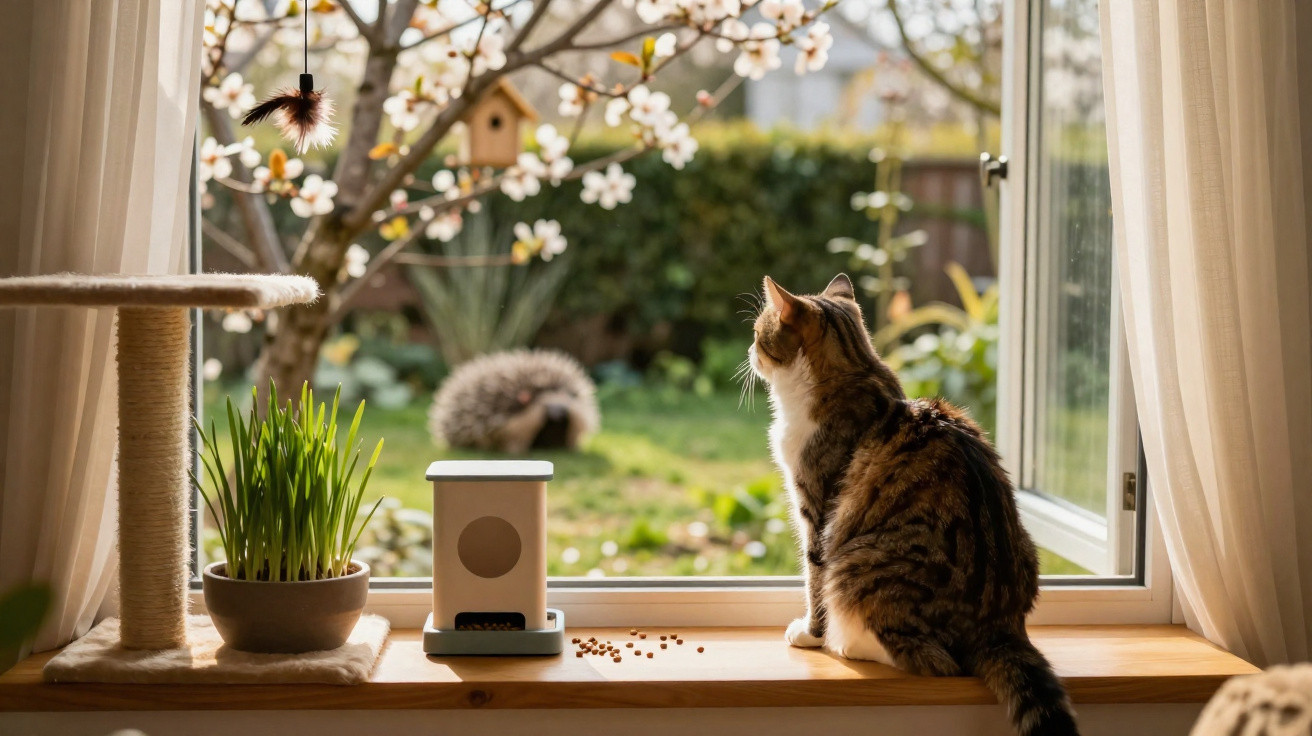
The first warm days arrive, you glance out of the window – and many cats are already waiting, purring, to slip into the garden. For many owners, allowing this urge for freedom seems perfectly natural. Yet March and April bring so much hidden activity in hedges, trees and on the ground that an apparently harmless outing by your four-legged companion can have dramatic consequences.
Why spring is such a sensitive time
March and April mark the peak of the breeding season in our gardens. Birds find partners, construct nests, lay eggs and feed hungry young around the clock. Many fledglings leave the nest before they can fly properly. They may be sitting in grass, among bushes or beneath shrubs, often only a few metres from patios and garden paths.
To us, these little bundles of feathers can easily look “lost” or as though they have “fallen from the nest”. Usually, however, they are exactly where the adult birds intend them to be: sheltered by ground cover, behind plant pots or between perennials. Their parents keep watch nearby and return regularly with food.
These seemingly helpless young birds are not orphans – they are the weakest link in a bird world already under pressure.
At the same time, figures from European countries show just how precarious the situation has become: populations of many common species have declined sharply within only a few decades. In some major cities, numbers of traditional urban birds such as sparrows have fallen dramatically. When entire habitats are under strain, every extra danger in the garden matters – including the well-fed family cat.
What cats really do outdoors in spring
A cat may look soft and cosy, but it still possesses the instincts of a highly specialised hunter. Even the laziest house cat instantly changes when it hears rustling leaves or spots a bird-like shadow: it crouches down, fixes its gaze, stalks slowly, then pounces.
Research into the prey caught by domestic cats reveals a fairly clear pattern:
- around two thirds of captured animals are small mammals, such as mice and voles
- around one fifth are birds – including a noticeably high number of fledglings
- the remainder consists of reptiles, amphibians and insects
These figures may seem modest at first when considering only one’s own cat. If one animal catches “only” five to ten birds a year, that may not sound like much. But when multiplied across the millions of pet cats in a country, the result is tens of millions of birds killed every year – in addition to pressures such as pesticides, glass-fronted buildings, traffic and habitat loss.
The domestic garden has now become an important refuge for birds. Those who tend it, provide food or create a wildlife-friendly space often feel they are already doing enough for biodiversity. However, once a hunting cat is present, that refuge can quickly become a trap for young birds.
The garden that many people see as a “nature paradise” can become a death zone during the breeding season – invisible and quiet, yet with tangible consequences for bird populations.
Outdoor access brings more springtime risks for cats
Focusing on birds alone would, however, be too narrow an approach. The busy spring period also increases the risks faced by cats themselves. There is more traffic, more cyclists, more walkers – and more territorial disputes with other cats. Tomcats defend their territories, cats encounter each other more often, and bite and scratch injuries become more common.
There are also parasites such as ticks and fleas, which become active again in warmer weather, along with infectious illnesses that can spread through contact between outdoor cats. A few additional weeks indoors therefore protect not only birdlife but also act as a kind of safety belt for your four-legged companion.
How to keep cats entertained with a “spring indoors”
Many owners worry that their cat will be unhappy if it cannot go outdoors in spring. The good news is that, with some planning, you can create an engaging indoor programme that satisfies hunting instincts and prevents boredom.
Better views: turn windows into a “cat TV” zone
Cats enjoy high vantage points. A secure spot on a windowsill or a fitted resting platform from which they can watch birds, clouds and the neighbourhood cannot replace a woodland, but it does provide live television with scents and sounds.
- wide windowsills or shelves used as viewing platforms
- a cat tree positioned directly by the window
- secure window protection to prevent accidents
Play like a hunter, not like a child
Many cat toys eventually lie unused in a corner because they are not used effectively. The key is to mimic real hunting sequences: stalking, pursuit, catching and “killing”.
Suitable options include:
- fishing-rod toys with feathers or fabric mice that move like prey
- balls that roll or bounce unpredictably
- food puzzles or intelligence games that make the cat work for its food
Several short play sessions each day are often more effective than one long session. Five to ten minutes of intensive hunting, followed by a break – that reflects the natural rhythm.
Everyday structure: set routines instead of constant entertainment
Cats benefit greatly from a predictable daily routine. Offering food, play and rest periods at broadly similar times creates reassurance. Giving up outdoor access then becomes much easier, because other needs are reliably met.
If outdoor access cannot be avoided: how to make it less fatal
Some cats have been used to going outdoors for years, live in rural areas or simply refuse to stay inside. In these cases, reducing harm and minimising risk are still important.
Useful measures may include:
- Control the timing: avoid letting cats out during the early morning and at dusk, when birds are particularly active
- A bell collar: a lightweight, elastic safety collar with a bell can warn some potential prey – it should release automatically in an emergency
- Restricted outdoor space: enclosed runs or secured patios provide fresh air while greatly reducing hunting success
These solutions will never be perfect, but they lessen the pressure on bird populations while also reducing the cat’s risk of accidents.
How garden owners can protect breeding sites
Anyone with a garden can do more than simply keep their cat indoors. A few straightforward changes can noticeably alter the risks faced by young birds:
- avoid heavily cutting back hedges and shrubs in March and April wherever possible
- deliberately leave parts of the lawn longer so fledglings can find cover
- plant dense shrubs or thorny bushes as safe nesting places
- position bird tables and nest boxes so cats cannot jump directly up to them
It is particularly useful to identify potential “flight paths”: if birds often perch on a particular wall or post, there should not be a spot beneath it from which a cat can easily leap upwards.
Why small changes matter so much
Many owners feel an internal conflict: on one side is the wish to give their cat freedom, while on the other is responsibility for protected species in their own garden. This tension cannot be resolved with one simple tip. Still, small steps make more difference than many people realise.
Biologists often refer to “cumulative effects”: one fewer bird may barely register, but millions of small interventions certainly do. Any population already under pressure is especially sensitive to further losses – even when those losses are spread across many gardens and many cats.
Anyone who restricts their cat a little more for a few weeks during the critical spring period makes an invisible but measurable decision in favour of biodiversity.
For cats, this period need not mean a loss of quality of life when people take their role as playmate, entertainer and safety net seriously. For the unobtrusive inhabitants of hedges, trees and meadows, a few closed doors can determine life or death.






Comments
No comments yet. Be the first to comment!
Leave a Comment