
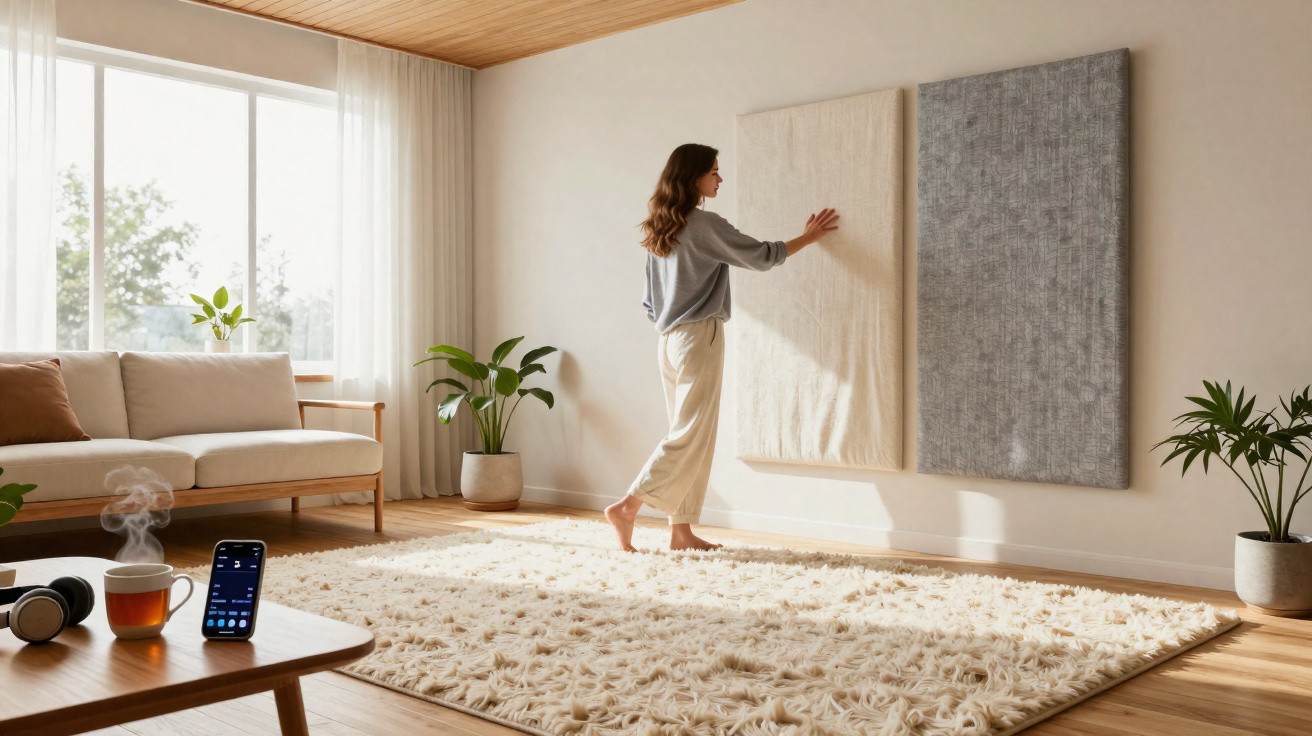
Living in modern flats with cold flooring often means dealing with persistent echoes every day. In Swedish homes, the strategic use of thick wool rugs tackles this issue and delivers excellent acoustic comfort without any renovation work.
How do wool rugs improve acoustics?
Rooms with little furniture and completely smooth surfaces cause sound to reverberate strongly from the walls. By introducing items made from dense materials, sound waves are absorbed efficiently, removing the unpleasant echo that undermines daily comfort.
Scandinavian décor favours functional features that combine visual appeal with practical everyday use. Placing a thick piece on the floor helps soften noise created by footsteps or conversations, completely changing the feel of your living room in a simple yet highly elegant way.
Here are the main benefits of this solution for your home:
- Effective insulation: Thick wool readily traps sound waves.
- Scandinavian style: It brings immediate sophistication to any residential space.
- An end to echoes: It dramatically reduces uncomfortable reverberation from smooth surfaces.
- No building work: It improves acoustic comfort without requiring construction work.
- Thermal warmth: In addition to sound control, it makes the floor feel pleasantly warm.
Which solutions eliminate household noise?
Sound insulation requires materials with mass and density to prevent external noise passing through doors and windows. Standard frames often have gaps that allow air in and compromise the internal peace and quiet of your cherished home.
Using solid wooden doors together with sealing strips greatly reduces this troublesome issue. Investing in the right technologies shields residents from irritating airborne noise, ensuring a calm place to unwind with complete privacy and considerable comfort.
Learn practical techniques by watching content from the PLANARQ CAMPOS / Ralph Dias YouTube channel:
How can walls be treated against noise?
Structured plasterboard is a practical alternative for containing sounds transmitted by neighbours. Adding materials such as rock wool inside the structure prevents sound vibrations from passing through the dividing walls of your property.
Drywall treatment
An efficient rock-wool structure
Hollow walls tend to transmit sound easily, creating unwanted reverberation inside rooms.
Using dense, properly filled panels absorbs acoustic energy and ensures complete silence.
This method dramatically limits the transmission of conversations or televisions playing, keeping the interior protected. As a result, you can enjoy peaceful moments without carrying out major masonry work on your property, quickly and practically.
Consider the following essential materials for soundproofing:
- Double plasterboard panels.
- Dense rock wool or glass wool insulation batts.
- Suitable metal profiles for drywall.
How can echoes be reduced on ceilings and floors?
Installing structured ceilings combined with insulating mats prevents noise from the flat above from disrupting your routine. Empty rooms amplify reverberation, so specific ceiling treatments are needed to disperse sound waves effectively and continuously throughout your home.
Likewise, applying rubberised coverings or dense rugs cushions mechanical impacts directly on the floor. These options prevent unpleasant noise being transmitted to neighbours below, encouraging excellent social coexistence and a very peaceful environment for all residents.
See effective alternatives for covering surfaces:
- Highly absorbent rubberised vinyl flooring.
- Thick natural wool rugs.
- Acoustic mats installed beneath the screed.
Which textures reduce internal reverberation?
Smooth surfaces, including polished porcelain tiles, mirrors and glass, reflect sound and intensify echoes in the living room. To break up this continuous reflection, incorporate decorative features with pronounced texture, such as slatted wooden panels or three-dimensional wall coverings, which disperse sound energy with great success.
Upholstered furniture, heavy curtains and bookcases also work as excellent natural diffusers in everyday life. Understanding the correct care extends durability, so learn the rules for a Scandinavian rug safely and very effectively to protect your valuable investment.






Comments
No comments yet. Be the first to comment!
Leave a Comment