
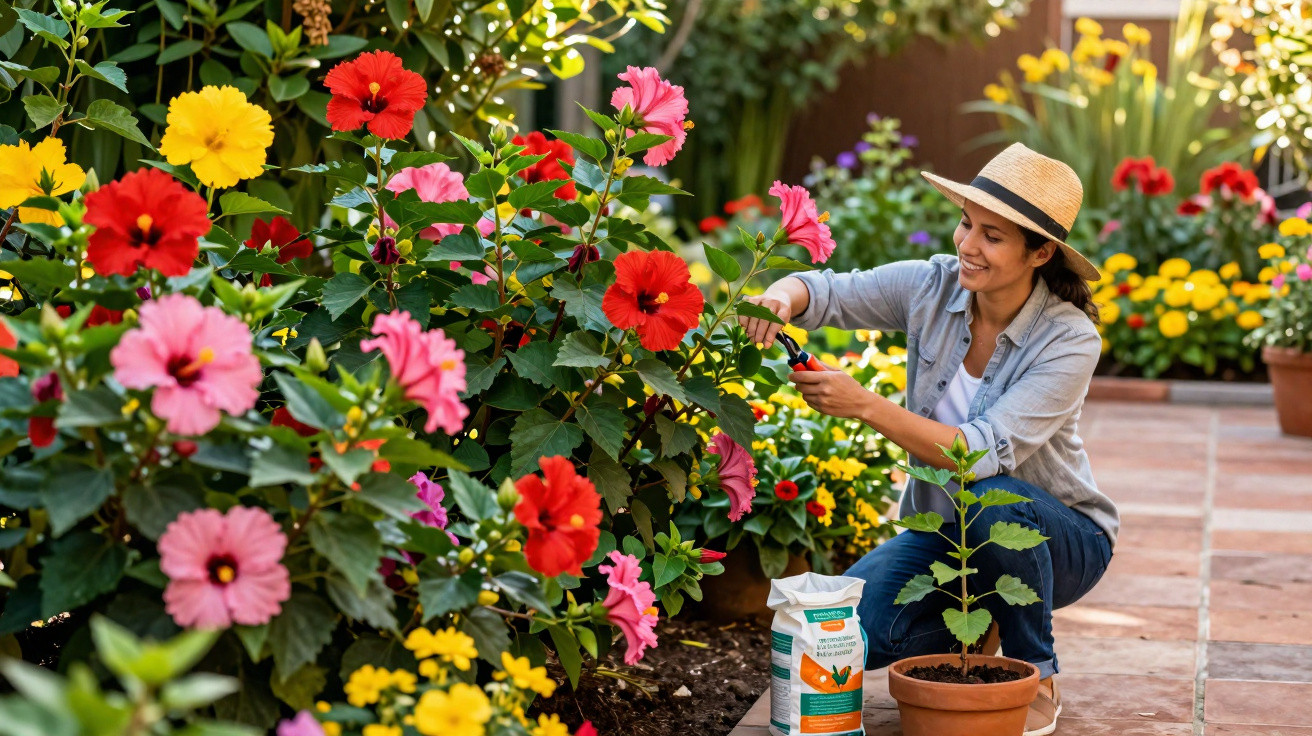
When imagining a garden in bloom throughout the year, many people think of sunflowers and daisies. However, one shrub has become increasingly popular with landscape designers for producing almost uninterrupted flowers across the seasons: the hibiscus. With a wide choice of colours, flower sizes and growing styles, this species creates a striking, lasting display in settings ranging from small back gardens to larger landscapes, adapting well to different regions of Brazil.
Why is hibiscus regarded as one of the best flowering shrubs for year-round colour?
Hibiscus stands out for its extended flowering cycle. It reaches its peak in warmer weather, yet in mild climates it continues to form buds for much of the year. It responds particularly well to regular pruning and consistently nourished soil, which encourages new, productive growth.
This versatile plant can be trained as a small tree, a dense hedge or a standalone focal point, whether in containers or flower beds. Its large single or double flowers appear in red, pink, yellow, orange, white and bicoloured varieties, producing a colourful garden without the need to rely on numerous different species.
Watch a video on the Fazendo em Casa YouTube channel about evergreen shrubs with continuous flowering that are easy to care for, helping to keep your garden colourful in every season:
https://www.youtube.com/watch?v=W-L57kQ8I-M
How should you choose the best position and plant hibiscus safely?
Choosing the planting position is essential if hibiscus is to perform as a true flowering shrub all year round. The species thrives in full sun, requiring at least four to six hours of direct sunlight each day. In excessive shade, it produces more leaves than flowers and loses much of its ornamental appeal.
When planting, a few straightforward measures will support strong root establishment and reduce future issues such as soil-borne diseases and waterlogging. Key points to consider include:
- Dig a planting hole larger than the root ball, allowing sufficient room for the roots to spread.
- Blend the existing soil with well-rotted organic compost to enrich and aerate it.
- Ensure effective drainage, preventing standing water that can encourage fungal problems around the roots.
- Set the plant at the same depth at which it was growing in its original container.
After planting, regular watering during the first few months helps the root system become established. In very hot, dry regions, more frequent irrigation supports continuous flowering. In humid areas, watering can be less frequent, although the soil should not be allowed to dry out completely for prolonged periods.
What pruning and feeding care keeps hibiscus flowering throughout the year?
Maintenance is crucial for ensuring hibiscus remains among the most eye-catching flowering shrubs. As the plant flowers mainly on new growth, light, regular pruning refreshes the canopy and promotes the production of additional buds.
Cleaning pruning removes dry or diseased branches, while formative pruning establishes the desired shape, whether rounded, grown as a hedge or with a more exposed trunk. Alongside this, applying organic matter two to three times a year and using balanced fertilisers containing nitrogen, phosphorus and potassium in moderation keeps the soil fertile and encourages successive flushes of flowers.
How can hibiscus be paired with other plants to create an impactful garden?
Although hibiscus can take centre stage, pairing it with other species enhances the effect of a colourful garden all year round. Shrubs with striking foliage, such as crotons and dracaenas, provide contrast even during quieter flowering periods, while flowering ground-cover plants fill the lower areas of beds.
One practical advantage is that hibiscus adapts exceptionally well to large containers, making it ideal for balconies and small gardens. In pots, it is easier to manage the soil, watering and feeding, retaining the appearance of a flowering shrub even in limited spaces. Arranging different flower colours in rows, alternating them with purple or variegated foliage, and adding plants that flower at different times, such as lantanas and ixoras, can turn any outdoor space into a dynamic and consistently appealing setting.


Comments
No comments yet. Be the first to comment!
Leave a Comment