
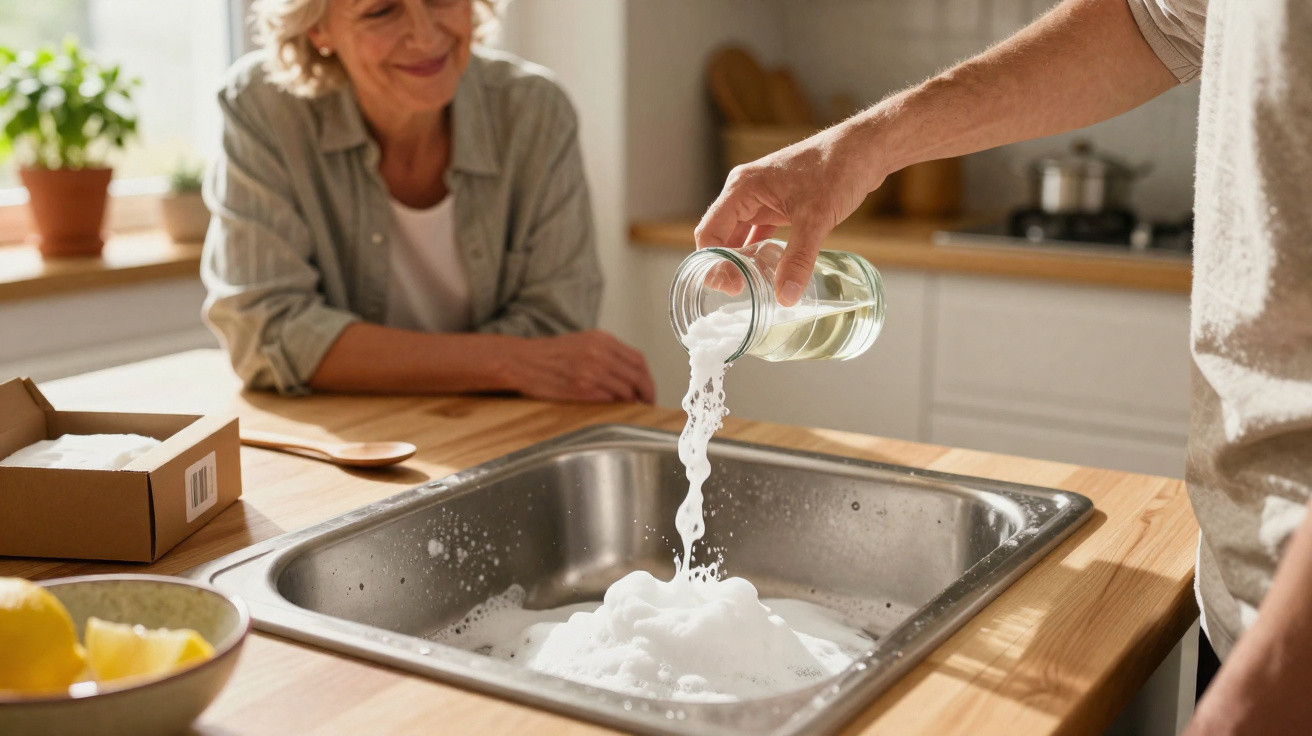
The grandmother’s method for unblocking drains generally uses bicarbonate of soda, vinegar and hot water to loosen light deposits, fresh grease and unpleasant smells in pipework. The fizzing reaction can shift debris close to the drain opening, but it does not replace mechanical cleaning where hair has built up, an object is stuck or the blockage is deep within the pipes.
Why do drains block so easily?
A drain becomes blocked when grease, soap, hair, food scraps, dust and cleaning residues stick to the inside of the pipe. Over time, this coating narrows the route for water and creates a surface that catches further debris.
In the kitchen sink, the usual causes are oil, coffee grounds, peelings and food particles. In the bathroom, blockages are more often caused by hair, cream, soap foam and dirt washed away during showering.
How does the bicarbonate of soda and vinegar trick work?
Bicarbonate of soda is alkaline, whereas vinegar is acidic. When combined, they create a foam that may help dislodge surface dirt and reduce drain odours, particularly if the blockage is only beginning.
Carry out the process carefully and do not combine it with hazardous products. Never use this method immediately after a chemical drain unblocker, bleach or oven cleaner, as chemical combinations can release irritating fumes.
What is the step-by-step grandmother’s method for unblocking drains?
Before you begin, remove any standing water, visible hair and debris from the drain cover. This makes it more likely that the mixture will reach the area where the water is draining slowly.
- Put half a cup of bicarbonate of soda directly into the drain.
- Pour half a cup of white vinegar over it.
- Cover the drain for 5 to 10 minutes to contain the reaction.
- Slowly pour in hot water to flush away the loosened residue.
- Repeat only once if the water is still draining slowly.
When will this method not clear a blockage?
The grandmother’s method works best for routine maintenance and minor blockages. If water will not drain, comes back up through the drain, bubbles elsewhere or gives off a strong sewer smell, the blockage may be deeper in the pipework.
In these situations, the following steps are more suitable than repeatedly using homemade mixtures:
- Use a rubber plunger with a firm seal.
- Remove the drain cover and pull out collected hair while wearing gloves.
- Clean the sink trap if the blockage is directly beneath the basin.
- Avoid adding more bicarbonate of soda if the pipe is already completely blocked.
- Call a plumber if water is backing up or the unpleasant smell persists.
How can you stop the drain blocking again?
Prevention is more effective than waiting until the drain stops working entirely. Fit a catch strainer in the sink and shower, remove hair after bathing, do not pour oil down the sink, and put food waste in the bin before washing dishes and pans.
Monthly cleaning with hot water and manual removal of debris already prevents a large proportion of blockages. Bicarbonate of soda and vinegar can assist with light maintenance, but the long-term condition of the pipework depends on stopping grease, hair and solid waste from entering the drain every day.





Comments
No comments yet. Be the first to comment!
Leave a Comment