

Many amateur gardeners are puzzled in summer by short, flimsy flower stems or cushions of foliage without a single bloom. The cause often does not lie in July, but in the few days when the African lily emerges from winter dormancy in spring. Anyone who acts deliberately at this point can have a surprisingly strong influence on the height and stability of the flower stems.
Why March determines the flowering display of Agapanthus
Agapanthus – more commonly known here as the African lily – is regarded as a hardy, Mediterranean-looking perennial. It flowers from June or July through to September. Depending on the variety, its flower stems reach 30 to 40 centimetres, while vigorous specimens can grow to as much as 1.20 metres.
This broad range is no coincidence. In early spring, the plant decides how much energy to direct into leaves and how much into flower stems. During this period, the buds awaken, the roots become active again and the metabolism gathers pace.
“Anyone who wakes their Agapanthus at the right moment and ‘feeds’ it properly directs energy away from foliage and towards strong, tall flower stems.”
Professional growing guidance repeatedly stresses that the crucial period falls around the end of winter dormancy – usually before the end of March in the UK. It may be a little earlier in mild areas and slightly later in colder locations. More important than the calendar date is the point at which the soil feels noticeably warmer and the first fresh leaf tips appear.
The P-K method: phosphorus and potassium rather than leaf growth
The central principle is straightforward: applying mainly nitrogen in spring produces plenty of greenery but weak flower stems. Tall, sturdy blooms require a different nutrient balance, with phosphorus (P) and potassium (K) taking priority.
Spring tidy-up around the clump
Start with a small clean-up job:
- Remove dry, brown leaves.
- Cut old, dried flower stems off directly at the base.
- Clear weeds and coarse plant debris from around the root area.
The next step is one that many gardeners overlook, although it can make a substantial difference: gently work around the plant with a hand cultivator. Go no deeper than three to five centimetres and take care not to damage the fleshy roots.
“This shallow cultivation breaks up the hardened winter crust, aerates the soil and opens a route for water and nutrients precisely where the roots are now active.”
The right nutrient blend for strong Agapanthus flower stems
Once the soil has been loosened, it is time for the real bloom “booster”:
- Work 1–2 handfuls of mature compost or worm compost lightly into the surface around each plant.
- Scatter a thin layer of finely sieved wood ash over it as a natural source of potassium.
- Do not add any further nitrogen-rich fertiliser at this stage.
Phosphorus encourages the development of flower buds and roots. Potassium reinforces cell walls, making stems firmer and less likely to snap. Nitrogen, by contrast, primarily promotes leaf growth, which can quickly come at the expense of flowering in Agapanthus.
Follow the nutrient mix with a light surface dressing of compost, a few centimetres deep. Add a thin layer of organic material on top, such as flax or hemp bedding. This cover retains moisture and protects soil organisms.
Water slowly and deeply so that everything reaches the root zone. Rushed, shallow watering does little at this stage; it is better to water thoroughly once, then allow it to soak in gradually.
Banana skins as a useful alternative
If wood ash is not available, an ordinary kitchen waste product can help. Chop banana skins into pieces of around one centimetre and lightly work them into the upper layer of soil. They release potassium over several weeks and naturally supplement the nutrient mix.
Agapanthus in pots: when to repot and when to simply support it
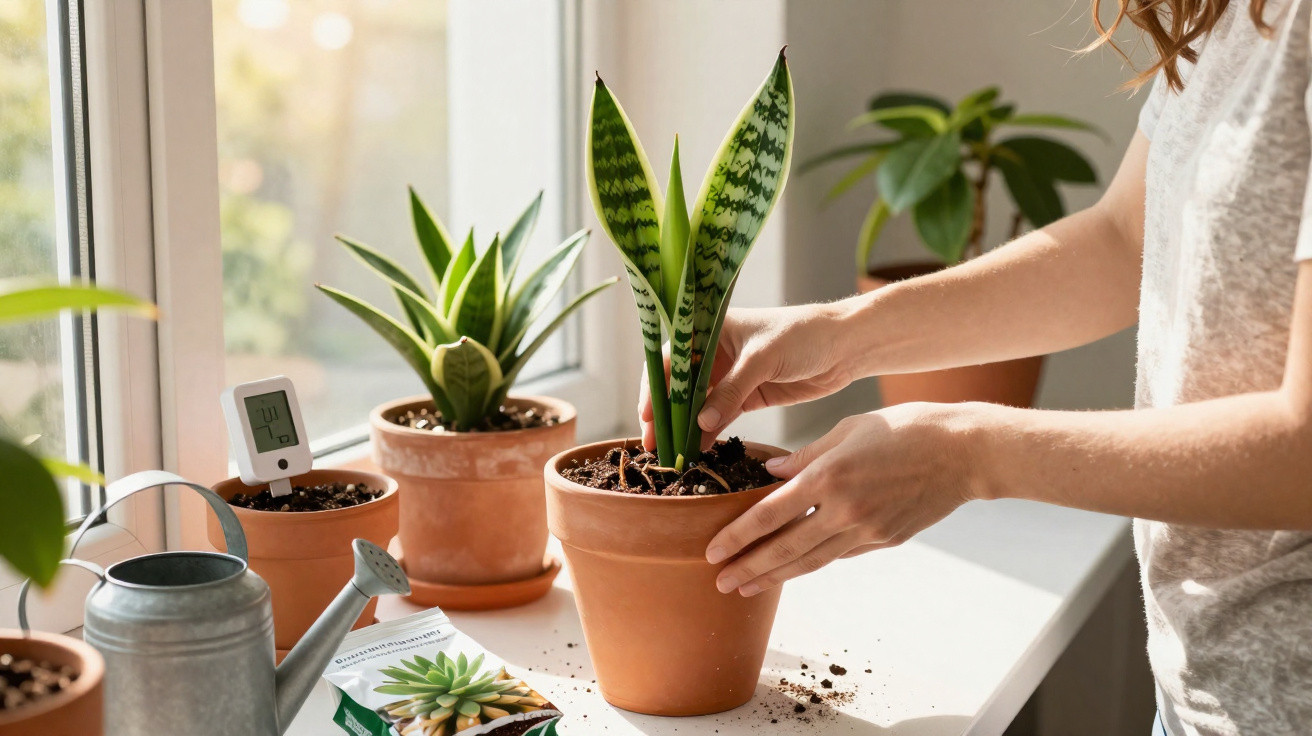
African lilies often grow even more vigorously in containers, but they can soon become restricted. After two to three years, the root ball is usually completely filled with roots. You can spot this when water runs only down the edge of the pot and immediately drains out from the bottom. At that point, the plant can barely take up nutrients.
“Anyone who does not loosen the compost and add nutrients in spring risks nutrient stress – resulting in puny stems below 30 centimetres that bend over in the first gust of wind.”
If the root ball is not yet fully congested, the P-K programme is enough: loosen the surface, add compost and potassium, mulch and water in. However, if the plant is “in the pot like concrete”, it needs repotting into only a slightly larger container with drainage holes.
One important point: Agapanthus prefers to be somewhat pot-bound. An excessively large container encourages the plant to make roots first and delays flowering. Choose a pot only one size larger, then carry out the spring treatment described above.
African lilies in borders: divide them when they become crowded
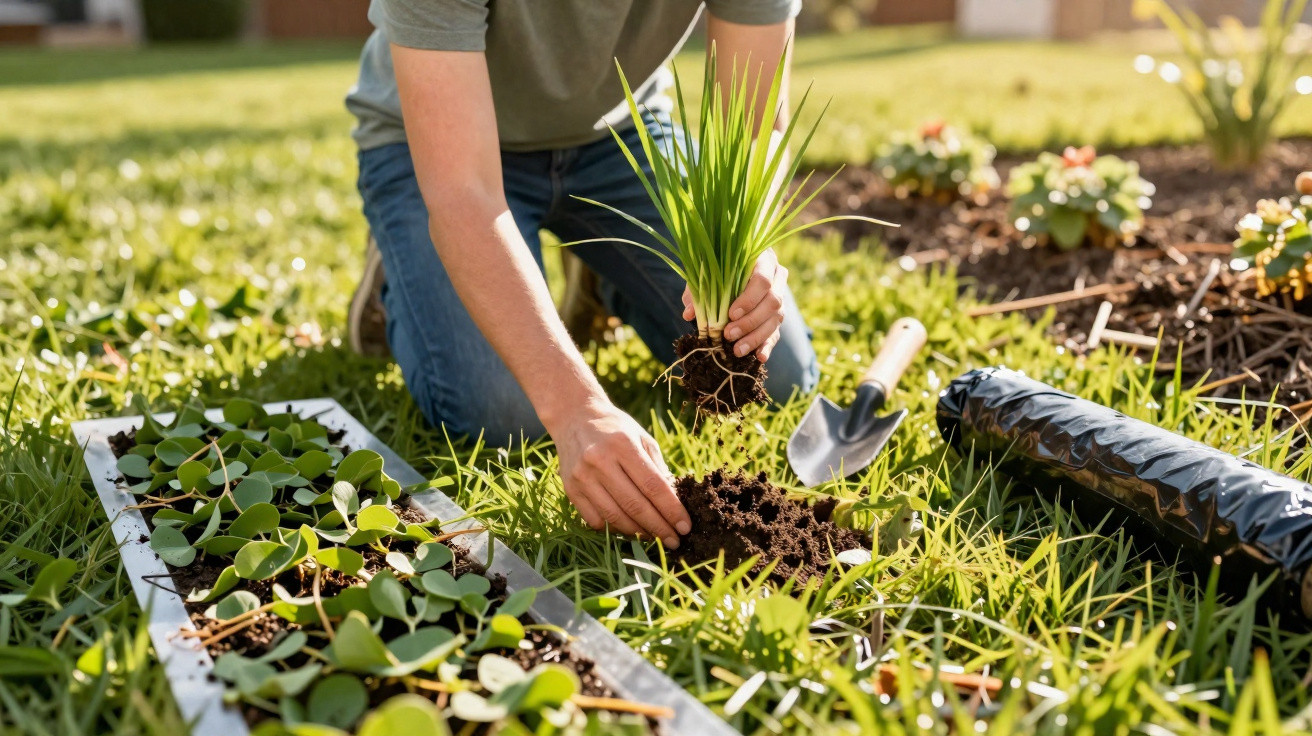
Agapanthus thrives particularly well in garden soil provided the site is sunny and the ground drains freely. Here too, the ideal time for care is around March, when the first fresh leaves emerge and the soil is no longer icy cold.
A basic annual routine is worthwhile:
- Remove old foliage and dead flower shoots.
- Loosen the surface without harming the roots.
- Work in a light application of worm compost or another mature organic fertiliser.
Over the years, clumps can become very dense. If roots are pushing up to the surface or flowering weakens, division can help. In March, lift the clump and split it using a spade or a sharp knife. Each section should have its own roots and one or two new growth buds. Replant the divisions, water them in thoroughly and apply a thin mulch layer.
What if March has already passed?
Many gardeners only notice in April or even May that their Agapanthus has not received any care. There is no need to give up on the plant. As soon as the soil is no longer cold and new growth is visible, the P-K method can still be applied.
The same approach applies: loosen the soil lightly, add phosphorus and potassium in a targeted way, spread organic material over the surface and water deeply. The effect on the final stem length may be slightly reduced, but the plant will still benefit from the improved nutrition.
Observation is especially important with container-grown plants, as growth often appears earlier than it does in borders. Watching for the first green tips means you will not miss the right moment.
In-season care: watering, cutting and avoiding nutrient mistakes
In summer, Agapanthus mainly has two requirements: sunshine and a regular but not waterlogged supply of moisture. In borders, natural rainfall is sufficient in many parts of the UK, although the plants appreciate a generous watering once a week during extended dry spells.
Container plants are different, as their growing medium dries out much more quickly. Daily watering may be necessary on warm days. Any water that collects in the saucer should be poured away a few minutes after watering, so the roots are not left sitting in wet conditions.
Anyone using liquid flowering-plant fertiliser in pots should follow the dosage stated on the packaging. Overfeeding offers no benefit and weakens the plant over time.
“A typical warning sign: lots of leaves, hardly any flowers. This points to too much nitrogen and too little potassium.”
In that case, stop using nitrogen-rich fertilisers, increase potassium instead and make a conscious plan for the spring timing next year. Spent flower stems should always be removed promptly. This stops the plant from wasting energy on producing seed.
What gardeners should also know about Agapanthus
Agapanthus originally comes from South Africa and enjoys warmth and sunshine. In mild areas, it can survive winter outdoors with light protection. In colder regions, it is better grown in a container and overwintered somewhere frost-free.
The term flower stem simply refers to the stalk that carries the rounded flower heads. The more stable and longer this stem is, the more striking the plant appears – particularly when planted in groups or along paths.
It is also worth considering companion planting in borders: African lilies combine well with roses, lavender, ornamental sage or grasses. Their upright stems add height to a planting scheme, while the companion plants fill the area at ground level.
The main risks arise from waterlogging in winter and from bringing plants out of winter quarters too early. Placing containers straight into strong spring sunshine too soon can lead to leaf scorch. A short acclimatisation period in partial shade is a better option.
Anyone who deliberately tries the P-K method once will quickly recognise the pattern: a targeted intervention lasting only a few minutes in March can shape flowering performance throughout the summer. For many gardeners, this short task therefore becomes a fixed part of the annual calendar, alongside the anticipation of robust, swaying flower heads above the green foliage.

Comments
No comments yet. Be the first to comment!
Leave a Comment