
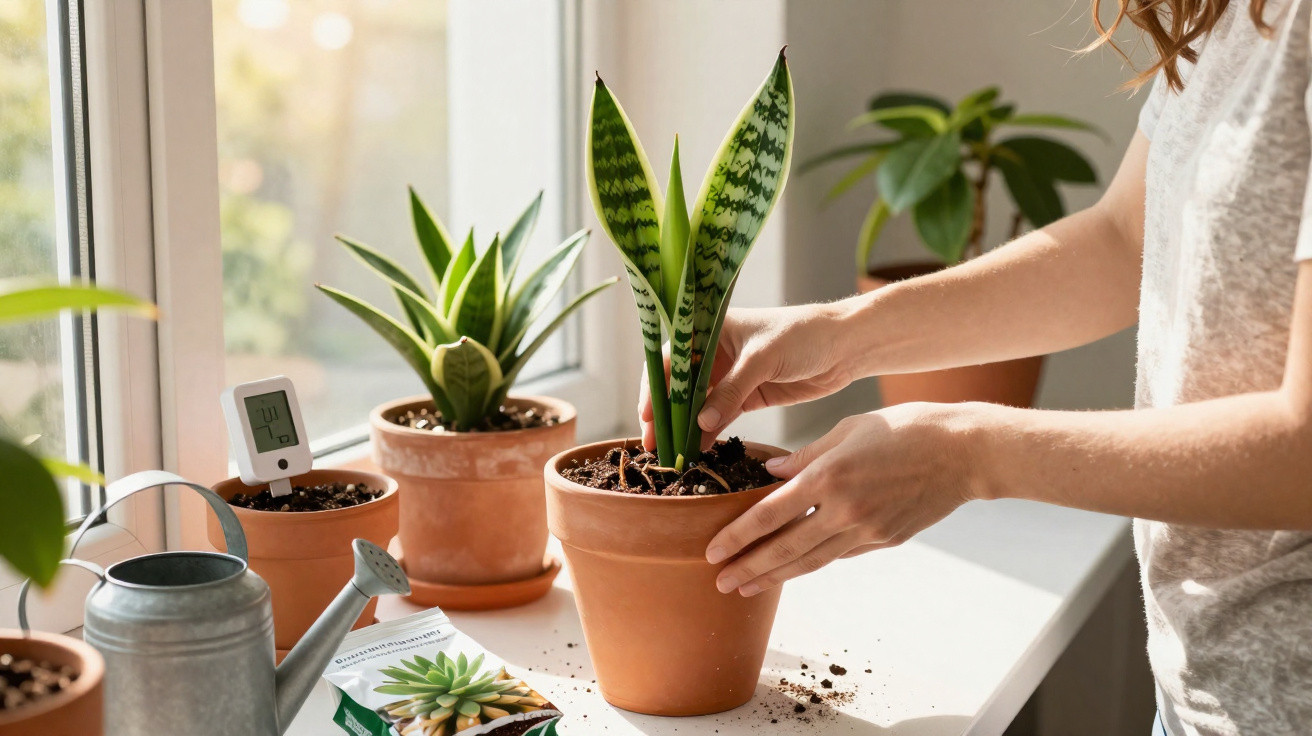
The snake plant is valued for its toughness and ability to cope with varied conditions, yet in many homes it can go for months without producing a single new leaf. When its growth stalls, the cause is usually straightforward: unsuitable light, overwatering, a pot that is too small or nutrient-poor compost. Correcting these points is often enough to restore steady, healthy-looking growth.
Why does a snake plant stop growing?
Even experienced growers can be surprised when a young plant fails to thicken up, retaining only a few thin, faded leaves. In this situation, checking where the snake plant is positioned, how it is watered, and how long it has been since it was repotted or fed can reveal why its development has halted.
Insufficient suitable light is the most common reason a snake plant does not thrive. Although it tolerates indoor settings, keeping it in a very dark spot all day slows its metabolism and reduces new shoot production, resulting in elongated, drooping and darker leaves.
Watch a video on the Horta do Ditinho YouTube channel about the ideal pot and compost for making a snake plant grow quickly and multiply into new plants:
https://www.youtube.com/watch?v=rX_jY8dK2aM
How do light and watering affect snake plant growth?
Improving the light levels is generally the first measure needed to revive the plant's vigour. Place it close to a bright window, where it receives strong indirect light for much of the day, or on a covered balcony with a few hours of gentle morning sun. Any move into brighter conditions should always be gradual.
For watering, only moisten the compost when it feels dry at least 3–4 cm below the surface. Constantly wet soil encourages root rot, preventing nutrient uptake and leaving the plant at a standstill, even when it appears to remain “alive” for a long time.
How to choose the right pot and compost for a snake plant
As well as balanced lighting and controlled watering, the container and growing medium play a decisive role in growth. A pot with effective drainage and a light, airy compost prevents water collecting around the roots, while allowing the rhizomes to spread more freely and create dense clumps.
To make these tasks easier to manage day to day, follow a few simple guidelines when planting or repotting:
- Use a light compost made from soil, sand and well-rotted organic matter;
- Create a drainage layer in the base of the pot using gravel, broken pottery or expanded clay;
- Choose terracotta pots to help excess moisture evaporate;
- Do not leave saucers holding standing water beneath the pot;
- Check regularly whether the pot is overcrowded with roots, and plan repotting accordingly.
What care makes a snake plant stronger and easier to propagate?
Once the light, watering and pot have been corrected, the plant will usually recover by itself. However, applying a light organic feed every two or three months can speed up the production of thicker leaves. When the pot is packed with roots, moving it into a slightly larger container and removing any dark, soft sections will generally restart new growth and refresh its appearance.
When the clump is dense, the plant can be propagated by division. Separate sections containing at least two or three leaves and firm rhizomes. Using clean tools, keeping it away from intense sun for the first few days, and maintaining the compost only slightly moist will help the new plants root quickly and keep the snake plant attractive for many years, both indoors and in sheltered outdoor spaces.



Comments
No comments yet. Be the first to comment!
Leave a Comment