
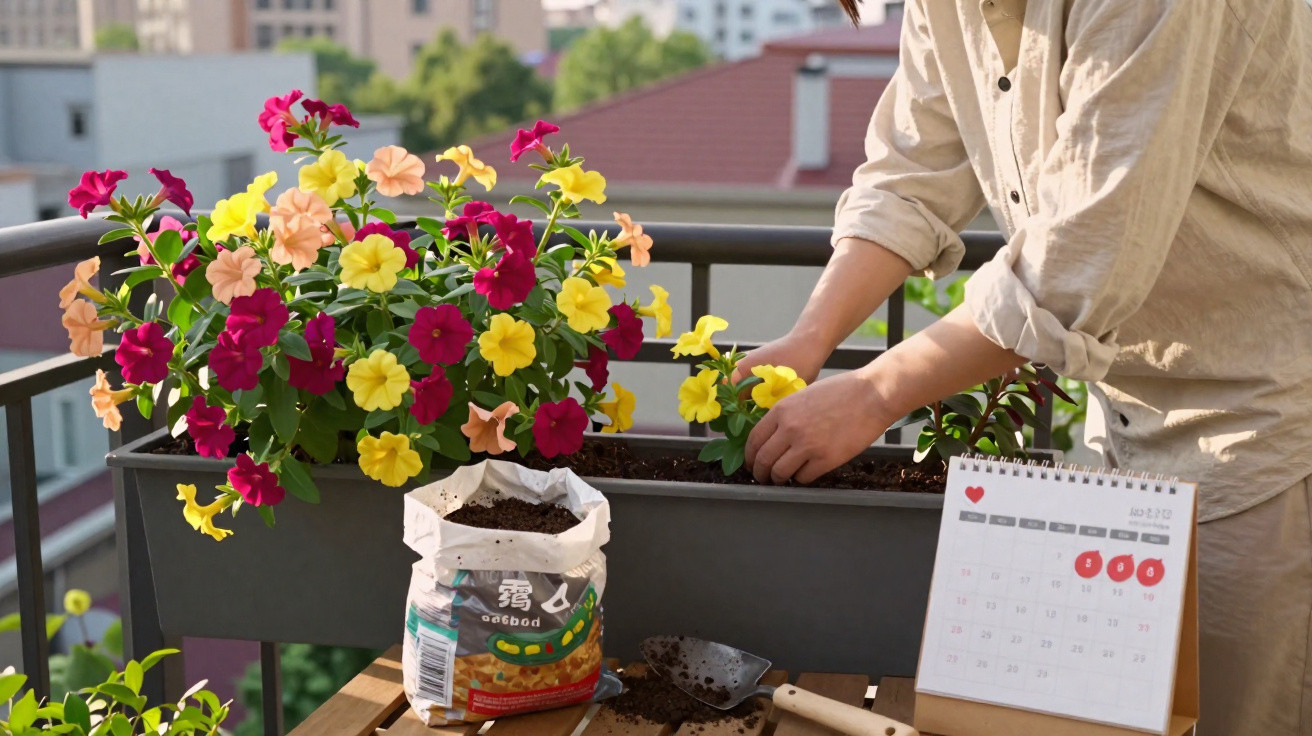
Many people admire the window boxes in high summer, spilling over with veritable cascades of flowers, and wonder how their neighbours achieve the look. The result often has nothing to do with secret professional gardening training. It comes down to the right plant, good timing in spring and a few straightforward rules for watering and feeding.
Calibrachoa: the star of cascading balcony displays
The same plant takes centre stage in countless window boxes that appear to be overflowing with blooms: Calibrachoa. It is often sold as Million Bells or mini petunia. Although it resembles a petunia, it stays more compact and produces far more small flowers.
Calibrachoa forms a rounded mound around 15 to 30 centimetres high, spreading sideways to roughly 30 to 60 centimetres. In hanging baskets and window boxes, its shoots grow outward before trailing decoratively over the edge. This overflowing effect is precisely what makes it so popular.
“From spring until the first frosts, Calibrachoa produces hundreds of small bell-shaped flowers – without a break in flowering when cared for correctly.”
Another advantage that saves balcony gardeners considerable effort is that Calibrachoa is regarded as self-cleaning. Spent flowers drop off naturally, so there is no need to constantly stand beside it with scissors removing faded blooms. It saves time while keeping the plant looking neat.
Newer cultivars that seem to change their colour mood are particularly interesting. Varieties such as Superbells Magic Double Grapefruit have double flowers that shift from yellow to shades of pink. They can make a single pot look as though it contains several different varieties.
Choosing the perfect time in spring
Calibrachoa thrives in warmth and is sensitive to cold. It is therefore generally grown as an annual seasonal plant in central European gardens. The key is not putting it outside too early.
The basic rule is to plant only once night frosts are no longer expected and temperatures consistently remain above 8 to 10 degrees Celsius. Depending on the region, this is usually sometime between mid-April and late May.
- Planting earlier: root growth stalls and the plant lags behind.
- Planting at the right time: the plant establishes quickly and produces long shoots early on.
- Planting too late: there is less time for it to fill the container completely.
Planting immediately after the last frosts gives Calibrachoa several weeks to push its roots deep into the growing medium. During this period, it develops strong shoots that will properly trail over the sides in July and August, creating the desired cascading appearance.
For a hanging basket or a medium-sized window box, use three to four young plants. This creates a thick covering with barely any gaps. On heavily used terraces in particular, planting a little more densely is worthwhile for a truly lush result.
The right container and growing medium
Calibrachoa is sensitive to waterlogging. It appreciates moisture but does not tolerate wet roots. It should therefore be planted in containers with effective drainage holes. If using a decorative outer pot without drainage, add a thick layer of expanded clay pellets at the base, or choose conventional window boxes with drainage outlets instead.
“Without free-draining growing medium, large drainage holes and a drainage layer, root rot and poor growth are likely.”
A loose, airy mix for window boxes or hanging baskets is suitable as a growing medium. Ordinary multipurpose compost can be opened up with a little sand or perlite. The aim is a very free-draining mix that retains water without remaining permanently wet.
Step by step to a dense cascade of flowers
- Choose a container with large drainage holes.
- Add a 2–3-centimetre drainage layer of expanded clay pellets or gravel.
- Fill with loose window-box compost, without pressing it down too firmly.
- Space 3–4 young plants evenly, positioning them at a slight outward angle.
- Water until it runs out at the bottom, then allow the container to drain.
When planting up several containers, colours can be combined creatively: use pastel shades in one window box, then place a bold blend of violet, pink and yellow beside it. With so many varieties available, even a small balcony can soon resemble a miniature flower wall.
Watering, feeding and trimming: keeping the window box full all summer
Calibrachoa produces fresh flowers almost continuously. This constant output takes energy, so the plant prefers a sunny to partly shaded spot with plenty of nutrients available.
When it comes to watering, the principle is regular moisture rather than constant wetness. Let the top layer of compost dry slightly before watering again. In high summer, compost in hanging baskets can dry out very rapidly. A daily check may then be necessary, especially on hot and windy days.
Without feeding, flowering declines noticeably. It is worth incorporating a slow-release fertiliser into the compost at planting time. From May onwards, apply a liquid fertiliser for flowering plants at intervals of around two weeks. Those who water very frequently can adjust the dose slightly, as nutrients are washed out more quickly.
“Regular nutrient applications prevent bare patches in the centre and keep flower production going into autumn.”
By high summer, usually from around mid-July, some plants may begin to look a little tired. A light trim can help: shorten several shoots by one to two centimetres, rather than cutting everything back at once. This preserves the lush overall effect while encouraging fresh branching and new shoots, followed by another flush of flowers.
The ideal position: sunshine with a little care
Calibrachoa is happiest in a bright, warm location. Full sun often produces the greatest number of flowers, but it also places more stress on plants in small containers. Take extra care if the only available position is a very hot south-facing balcony.
- South-facing: Suitable, but allow for sufficiently large containers and more intensive watering checks.
- East- or west-facing balcony: Usually ideal, with morning or evening sun and less heat build-up.
- North-facing: Suitable only if the position is very bright; otherwise flowering will be sparse.
Windy positions are not generally a problem, provided watering keeps pace. Prolonged heavy rain can damage delicate flowers somewhat, although the plant normally recovers quickly. If growing sensitive varieties, move the boxes to a more sheltered position temporarily during extended periods of heavy rain.
Colours, combinations and minor risks
The Calibrachoa colour range extends from simple white and pastel tones to intense neon shades and bi-coloured flowers. This makes it suitable for almost any style: romantic, Mediterranean, contemporary or vividly colourful.
Popular mixed plantings include:
- trailing ivy or pothos for a green contrast
- related petunias, providing larger flowers in the background
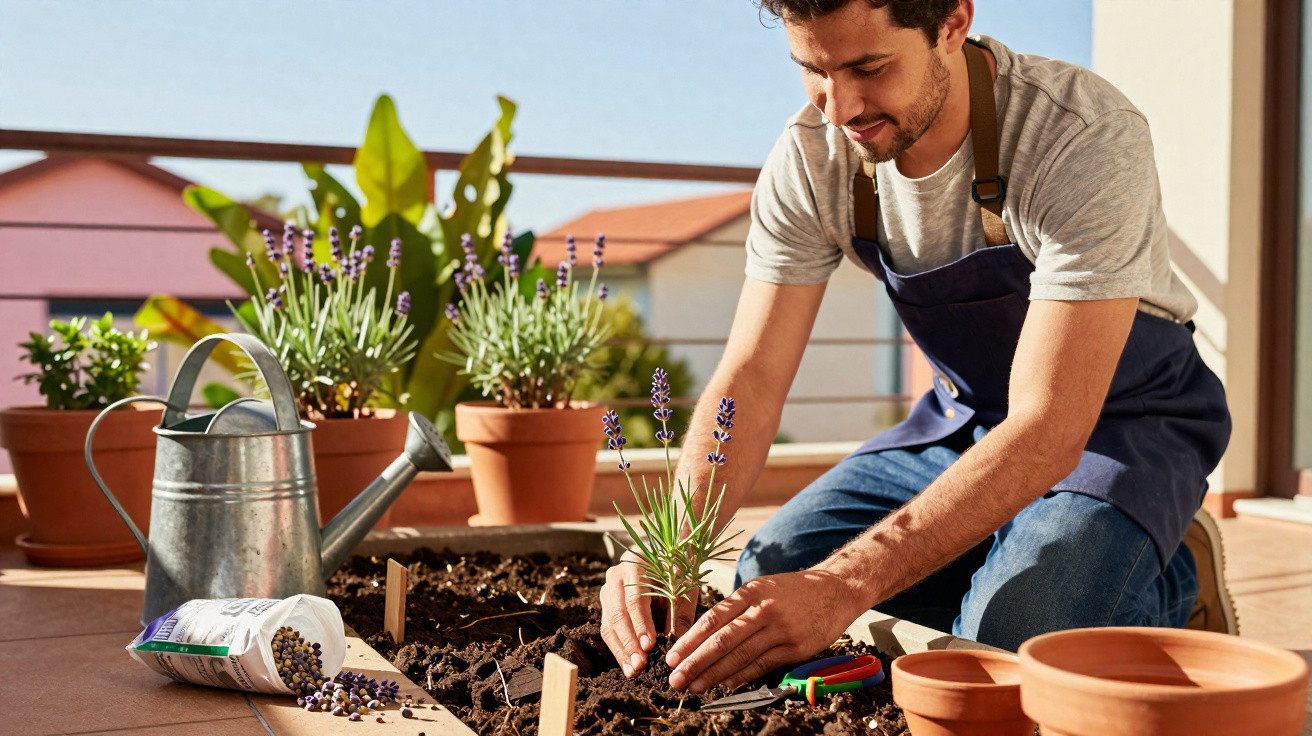
- fragrant thyme or lavender for a Mediterranean feel
- coleus or sweet potato vine as colourful foliage companions
Hard tap water can present a potential difficulty. Calibrachoa is sensitive to excessive lime, which may cause its leaves to become paler. In these situations, use rainwater or filtered water, together with a fertiliser formulated for balcony plants that includes trace elements such as iron.
Pet owners should also bear in mind that, like many ornamental plants, Calibrachoa is not intended as food. Cats and dogs should not regularly chew it. In practice, this rarely happens because animals usually find the leaves unappealing.
Why checking the calendar now is worthwhile
The success of these flower cascades is decided in spring. Anyone who uses the right window of time, prepares a well-drained container and waters and feeds consistently will be rewarded in summer with impressive curtains of flowers, without having to reach for the scissors every evening.
For city balconies, small terraces and even railings on terraced houses, Calibrachoa offers an uncomplicated way to extend the space visually outwards. Its flowers tumble over the edge, making the area feel larger and more vibrant – a small effort for a long, colourful summer.
Comments
No comments yet. Be the first to comment!
Leave a Comment