
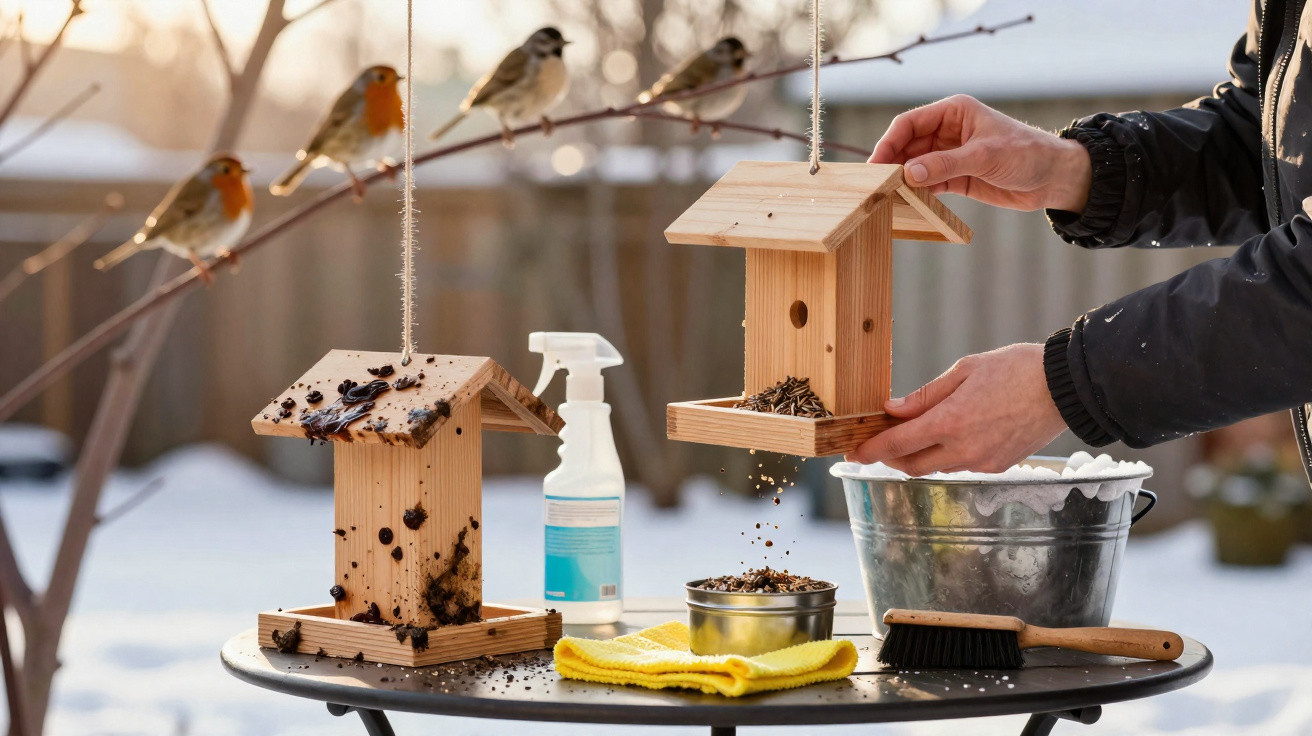
Millions of people are putting out food for tits and sparrows now – but one commonly overlooked mistake can turn a feeding station into a breeding ground for disease.
Stepping into the garden on a frosty day can reveal a small wonder: colourful tits, sparrows and robins all crowd around bird feeders and fat balls. Many people assume they are automatically doing something good. The harsh reality is that, without consistent hygiene, this very help can seriously harm birds and weaken entire populations.
Why a bird feeding station can quickly become a danger zone
In the wild, birds would usually spread out across wide areas. In a garden, however, they suddenly obtain all their energy from one spot. This creates a situation rarely found in nature, with consequences many amateur gardeners underestimate.
Unnatural crowding encourages viruses and bacteria
At a feeding station, birds of different species gather in close quarters, including healthy animals and undetected carriers of disease. They squabble, touch one another with wings and beaks, use the same perches and peck at the same food. One infected greenfinch can be enough to spread pathogens among dozens of visitors.
The closer birds sit together at a feeding station, the faster diseases spread – your garden can become a hotspot in a short time.
When birds search naturally for food, contact is often brief. A garden feeder, by contrast, becomes a kind of “bird canteen” with continual contact. Germs thrive in precisely these conditions.
Damp food, droppings and mud create the ideal breeding ground
Within just a few days, an unappetising mixture can build up beneath and on feeding areas:
- husks from sunflower seeds and other grains;
- moisture from rain, snow and dew;
- bird droppings from birds waiting in the branches above;
- birds walking through mud before hopping back onto the feeder.
This sludge begins to ferment, develops mould and becomes colonised by bacteria. Seeds lying in droppings or stuck together by moisture are no longer food; they are a risk. Yet many birds still eat them through hunger and habit, taking in germs with every mouthful.
Dangerous diseases: what bird keepers should know
Dirty feeding stations can spread two diseases in particular, both of which can prove fatal for many garden birds.
Trichomonosis and salmonellosis – silent killers at the bird feeder
One disease is caused by single-celled parasites, while the other results from resilient bacteria. Both mainly affect weakened birds and occur more frequently in winter. Often, nobody links the problem to the feeder at home – the birds simply disappear suddenly.
Frost does not automatically mean germ-free conditions. Damp leftovers, droppings and slightly warmer temperatures in decaying material create pockets in which pathogens can survive well. At the same time, many birds are already weakened by cold weather and limited natural food, leaving their immune systems working at reduced capacity.
Spotting warning signs: what ill birds look like
Many garden owners mistake signs of illness for birds “huddling up against the cold”. Typical warning signs include:
- fluffed-up plumage, making the bird appear round like a ball;
- sitting almost motionless at the feeding station or on the ground for long periods;
- half-closed eyes and an uninterested stare;
- saliva around the beak, or food falling back out;
- failing to fly away even when people approach.
Birds showing these signs are usually seriously ill and highly infectious. Simply topping up the food is the worst possible response at this point. Above all, the feeding station itself needs an urgent emergency stop.
Hygiene is the main task: cleanliness saves more birds than food
Many people think: “Anything to eat is better than nothing.” For birds, the better principle is clean food or no food at all. Anyone providing food takes responsibility for health conditions at their feeding site.
Never put fresh food onto a dirty surface
The basic rule is straightforward: you would not tip fresh pasta onto old food scraps on a plate, and the same applies to bird feeders. Always check the following before refilling:
- Are there clumped, damp seeds?
- Are bird droppings visible?
- Does the container smell musty or fermented?
If the answer is yes, throw everything away. Leftovers belong in the bin or on the compost heap, well away from the feeding station. It may seem wasteful, but it saves lives. Old, mouldy food residues carry a huge germ load that immediately contaminates every fresh refill.
Move the feeding station regularly
One of the simplest measures is to hang or position feeding areas elsewhere in the garden every two to three weeks. This gives the ground time to recover. Organisms living in the soil can break down droppings and husks without becoming overloaded. It also makes it harder for cats and birds of prey to establish a fixed “hunting spot”.
How to establish an effective cleaning routine
A fixed routine means you do not need to keep deciding what to do. If the feeder is heavily used, setting aside a weekly cleaning session is worthwhile.
Scrub and disinfect – but do it properly
For bird feeders, seed dispensers and feeding tables, follow these steps:
- Remove and dispose of all remaining food.
- Scrub thoroughly with hot soapy water and a stiff brush.
- Then disinfect, for example with heavily diluted chlorine bleach (a small amount in water).
- Leave it to work for a few minutes.
- Rinse extremely thoroughly with clean water until there is no smell left.
No chlorine smell left, completely rinsed out – only then is the feeding station truly ready for sensitive birds again.
Resilient pathogens such as salmonella can survive many “gentle” household products. Carefully measured disinfectant that is rinsed off thoroughly is much safer. It does not need to be used every week, but particularly during periods of heavy use.
Drying is not a minor detail: it is essential
Damp surfaces are a gift to mould fungi. Refilling straight after cleaning only creates fresh problems. Instead:
- Allow wood and plastic to dry completely, preferably in the sun or somewhere well ventilated.
- Keep a second feeding station available for use in the meantime.
- Refill wooden feeders only once they feel dry rather than cold and damp.
Clean water matters as much as food in winter
Many people think only about seeds. Yet birds struggle to process dry food without fresh water. They need it for drinking and for brief bathing to keep their plumage in good condition.
Dirty bird baths are a frequently missed risk
Stagnant puddles in bowls and small basins are ideal collection points for germs. An ill bird only needs to drink once for pathogens to enter the entire volume of water. Algae, leaves and droppings in the basin are clear warning signs, even if the water appears reasonably clear in winter.
Changing the water daily provides double protection
The simplest rule is to add fresh water once a day. Briefly scrub the edges with a brush at the same time and remove any dirt. During prolonged frost, lukewarm water can keep the bird bath open for at least a few hours. Additives such as salt or antifreeze are strictly off limits, as they seriously harm birds.
Clean winter shelters: hygiene matters in nest boxes too
Nest boxes are not merely decoration in winter or something to prepare for spring. Many small species use them as sleeping places to withstand cold nights.
Remove old nests and parasites
Anyone who can access their nest boxes should inspect them outside periods of use. Old nests from the previous breeding season are often full of fleas, mites and ticks. Vigorous brushing-out is usually enough. Chemical sprays are not a good idea: they soak into the wood and can later irritate birds’ respiratory systems.
A warm, dry sleeping place can save lives
Many species snuggle together in a nest box at night to conserve energy. In a damp, dirty interior, the risk of infection then rises sharply. Keeping the box dry inside and free from old material significantly reduces the danger of disease. A thin layer of dry wood shavings helps absorb moisture and provides a little insulation.
Why your cleaning cloth achieves more than the next bag of bird food
People who feed birds want to help them through winter, not unintentionally weaken whole flocks. Fresh seeds are only half the solution. A clean feeding station, well-maintained water bowls and cleaned nest boxes noticeably reduce pathogens.
In practical terms, it is better to offer slightly less food but provide fresh portions more often. It is also better to schedule one thorough cleaning session each month than repeatedly refill the bird feeder without checking it. By making a brush, hot water and a little discipline part of a winter routine, you can genuinely turn your garden into a refuge for biodiversity rather than an unnoticed risk for its regular feathered visitors.
Comments
No comments yet. Be the first to comment!
Leave a Comment