
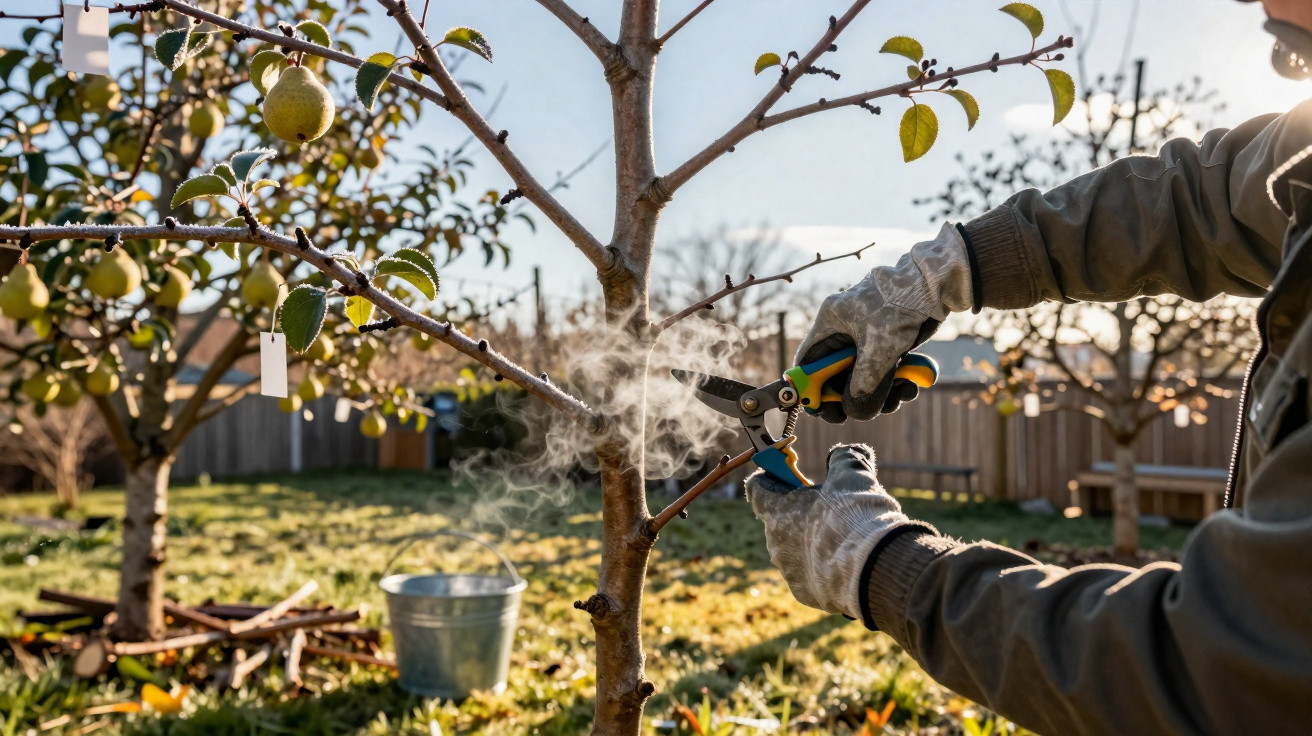
Anyone hoping to harvest crisp apples, juicy pears and fragrant quinces from their own tree in autumn has one crucial task to complete in January.
The garden may look dormant, with beds and lawns apparently asleep, but this is when the course is set for the coming harvest. Three classic pome fruit trees need targeted pruning by the end of January; otherwise, they may produce small fruit, bare crowns or become prone to disease.
Why January is the key time for fruit trees
Most fruit trees are dormant in January. Their sap is largely concentrated in the roots and growth has stopped. This makes it the ideal month to work on the crown without placing unnecessary strain on the tree.
“During winter dormancy, pome fruit trees cope better with major intervention – pruning now directly influences the year’s harvest.”
Winter pruning is primarily about achieving the right balance between shoot growth and fruit production. Trees left unpruned often develop too many poorly lit shoots. The result is lots of small, less flavoursome fruit and an unstable structure.
Three species particularly benefit from being pruned no later than the end of January:
- Apple tree
- Pear tree
- Quince tree
They are all pome fruits and respond far better to winter pruning than stone fruits such as cherries or plums, which should be pruned at different times.
Apple tree: More light, less branch growth, better harvests
Apple trees generally tolerate winter pruning very well. Allowing them to grow unchecked can create a dense crown where hardly any light reaches the fruit. This may lead to plenty of apples, but they are small, sour and often more susceptible to disease.
How to spot where to use the pruners
Start by looking at the centre of the crown. Many amateur gardeners leave a real tangle of inward-growing branches in this area. This deprives the fruit of light and keeps the space between branches constantly damp – ideal conditions for fungal disease.
- Remove all branches growing inwards, crossing each other or rubbing together
- Shorten vigorous upright water shoots substantially or remove them entirely
- Thin out older, weak fruiting wood in favour of younger shoots
One principle is especially important: keep the centre of the crown bright and open. Light should penetrate as deeply towards the trunk as possible.
Shorten main branches – but do it thoughtfully
The main scaffold branches, meaning the stronger structural limbs, can be shortened moderately. This brings the fruiting area closer to the trunk. It also makes the tree more stable, as the weight of the apples is not carried at the very ends of long, thin shoots.
“The closer fruit develops to the trunk, the better the tree can support its weight – without the risk of breakage under a full crop.”
With very young apple trees, the focus should be on establishing a sturdy basic framework. For older specimens, thinning and rejuvenating the fruiting wood is more important.
Pear tree: Control the height and encourage horizontal shoots
Pear trees grow quite differently from apple trees. They naturally have a strong tendency to grow upwards. Without pruning, they develop long, straight trunks with a sparse crown at the top, leaving fruit hanging high above the ground and out of reach without a long ladder.
Why pear trees become “candles”
Pear trees display strong apical dominance: upward-facing shoots take the lead and draw most of the nutrients. The lower sections gradually become bare because little sap reaches them. The tree then appears bare at the bottom and dense at the top.
This is where winter pruning makes a difference:
- Shorten vertical shoots significantly or cut them back to side branches that grow more horizontally
- Retain and encourage horizontal or gently sloping branches
- Reduce overly tall crowns gradually rather than cutting them back radically in a single year
The best flower buds, and therefore the finest pears, are usually found on horizontal or slightly inclined branches. Strengthening these shoots directs the tree’s energy towards fruit production.
Build up small fruiting spurs deliberately
Over time, short, knobbly pieces of growth that regularly carry flowers develop on the side branches. These are the tree’s true fruit producers. Excessive pruning removes them, whereas considered pruning retains and rejuvenates them.
“For pear trees, the rule is: less height, more width – this keeps the crown accessible and productive.”
Older pear trees that have grown very tall particularly benefit from a plan spanning several years: shorten them moderately each year, repeatedly cut back to side shoots and keep the leading tip consistently under control.
Quince tree: A clean crown helps prevent disease
Quince trees are often overlooked in gardens and receive very little care. Yet they respond particularly well to targeted pruning, especially where tree health is concerned.
Quinces tend to produce many root suckers. Their crowns can also quickly become dense and tangled, with branches rubbing together and moisture building up inside the crown. Fungal diseases can then take hold easily.
Hygiene comes first when pruning quince trees
For quince trees, winter pruning is mainly a matter of thorough clearing out:
- Remove all dead wood completely
- Cut root suckers off close to their point of origin
- Take out branches that rub against one another or create heavy shade
Unlike apple and pear trees, the tips of quince shoots should not be cut back too heavily. Quinces often bear fruit at the ends of this year’s or last year’s shoots. Hard pruning can therefore reduce the crop directly.
“With quince trees, thinning is preferable to drastic cutting – good airflow through the crown greatly reduces the risk of disease.”
The aim is an open, well-ventilated crown with a small number of clearly defined scaffold branches and a tidy structure. Leaves and fruit then dry more quickly, making conditions less favourable for fungi.
Weather, tools and mistakes: What really matters in winter pruning
Even the best pruning technique is of little use if the conditions are unsuitable. Frost is particularly important. When temperatures are below freezing, leave the pruners and saw in the shed.
- Never prune frozen wood, as cracks and dead patches may result
- Dry days around freezing point or slightly above are ideal
- Use clean, sharp tools to create smooth cuts
Frozen wood tears easily and pruning wounds heal poorly. This can cause dead edges, splits in the bark and, in the longer term, rot.
Take particular care with large cuts on older branches. A clean, slightly angled cut without ragged edges considerably reduces the risk of rot and fungal infection.
Pome fruit yes, stone fruit should wait
A common gardening mistake is to prune every fruit tree indiscriminately in winter. That works for pome fruits such as apple, pear and quince, but not for species with stones.
“Plums, damsons, cherries and similar trees are sensitive in deep winter – they are better pruned during the warmer months.”
Stone fruit trees are in a deeper state of dormancy during winter and do not seal pruning wounds well. This can lead to gummosis and lasting damage. These trees are usually best pruned after harvest or during a warm, dry spell in summer.
Practical help for pruning in your own garden
Many amateur gardeners avoid winter pruning because they fear removing too much. In practice, overly cautious pruning often harms trees more than a clear, confident intervention. Small corrections made year after year are usually the best approach.
A simple checklist can help:
- Look from the outside in: is the shape balanced, or has the tree become heavily one-sided?
- Clear the interior: are branches crossing, and are shaded areas forming?
- Check the fruiting wood: where are the buds, and where does the fruit develop?
If you are unsure, mark particularly productive branches with a ribbon in summer. This makes it easier to decide in winter which areas should remain and which can be removed.
Risks, benefits and looking ahead to next year
A tree that is poorly pruned or not pruned at all may still carry plenty of fruit, but its overall performance suffers. The crown becomes unstable, diseases spread more easily and the fruit remains small. Over time, the tree can age prematurely even when it is still relatively young.
Regular, properly carried out winter pruning offers several benefits:
- A more stable crown and fewer broken branches under a full crop
- Larger, more flavoursome fruit
- Better ventilation and a lower risk of fungal disease
- Easier harvesting without risky climbing
Taking time in January to prune apple, pear and quince trees lays the foundations for several years ahead. The trees respond in spring with more orderly new growth, fruit production becomes more focused and maintenance work during future seasons is significantly reduced.
The essential point is to act by the end of January at the latest. If pruning is delayed until late winter or early spring, the tree will already be starting to grow, and heavier cutting can weaken it unnecessarily. This still-quiet period is therefore the best opportunity to shape the three classic pome fruit trees in the garden.



Comments
No comments yet. Be the first to comment!
Leave a Comment