
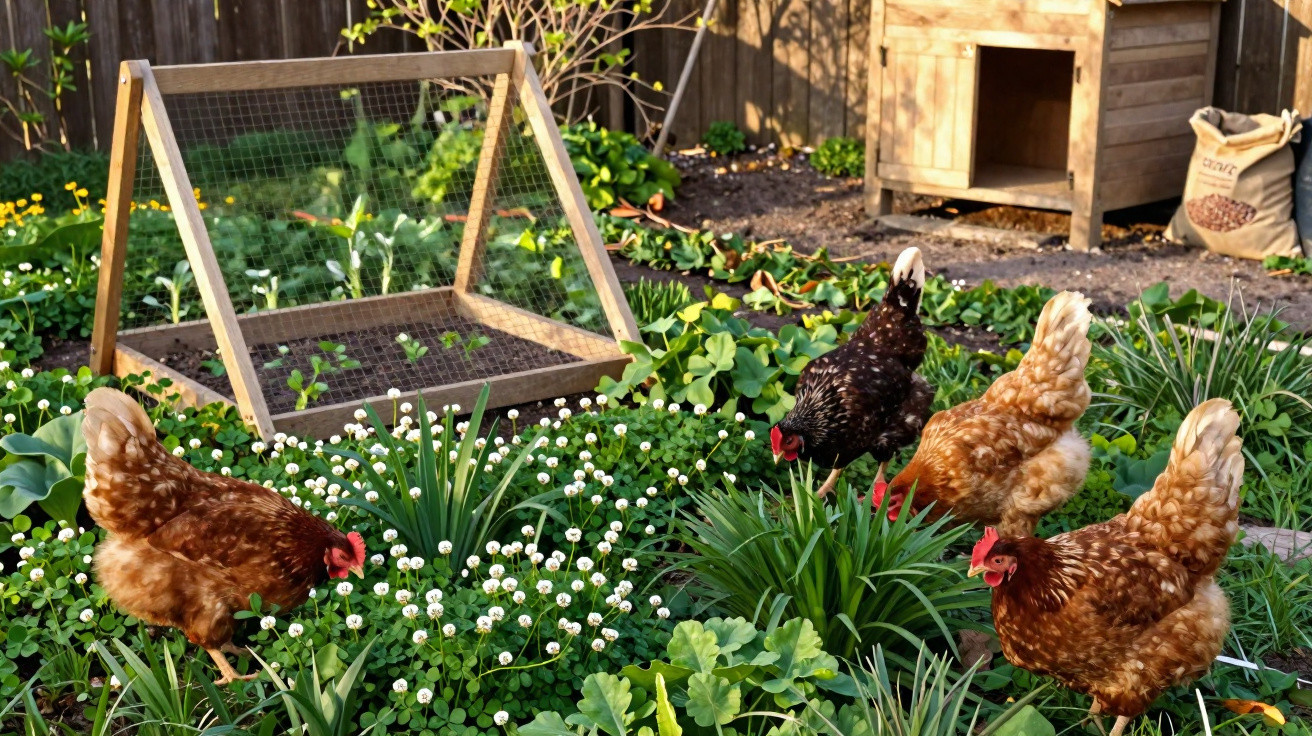
When winter turns the chicken run into a grey, muddy wasteland, one simple trick can transform it completely.
By the end of winter, the run can look abandoned: wet ground, bare patches and bad-tempered hens. Yet this is precisely the best time to turn the area, with just a few practical steps, into a healthy, green and almost self-sustaining haven for your chickens – using plants that benefit the soil, your budget and the birds at the same time.
Why the chicken run looks so bad after winter
After months of rain, frost and constant use by the flock, soil in the chicken run becomes heavily compacted. Puddles form, every trace of greenery disappears, and mud splashes with every step. This is more than merely unattractive for chickens:
- Damp, muddy ground encourages parasites
- Their claws are constantly wet, which can contribute to skin problems
- Fresh greens are missing as a balance to grain feed
Many keepers wait for warmer spring weather before taking action. That is a mistake. Anyone who gets started during the final weeks of winter or the very beginning of spring makes the most of residual moisture in the ground and mild conditions. Seeds germinate far more successfully then, before weeds and summer dry spells take over.
“Sow in March and, from April, give your chickens a living feed carpet instead of a muddy wasteland.”
The ideal plant mix: more than simply “grass for chickens”
Ordinary lawn grass nearly always fails in a chicken run. Its blades are too delicate, its roots are too weak, and after only a few days of digging and scratching, nothing but bare soil remains. A mix of hardy perennial species, chosen specifically to meet chickens’ needs, is much more useful.
White clover: a protein source and soil fertiliser in one
White clover is a legume, meaning it captures nitrogen from the air and stores it in the soil. That effect makes it a natural fertiliser. At the same time, it is a genuine high-energy feed for chickens:
- Rich in plant protein – beneficial for egg production
- Tender leaves that chickens readily eat
- Dense growth that covers the ground and reduces erosion
There is another practical advantage: a ground-covering carpet of clover reduces bare areas and helps keep soil where it belongs.
Ribwort plantain: an overlooked medicinal plant for chicken health
Many gardeners regard ribwort plantain as a “weed”, but it is extremely valuable in a chicken run. Its leaves contain plant compounds traditionally used for respiratory and digestive complaints. Given the choice, chickens are happy to peck at the leaves.
A chicken run containing ribwort plantain therefore provides more than green feed; it also supports the birds’ wellbeing in a natural way. This can be particularly helpful when dust and damp conditions put pressure on their airways.
Wild chicory: a deep-rooted source of minerals
With its strong taproots, chicory loosens soil deep below the surface. The plant draws minerals and trace elements up from lower soil layers. These nutrients accumulate in its leaves, allowing chickens to take them in directly when feeding.
If you feed a lot of bagged grain, this variety of micronutrients is often exactly what is lacking. Chicory naturally fills that gap and supports the hens’ liver and digestion.
“Together, white clover, ribwort plantain and chicory create living, perennial supplementary feed – right outside the chicken coop.”
How to sow in “hostile territory”: the chicken-proof seed trick
The biggest challenge in a chicken run is that chickens love exactly what you have just sown. They either eat the seeds or scratch them back to the surface. Anyone who simply broadcasts seed will usually watch the birds clear the “buffet” that very same day.
The protective-frame method for lasting greenery
To give the plants any chance at all, you need a temporary exclusion zone. Simple wooden frames covered with fine wire mesh and laid flat on the ground have proved effective. The method works as follows:
- Place a frame over the chosen area
- Sow inside the frame and rake the seed in lightly
- Lay the wire-covered frame over the area and, if necessary, weigh it down with stones
The chickens can now reach neither the seeds nor the young seedlings. Once the plants are tall enough, they grow through the openings in the wire. The birds can peck the leaves without pulling out the roots. This creates a “salad buffet” that repeatedly regenerates itself.
For larger chicken runs, position several of these frames in alternating areas. While one section regrows, the other is grazed. This keeps the run green and resilient over the long term.
From mud to a health zone: what the green carpet achieves
This plant mix performs several roles at once – going far beyond its value as feed.
Drier, cleaner ground with a lower risk of disease
As root mass increases, the ground becomes more stable. Clover and chicory roots act like a spreading network that holds the soil together and absorbs excess moisture. Puddles disappear more quickly and the surface remains firmer underfoot.
For the chickens, this means less constant dampness around their feet, a lower risk of skin problems and an environment in which parasites spread less easily. Anyone who has dealt with burrowing parasites or painful foot damage knows how valuable that can be.
Activity instead of boredom – and less feather pecking
A varied, planted chicken run also changes the birds’ behaviour. Rather than standing listlessly around the feeder, they spend more time picking leaves, searching for insects and foraging among the plants.
This kind of activity acts like a natural anti-stress programme. Chickens kept occupied with searching, pecking and scratching are less likely to develop unwanted feather pecking or aggressive behaviour towards other birds.
“Diverse planting encourages calm within the flock – and turns stressed hens into relaxed garden helpers.”
Low costs, major benefits for feed spending and vitality
The seeds required are inexpensive. A considerable area can be sown for only a few pounds. As these are predominantly perennial plants, there is no need to start again every spring, provided the areas continue to be protected using the wire-frame method.
The first results are visible after only a few weeks: chickens eat noticeably more fresh greens, and the grain ration decreases automatically. Anyone wanting to keep feed costs under control gains twice over – less need for costly supplementary feeds and more nutrients straight from the enclosure.
Practical tips for starting your green chicken run
- Timing: Late winter to early spring is ideal, as long as the soil is moist but no longer frozen.
- Prepare the ground: Break up large clumps and lightly mix muddy areas with sand or fine soil.
- Vary the mix: Depending on the soil, you can add small quantities of other herbs, such as yarrow or lucerne.
- Check regularly: If one species becomes too dominant, selectively overseed to maintain balance.
Anyone who takes the term “chicken garden” seriously no longer sees the run as a bare sandy patch, but as a living system. Plants improve the soil, chickens use the plants, and their droppings in turn fertilise the growth. This creates a small cycle that becomes more stable with every year.
You will also come to see your birds differently: instead of simply gathering around the feeder, they suddenly seem like little gardeners tending their own food source leaf by leaf. It is a touch of self-sufficiency right behind the house, requiring no large budget but making a noticeable difference to the health and quality of life of your flock.




Comments
No comments yet. Be the first to comment!
Leave a Comment