
For anyone wanting months of colour on a balcony, terrace or in the garden during summer, annuals are often the first choice. Yet there is a perennial alternative that needs very little attention, has an intense fragrance and flowers from spring well into autumn: the long-lasting garden pink Dianthus ‘Bumbleberry Pie’. This variety is currently considered an insider tip among amateur gardeners.
Why this perennial delights so many gardeners
Compact growth, impressive impact
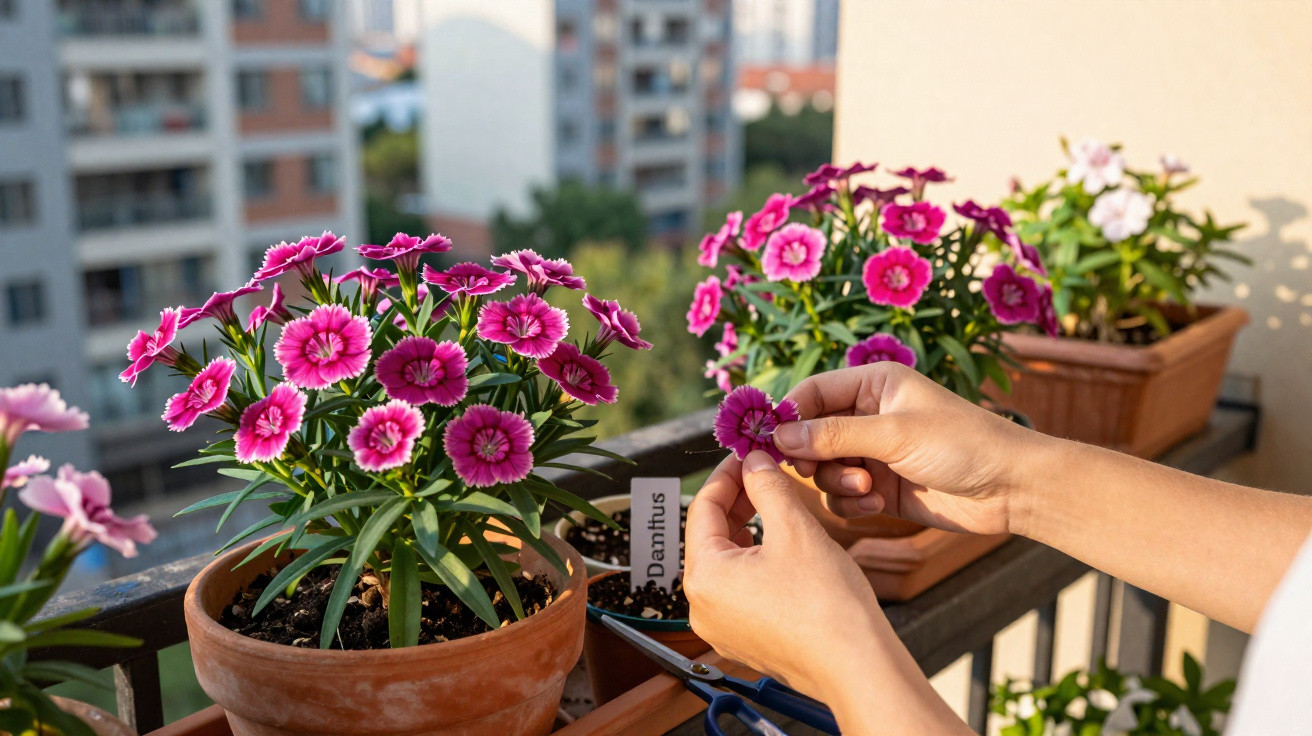
Dianthus ‘Bumbleberry Pie’ develops into a dense, cushion-shaped mound around 25 to 30 centimetres tall. This makes it ideally suited to bed edges, bowls and long window boxes. Its grey-green foliage provides a calm backdrop that makes the flowers appear even more vivid.
Its habit stays firm and neat, with shoots rarely flopping over. A bed planted with this pink therefore looks tidy even when surrounding plants are growing more freely. On compact balconies in particular, its restrained shape creates structure without taking up precious room.
The perennial stays low but looks like a colourful carpet – ideal for anyone wanting to combine order and colour.
Bright blooms with a fragrant touch
The flowers are the real attraction: a strong pink shade with a darker, almost burgundy-red centre. Their gently fringed petals create an effect reminiscent of a watercolour painting. The colours are especially striking in sunshine.
There is also the delicate, sweet fragrance associated with traditional garden pinks. Placed on a balcony or terrace close to where people sit, it creates a small scented area that is clearly noticeable over breakfast or an after-work drink.
A useful detail for decorating enthusiasts is that the flowers can be cut for small vases. Their sturdy stems support the buds well, so they do not immediately droop.
Months of flowers instead of a brief burst of colour
Many bedding plants put on a short display before running out of energy. This perennial performs differently: from spring far into late summer – and, with good care, even into autumn – it continues to produce fresh blooms.
The secret is a combination of robust genetics and one straightforward care task: removing spent flowers regularly encourages the plant to form more buds.
Fresh flowers again and again from spring to autumn – without constantly buying replacements from the garden centre.
Its abundance of flowers also attracts butterflies and other pollinators. Deer and other animals that nibble plants generally avoid pinks, making this variety especially appealing in rural areas.
Planting Dianthus ‘Bumbleberry Pie’ for a strong start
Position: sunshine delivers the best results
This plant thrives in sunshine. At least six hours of direct light a day is ideal. It will survive in partial shade, but both flower production and fragrance will noticeably decrease.
The perennial is more selective about soil: it should be relatively light, free-draining and preferably slightly calcareous. Prolonged waterlogging, particularly in winter, can significantly shorten its lifespan.
- Light: sunny, preferably full sun
- Soil: free-draining and rather lean than overly rich
- Moisture: moist to slightly dry, with no waterlogging
- pH value: neutral to slightly calcareous
Spring, once the soil has warmed up, is the best time to plant. This gives the roots time to establish a dense network before summer heat arrives. In beds, allow a spacing of 25 to 30 centimetres; over time, this creates a dense, continuous row.
Pots, window boxes and bowls: perfect for urban balconies
Anyone without a garden can grow this plant in containers without difficulty. For balconies and terraces, choose a pot or window box at least 25 centimetres wide. Drainage holes are essential so excess watering can escape.
A loose, structurally stable compost is suitable as a growing medium, improved with sand, crushed expanded clay or lava granules. This creates spaces through which water can drain while allowing the roots enough air.
Compost dries out much faster in containers than it does in a border. Anyone who is out during the day should either water generously in the morning or consider a simple irrigation system.
| Aspect | Bed | Pot / window box |
|---|---|---|
| Watering frequency | usually only during dry spells | regularly, often every 1–2 days in summer |
| Feeding | sparingly, 1–2 applications per season | liquid feed every 3–4 weeks is useful |
| Frost protection | normal garden soil is usually sufficient | move the pot against a sheltered wall and wrap it if necessary |
Keeping the floral display going for months
Low-maintenance, not entirely maintenance-free
This perennial is regarded as uncomplicated. However, a few small tasks make a clear difference. It needs regular water in hot weather, particularly when grown in a pot. The compost should never be allowed to dry out completely, but it must not remain constantly wet either.
From May to August, the pink can be given a small amount of liquid fertiliser in the watering water every three to four weeks – ideally a low dose of a product for flowering plants. Too many nutrients may encourage foliage growth, but will reduce flowering over time.
Removing spent flowers – the key technique
To extend the flowering period as much as possible, cut off faded flower heads regularly. This can easily be done during an evening walk around the garden. It directs the plant’s energy into fresh buds rather than seed production.
A few minutes a week with the shears are enough to keep the plant flowering continuously.
A light trim at the end of winter is also worthwhile: cut dry, brown shoots back just above the fresh new growth. The mound will then look dense and even again, and the plant will begin the new season vigorously.
Where this perennial looks especially effective
Pairings for beds and balconies
Thanks to its grey-green leaves, Dianthus ‘Bumbleberry Pie’ works beautifully with Mediterranean-style plants. Attractive combinations include:
- lavender or catmint for a fragrant perennial border
- silver-leaved or spiky plants, such as silver ragwort
- low grasses that add movement to the display
- spring bulbs that flower before the pink, then make way for it
In a window box, it works well with trailing plants that spill over the edge while the pink forms the centrepiece. Even in a very small space, this creates a varied and densely planted miniature garden.
Suitable for beginners and busy people
This plant is particularly helpful for people with limited time or little gardening experience. It tolerates short dry periods, needs no complicated pruning techniques and does not have to be bought again every year.
Anyone who has repeatedly been disappointed by summer bedding plants because they lose vigour after a few weeks will find a long-term alternative here. Once established properly, this perennial supplies colour and fragrance for years without demanding constant attention.
It is also an interesting choice for anyone unsure what the term “perennial” means. Perennials are long-lived, usually herbaceous plants that die back above ground over winter before shooting again from the root area. This is precisely what makes plants of this kind economical and sustainable – you invest once and enjoy them for a long time.
Anyone planning an outdoor space should consider this perennial as a permanent feature: as a low border edging, a scented accent beside the terrace or a lasting replacement for short-lived balcony flowers. Combined with several other robust perennials, it creates an easy-care yet colourful outdoor area for months on end, with an effect far greater than the modest effort involved.




Comments
No comments yet. Be the first to comment!
Leave a Comment