
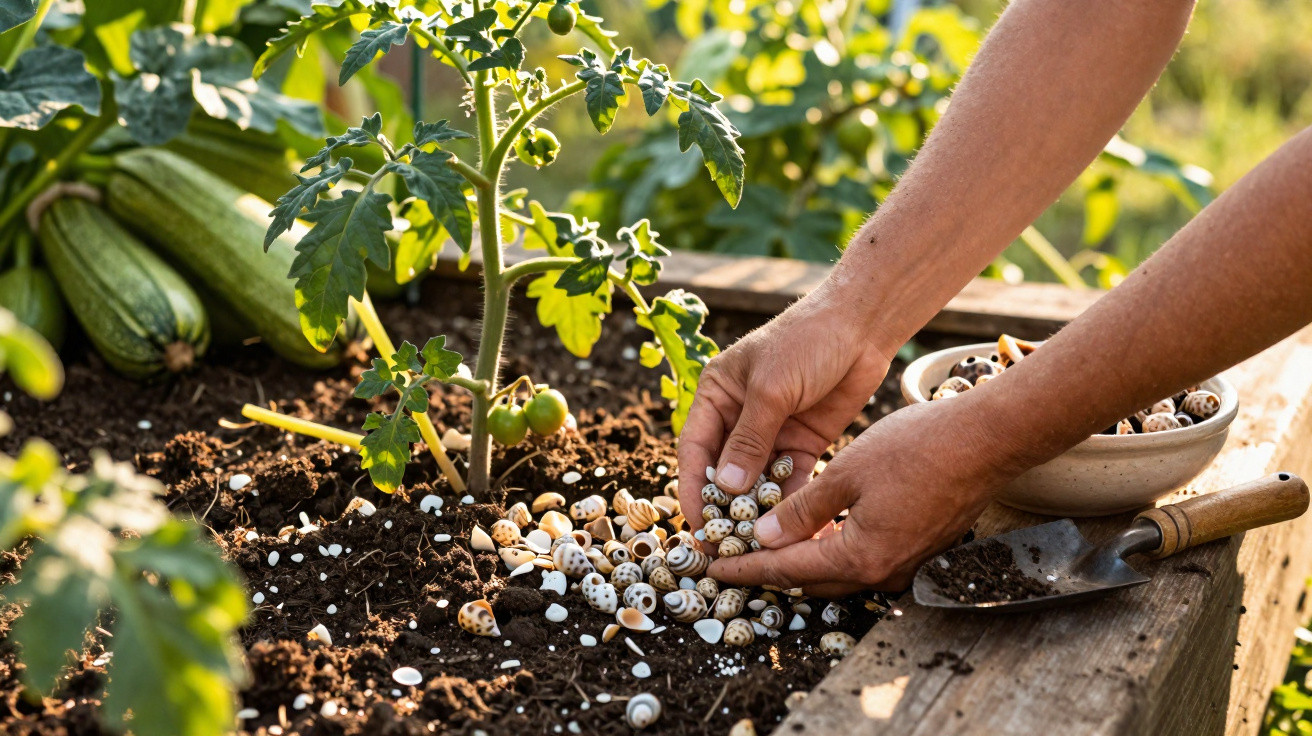
In spring, anyone checking their beds will repeatedly come across empty snail shells. Most are thrown into the bin or kicked aside on the path. That is a mistake: these inconspicuous shells provide valuable lime, improve soil structure and help sensitive crops such as tomatoes and courgettes remain healthy. Used wisely, they save on fertiliser, cut waste and strengthen garden soil at the same time.
Snail shells in the bed: from “rubbish” to a soil treasure
At first glance, empty snail shells look like ordinary garden waste. In fact, they contain plenty of calcium carbonate – a natural lime that is available to plants in an easily usable form. Many gardeners apply lime, wood ash or kitchen eggshells to their soil, but snail shells are especially easy to incorporate.
“Snail shells provide readily available lime, loosen the soil and thereby strengthen roots, leaves and fruit.”
Calcium has a more significant role in soil than many people realise. It reinforces cell walls, encourages root development and supports soil organisms such as bacteria and fungi. Without enough calcium, plants struggle to take up nutrients and become more vulnerable to stress, drought and heat.
Why calcium from snail shells works so well
The lime in snail shells is present in a form that dissolves in the soil relatively evenly. Compared with coarse eggshells or heavy applications of lime, it acts more gently and over a longer period. Medium-sized fragments gradually break down, releasing calcium over several weeks while also becoming part of the soil structure.
- readily usable lime for young plants
- steady, slow release rather than “shock fertilising”
- mechanical loosening of the soil from the coarser pieces
- support for soil organisms, which readily “process” mineral particles
Calcium demand is particularly high in spring, when young plants begin growing vigorously. This is also when damp nights often leave especially large numbers of empty shells on paths and beds – the ideal time to collect and put them to good use.
Tomatoes, courgettes and fruit trees: plants that benefit from snail shells
Not every crop reacts equally sensitively to a poor calcium supply. Some common garden vegetables are considered heavy lime feeders – and reward every additional, measured application with firmer fruit and stronger growth.
Typical calcium deficiency symptoms in the garden
Gardeners who know what to look for can spot a deficiency early. Common signs on hungry plants include:
- leaf tips turning brown or black
- young leaves remaining small, becoming misshapen or curling up
- tomatoes with a black, sunken base to the fruit (blossom-end rot)
- courgettes and squashes that become soft and rotten at the fruit tip
- slowed growth despite adequate watering
These issues occur especially as temperatures rise and watering becomes inconsistent. Transport within the plant is then disrupted, so calcium no longer reaches the fruit reliably. A stable basic supply in the soil significantly reduces this risk.
Supporting crops with snail shells
Crushed snail shells are particularly suitable for:
- tomatoes, peppers and aubergines
- courgettes, squashes and cucumbers
- berry bushes such as redcurrants and gooseberries
- fruit trees, especially young apple and plum trees
Work the fragments into the soil around the root zone, or scatter them over the surface and lightly rake them in. Their texture acts like miniature drainage: soil compacts less, water drains more effectively and air can reach the roots more easily. The result is sturdier plants and fruit that is less susceptible to problems.
How gardeners can use snail shells as part of zero waste
Anyone already spending time in the garden can “harvest” empty shells with very little effort. A few simple steps are needed to make sure they benefit the soil rather than cause problems.
Collecting and preparing them correctly
First of all, use only shells that are genuinely empty. Gardeners should bear the following in mind:
- Pick up only dry, empty snail shells.
- Rinse them briefly with water if soil or residue is stuck to them.
- Leave them to dry on paper or a cloth.
- Store them in a bucket or jar until there are enough to make crushing worthwhile.
Smelly remains or partly decomposed animals have no place in the bed, as they would merely attract flies and other unwanted visitors.
The right particle size: crush coarsely rather than making powder
Many people assume that finer is better, but this does not apply to snail shells. Pieces measuring roughly three to five millimetres are ideal. This can be done easily:
- Put the shells in a sturdy freezer bag or beneath a kitchen towel.
- Roll over them or tap them gently with a rolling pin, hammer or the base of a glass.
- Stop once coarse granules have formed – do not aim for dust.
Coarser fragments release lime gradually, remain in the soil for longer as structural material and are still easy to see. Grinding them into dust risks making the soil excessively alkaline and makes the effect harder to control.
How much is useful? Dosage and limits in the bed
Even natural garden aids can be overused. A moderate amount is entirely sufficient and delivers reliable results.
Guideline: around 150 grams per square metre
For areas growing typical hungry crops, use around 150 grams of coarsely crushed snail shells per square metre. This is roughly equivalent to one generously filled mug.
| Area | Recommended amount | Frequency |
|---|---|---|
| Tomato and courgette bed | 150 g/m² | once in spring, if necessary in 2 applications |
| Young fruit trees | 1–2 handfuls within the canopy area | every 1–2 years |
| Berry bushes | around 1 handful per bush | every 1–2 years |
Incorporate the pieces into the surface rather than burying them deeply. Light hoeing or raking is enough. If preferred, divide the total amount into two smaller applications a few weeks apart.
Where caution is needed
Soil that is constantly over-limed can harm certain crops. Classic acid-loving plants are sensitive to too much lime. These include, for example:
- potatoes
- carrots
- blueberries and bilberries
- rhododendrons and hydrangeas in ornamental gardens
Anyone who is unsure can use a simple soil pH test from a garden centre or DIY shop. If the pH rises well above neutral, snail shells should be used only very sparingly, if at all.
Regenerative gardening: why “waste” suddenly becomes valuable
Using snail shells as fertiliser may initially seem like a minor detail. Yet it reflects an approach: returning as much as possible of what is produced in the garden back into it sensibly, rather than buying expensive products and discarding useful materials.
A natural cycle in your own garden
Those who use compost, mulch with grass clippings and make deliberate use of kitchen leftovers such as eggshells, coffee grounds or banana skins build a living soil system over time. Snail shells are another component of that system: mineral-based, slow acting and easy to store.
The result is soil that dries out less quickly, buffers nutrients more effectively and is less likely to experience pest outbreaks. Gardens built around these cycles need considerably less purchased fertiliser and fewer sprays.
Other overlooked helpers from the home and garden
Snail shells are just one example of the potential found in “rubbish”. Many leftovers offer particular benefits:
- Eggshells: also rich in calcium, useful for compost and as a coarse structural material in soil.
- Coffee grounds: a light source of nitrogen, popular with roses and hydrangeas, and attractive to earthworms.
- Wood ash: supplies potassium, but should be used very sparingly and only on lime-tolerant soils.
- Banana skins: provide potassium and some phosphorus when chopped up and buried around the root area.
Anyone using these materials should start gradually and observe how the garden responds. Every plot and soil reacts somewhat differently, depending on its starting condition, climate and watering.
For many amateur gardeners, it is a real eye-opener to discover that what was once carelessly trodden underfoot can save tomatoes, strengthen courgettes and give apple trees a boost. Empty snail shells no longer belong in the bin, but back in the soil from which they originally came.

Comments
No comments yet. Be the first to comment!
Leave a Comment