
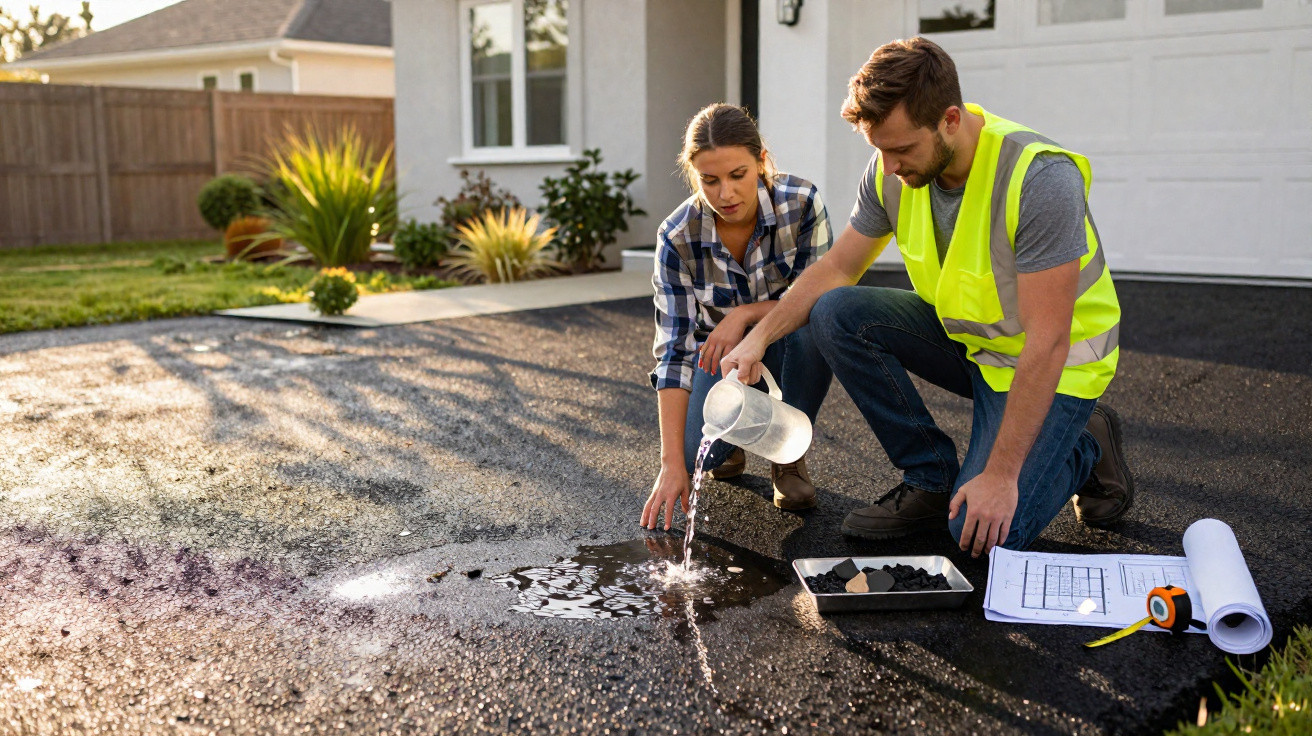
For many years, concrete was regarded as the first choice for driveways: hard-wearing, smooth and apparently indestructible. Increasingly, however, it is clear just how damaging to the climate and impractical this grey slab can be. A surface made from recycled asphalt, sometimes using plant-based binders and a permeable structure, addresses precisely these issues and suddenly makes conventional concrete look outdated.
Why traditional concrete driveways are becoming a problem
Concrete may appear sturdy at first glance, but outside the home it has obvious shortcomings. Hairline cracks, standing water that cannot drain away and a surface that retains heat at the height of summer can soon become frustrating. Rain carries dirt into the house, while every spell of frost takes its toll on the rigid slab.
There is also its carbon footprint to consider: concrete relies on cement for its strength. Producing it requires kilns operating at extremely high temperatures, generally fuelled by fossil fuels. Experts attribute roughly ten per cent of global CO₂ emissions to the cement industry. Anyone refurbishing their home for energy efficiency will eventually ask themselves whether a large, impermeable concrete surface really belongs in front of it.
Technically, too, the solution is less permanent than it may seem. Concrete:
- responds inflexibly to movement in the ground and can crack quickly;
- is difficult to repair neatly in individual sections;
- requires particularly careful preparation of the sub-base;
- completely seals the ground, preventing rainwater from soaking away.
Cost is another factor. High-quality designed concrete slabs for driveways commonly cost around 70 to 120 euros per square metre, including installation. North American comparisons even show prices of up to around 18 to 19 euros per square foot, placing them at the upper end of the scale.
Recycled asphalt surfacing: a surprisingly green option
Using recycled asphalt has long been standard practice in road construction. This principle is now increasingly being adopted in residential settings, with driveways, courtyards and parking spaces receiving a wearing course made largely from reprocessed road surfacing.
The basis is asphalt surfacing: a compact blend of aggregates such as gravel and sand, bonded together with a bitumen-based binder. The result is a durable, slightly flexible layer suitable for vehicles and pedestrians. Toxic coal tar, once used in road building, no longer has a role in modern surfacing.
How recycled asphalt is produced
For the recycled version, contractors mill off old road layers, break them down and process them into aggregate. This material is then combined with new binder to form fresh surfacing. The technical term often used is RAP, meaning recycled asphalt material.
“Reusing old road surfaces reduces the need for new aggregate, energy and transport – cutting costs and CO₂ emissions at the same time.”
In practical terms, this means:
- less material sent to landfill because old layers do not need to be discarded;
- lower energy use than producing entirely new mixes;
- shorter transport distances, as existing material remains within the region;
- more careful use of natural raw materials.
Cost, lifespan and everyday practicality
North American comparisons put driveways made with recycled asphalt at roughly 7 to 8 dollars per square foot, equivalent to around 6 to 7 euros. Concrete surfaces there can cost up to 20 dollars, representing a considerable difference.
Both options can offer a respectable service life. In ideal conditions, concrete lasts 30 to 40 years, while recycled asphalt typically lasts between 15 and 30 years. The key difference is that damage to asphalt surfaces can be repaired in sections or milled out and renewed. With concrete, a crack may mean that much larger areas have to be rebuilt, making the work costly and laborious.
Permeable surfacing and plant-based binders: less sealing, greater climate benefit
With intense rainfall and overloaded drainage networks in mind, many local authorities are reducing the amount of sealed ground surface. Some new-build developments even impose specific requirements for driveways and parking spaces.
This is where permeable surfacing comes in. It is designed so that water can pass through the wearing course and soak into the ground below. That reduces pressure on drainage systems and allows groundwater to be replenished. For homeowners, the benefits include fewer puddles, less sheet ice in winter and lower heat build-up in summer.
These surfaces typically cost around 15 to 25 per cent more to install than standard asphalt. Some products also combine this with:
- around 30 to 35 per cent recycled aggregates;
- binders from plant-based sources, which partly replace petroleum.
“Recycled content combined with plant-based binders and a water-permeable structure makes the driveway considerably more climate-friendly than a solid concrete slab.”
How homeowners can plan a recycled asphalt surfacing project
Anyone intending to replace concrete with recycled asphalt surfacing should not rely on marketing claims alone. The contractor’s experience with these mixes is crucial. Building professionals who routinely work with recycled material understand the correct aggregate grading, appropriate amount of binder and required layer thickness.
The key questions to ask a contractor
Before placing an order, it is worth examining the quotation closely. Reputable firms are transparent about how the surface will be constructed. Useful questions for the initial discussion include:
- What proportion of recycled material is planned?
- Will the wearing course be installed as permeable surfacing?
- How thick will the base course and wearing course be?
- How will the fall be formed to direct water away?
- What lifespan does the company realistically expect?
One example illustrates how substantial the differences can be: homeowner accounts state that only some of the firms they approached could confidently explain recycled content and drainage capacity. If clear answers are not forthcoming, it is better to keep looking.
Sub-base, gradients and maintenance: the practical details
Even the best mix offers little benefit if the sub-base is inadequate. Specialist contractors therefore plan several layers:
| Layer | Function |
|---|---|
| Frost protection layer | prevents frost-related heave and settlement |
| Base course | carries vehicle loads and spreads them |
| Recycled asphalt wearing course | provides appearance, grip and water management |
A slight fall is equally important, allowing rain to run off or soak into the subsoil. With permeable surfacing, water is directed into the unbound crushed-stone layer instead of remaining on the surface.
Maintenance is limited: remove leaves and dirt regularly, arrange for cracks to be sealed early where necessary, and promptly cover, absorb and remove oil or petrol spills. Compared with a delicate decorative concrete slab, the work involved remains manageable.
When is it worth moving away from a concrete slab?
Not every existing concrete surface needs to be removed immediately. However, anyone already dealing with cracks, concerned about forthcoming repairs or planning a new build can consider recycled surfacing from the outset. The change is especially worthwhile in areas with strict rules on sealed surfaces or on properties where intense rainfall causes problems.
Homeowners report that driving on a slightly resilient asphalt surface feels more comfortable than driving over rough concrete. Visually, the options range from dark, almost black finishes to lighter alternatives that are nearly gravel-like. Combined with kerbs or paving bands, they can quickly create a high-quality appearance.
What terms such as recycled asphalt and permeable surfacing actually mean
Many product names in brochures sound technical, but they often describe similar principles. In most cases, recycled asphalt means a mix containing a noticeable proportion of old road surfacing. Permeable surfaces deliberately allow water to pass through the wearing course, usually through larger voids between the aggregate particles.
Plant-based binders replace part of the conventional bitumen with materials from renewable raw resources. They do not eliminate petroleum altogether, but they improve the overall balance. When comparing quotations, homeowners should not be swayed by marketing terminology and should instead request specific figures: recycled percentage, proportion of plant-based binders, water absorption or infiltration performance.
One additional consideration is often overlooked: lighter surfaces do not heat up as intensely. This can make summer evenings outside the house noticeably more pleasant, particularly in densely built-up residential areas. Those who prefer a darker appearance must accept greater heat retention in return.
Overall, the supposedly indestructible concrete slab is losing its position as the standard choice. Anyone building or renovating today can find a robust, practical and considerably more climate-friendly driveway alternative in recycled asphalt surfacing with a permeable structure and modern binders.


Comments
No comments yet. Be the first to comment!
Leave a Comment