
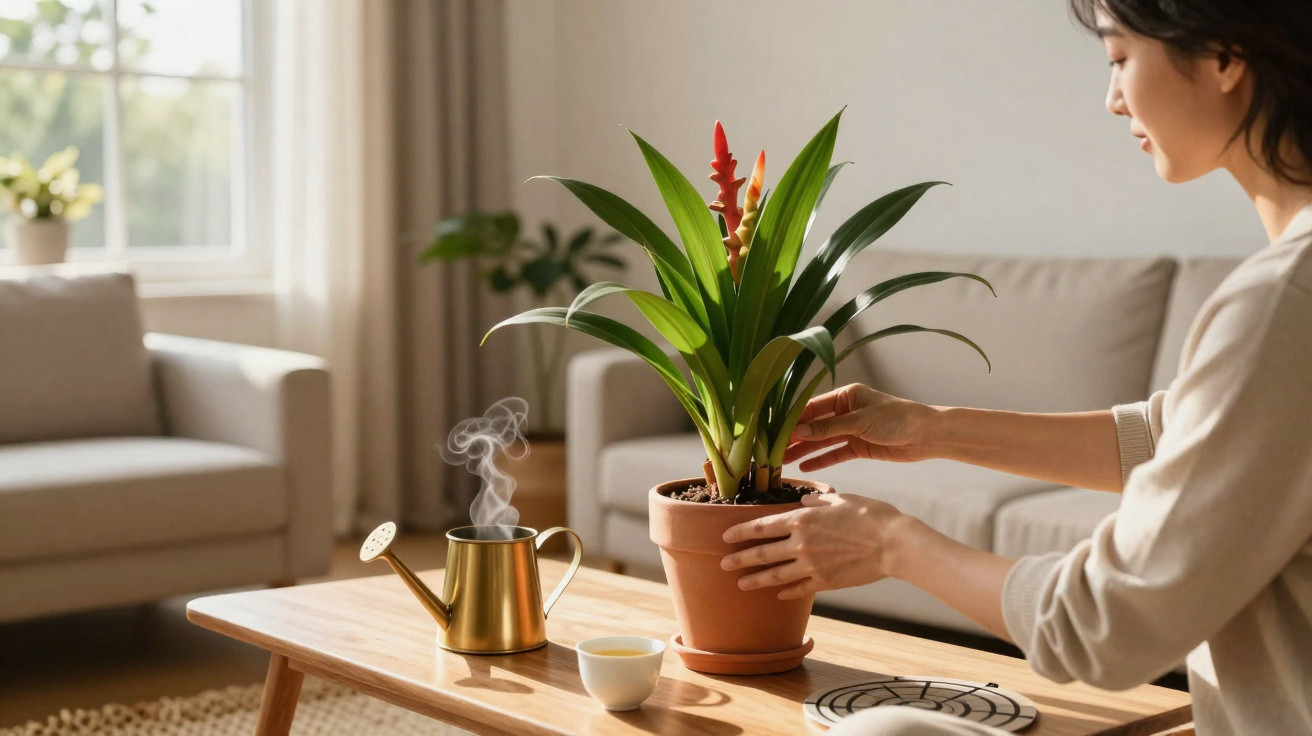
Among plants used in flats and offices, ginger as an ornamental plant is becoming increasingly common across a range of decorating styles. Once regarded solely as a spice, the rhizome is now displayed in pots, on shelves and on balconies, combining an understated look, straightforward care and associations with wellbeing, a balanced setting and even the idea of a mini vegetable garden in limited spaces.
Why has potted ginger become so popular indoors?
One key reason for the appeal of potted ginger is that its foliage stays green for much of the year. Its deep-green, lance-shaped leaves grow into thick clumps that soften more rigid spaces, including heavily furnished living rooms, narrow hallways and work areas filled with equipment.
The plant also adapts well to conditions commonly found in urban interiors, thriving in indirect or filtered light. This makes it easy to place a pot on a windowsill, in a bright kitchen, on a covered balcony or beside office windows, without the need for prolonged direct sunlight.
Watch a video from the YouTube channel Pomar e Horta em Vasos about growing potted ginger indoors and how its lush foliage has become a major decorating trend:
https://www.youtube.com/watch?v=F0B6bUjscb4
How is ginger connected with Feng Shui and everyday wellbeing?
Within the context of so-called everyday Feng Shui plants, ginger is regarded as a choice associated with vitality and renewal. Plants that grow strongly and have well-shaped leaves are often linked to the notion of energy in motion, helping a room feel more dynamic and fresh.
Many interpretations advise placing ornamental ginger at strategic points around the home, where it can benefit from light and air circulation. It is often used to define transitions and establish balanced areas, such as:
- balconies or indoor planters, creating a gentle link between outdoor and indoor areas;
- near the front door in a well-ventilated position, to symbolise a welcome;
- beside windows, on stands or worktops, where it benefits from diffused light and ventilation.
How do you care for ornamental ginger indoors?
To grow ginger as an ornamental plant indoors, only a few basic measures are generally needed, making it appealing to beginners. It prefers indirect brightness, light and free-draining soil, and regular watering that keeps the growing medium slightly moist without leaving it waterlogged.
Choosing pots with drainage holes helps prevent excess water around the roots. Light feeding, either organic or formulated for foliage plants, keeps it growing vigorously. Propagation is also uncomplicated: a healthy piece of rhizome can produce new pots in a short time, making cultivation affordable and appealing for anyone wishing to add more greenery at home.
What additional uses and current trends involve ornamental ginger?
Although it is mainly decorative, ginger in indoor settings retains its culinary and medicinal heritage. Many households keep more than one pot: one intended to complement the décor and another for the occasional harvesting of rhizomes. It can therefore provide a focal point of colour in a living room or office while also bringing everyday life closer to the concept of a home vegetable garden in a small space.
The growing use of ginger as an ornamental plant also aligns with compact homes, minimalist schemes and greater attention to mental health. It adapts to medium or small pots, suits styles ranging from industrial to rustic, and can be paired with other low-maintenance plants. Together, they create green corners that serve as visual pauses and offer a simple daily reminder that nature and practicality can be brought indoors.


Comments
No comments yet. Be the first to comment!
Leave a Comment