
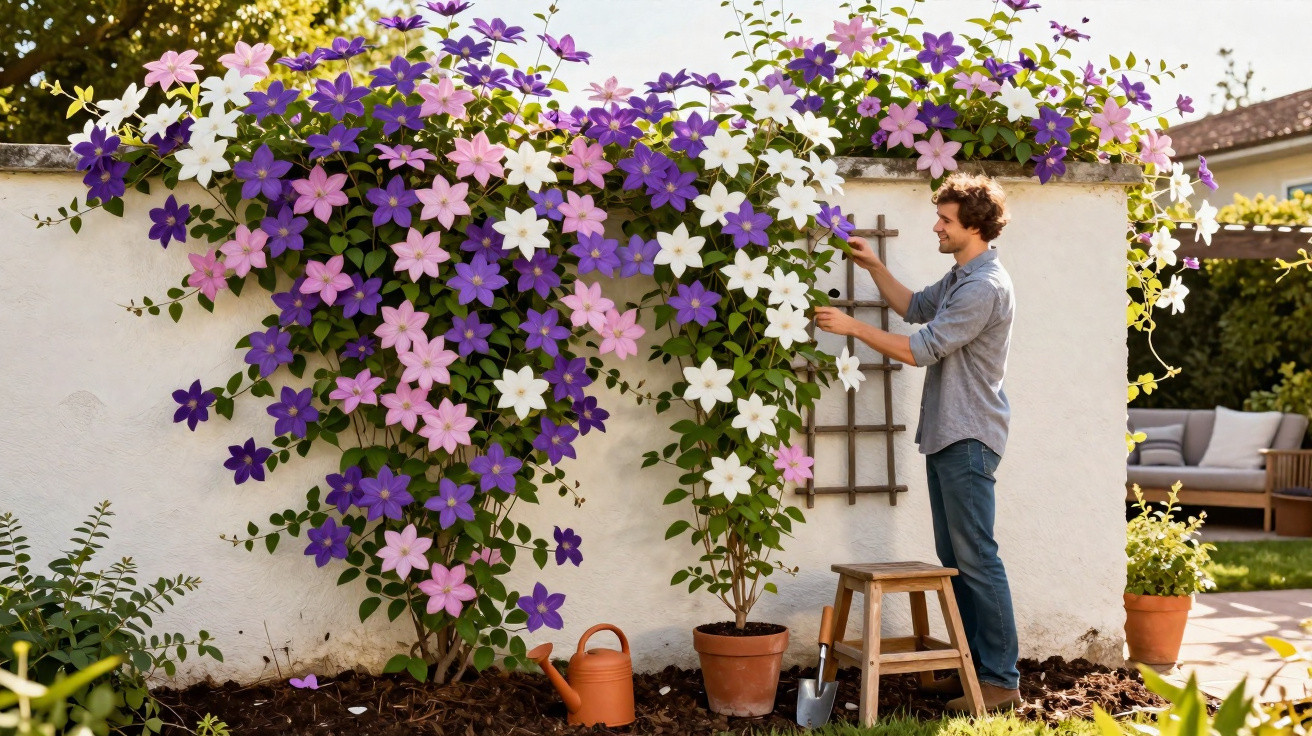
Rather than waiting years for a hedge to fill out or installing costly screening panels, more and more amateur gardeners are choosing a climbing plant that can conceal entire façades within just a few seasons. With huge flowers, modest care requirements and exceptional growth speed, it has gone from being an insider tip to an understated favourite at many garden centres.
The “queen of climbers”: why gardeners rely on Clematis
The plant in question is Clematis, commonly known in English as old man’s beard. Gardening websites call it the “queen of climbing plants” for good reason. It climbs with elegance, creates spectacular veils of flowers and is equally suitable for a compact urban balcony or a large country garden.
“Anyone who wants flowers quickly without constantly reaching for the pruning shears will sooner or later choose Clematis.”
Depending on the variety, the plant can gain several metres in a season. Species such as Clematis viticella grow by two to four metres in one year, while vigorous montana types can cover an entire house wall within a few years. Flowers range from delicate pastel shades to deep purple; some are star-shaped, while others resemble exotic giant blooms.
Another advantage is that many varieties are remarkably frost-hardy. Certain viticella types tolerate around minus 20 degrees and below. This makes Clematis suitable for many regions, from a sheltered courtyard to a more exposed country garden.
Where the XXL climbing plant makes the greatest impact
Clematis is a genuine problem-solver for anyone wanting to disguise bare areas in a garden or on a balcony. Typical places to use it include:
- plain garage or house walls
- unattractive wire or chain-link fences
- pergolas and covered walkways
- climbing arches at an entrance or beside a path
- trees or old shrubs that need a visual lift
Because many varieties require very little ground space, the plant also works well in small gardens. A narrow strip of soil in front of a fence is often enough for it to climb upwards and create fullness overhead.
Position and soil: the well-known foot-and-head rule
Gardeners often sum up Clematis requirements in one sentence: “Feet in the shade, head in the sun.” In practical terms, this means:
| Part of the plant | Requirement |
|---|---|
| Root area | Shaded or partially shaded, cool and evenly moist |
| Climbing growth | Sunny to partially shaded, with plenty of light for abundant flowering |
| Soil | Deep, humus-rich, well-drained and not prone to waterlogging |
A position roughly 20 to 30 centimetres in front of a wall or fence is ideal. A training wire, wooden trellis or metal grid can be installed there. Its fine shoots cling on using leaf stalks, which grip especially well around thin canes or wires.
Planting Clematis: how to establish a curtain of flowers
The best time to plant is spring or autumn, when the soil is still, or once again, warm and retains moisture more effectively. Container-grown plants from a nursery can be planted in summer too, although they will then need considerably more water.
Step-by-step planting guide
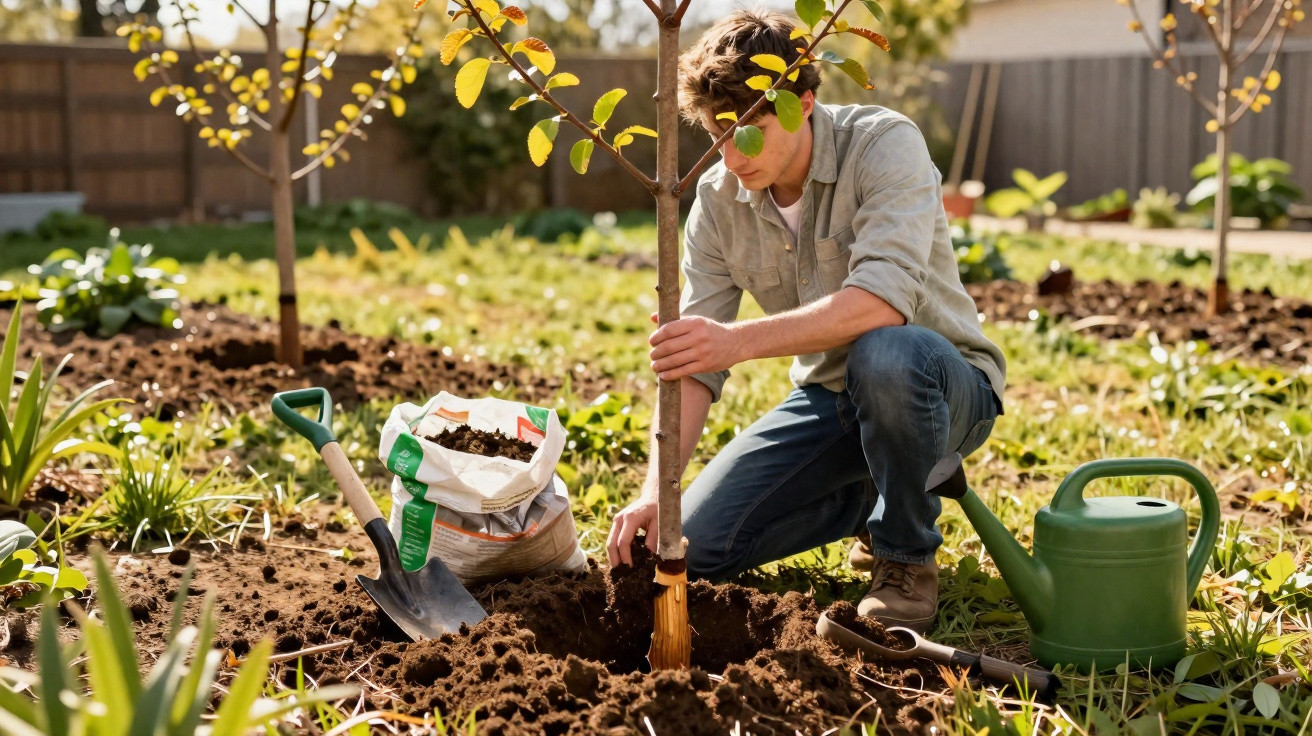
- Dig a planting hole twice the size of the pot and loosen the soil at the base.
- Mix the garden soil with compost or well-rotted farmyard manure.
- Set the plant in at a slight angle towards the support structure.
- Plant the root collar five to twenty centimetres deep – deeper than for many other perennials.
- Water thoroughly and mulch the soil around the plant, for example with bark mulch or grass clippings.
Planting more deeply serves a purpose: Clematis develops additional bud reserves on the lower shoots. If the growth above ground later dies back from frost or suffers fungal damage, the plant can reliably reshoot from below.
Water and nutrients: little effort, great results
During the first two years, the water supply is the main factor determining success or failure. Rather than watering a little every day, it is more beneficial to water generously every few days, allowing moisture to reach a depth of around 30 centimetres. This encourages strong root development.
“Water less often but thoroughly – it makes Clematis more resilient in the long term.”
Once established, the plant needs little more than occasional rainfall in a normal summer, plus a deep watering during prolonged dry spells. One application of potassium-rich fertiliser in late winter or very early spring, supplemented with compost, is sufficient. Potassium strengthens the shoots and promotes flower formation.
Care and pruning: almost effortless
Many amateur gardeners hesitate over Clematis because they have heard about complicated pruning groups. In reality, most people manage with one simple principle: spring- and summer-flowering plants are pruned differently from species that flower on one-year-old shoots.
A simple pruning approach for beginners
- Vigorous summer-flowering varieties (for example viticella): Cut back to around 30 to 40 centimetres in late winter and remove dead wood. The plant will produce strong new growth and flower on fresh wood.
- Spring-flowering varieties (for example montana): Thin out lightly immediately after flowering and shorten where needed, so that the house wall or neighbouring property is not overgrown.
Over the course of the year, it is usually enough to guide a few shoots and tie them in loosely. As the stems break easily, use soft twine and avoid pulling it tight.
A wealth of flowers from spring to autumn
Another attraction of Clematis is its enormous range of varieties. With a little planning, it is possible to enjoy flowers for almost the whole gardening season. Practical examples include:
- Spring: Montana varieties with countless small, usually pale flowers and vigorous growth.
- Summer: Large-flowered hybrids with spectacular individual blooms, often in pink, violet or white.
- Late summer to autumn: Viticella types, which flower reliably even during hot periods.
Combining several varieties creates a changing display over many months. In smaller gardens, one robust summer variety and one autumn variety on a pergola or climbing arch are often enough to produce the effect of a continuous curtain of flowers.
Tips for common problems
Clematis wilt is well known: shoots suddenly turn black and die back. Although it looks dramatic, it does not have to mean the end of the plant. If it has been planted deeply, it will usually regrow from the base.
You can help prevent it by:
- ensuring an airy position that is not too densely planted;
- avoiding soil that remains permanently wet;
- keeping the root area shaded and cool;
- choosing more robust species such as viticella where the site is challenging.
Slugs are fond of young Clematis shoots. Paying attention during the first few weeks after planting, checking gaps in masonry and, where necessary, putting out barriers or traps will protect the fresh growth effectively.
Strong companions: plants that work well with Clematis
Clematis becomes especially interesting when it is not climbing alone. Combining it with climbing roses is popular: the rose provides fragrance and a green framework, while Clematis adds colourful splashes of bloom on top. Evergreen climbers such as ivy or climbing spindle can also form a backdrop over which the old man’s beard can grow.
For the root area, perennials such as lady’s mantle, cranesbill or hostas are suitable. They shade the soil, keep it cooler and at the same time conceal the sometimes rather bare lower section of the climber.
Who benefits most from the XXL climbing plant
Anyone taking on a garden for the first time or greening a balcony needs plants that forgive mistakes and make an impact quickly. This is precisely where Clematis excels: it grows rapidly, rewards gardeners with striking flowers and remains easy to manage with a few straightforward rules.
People with limited time also benefit. Once planted properly, the plant only needs occasional attention. One annual prune, occasional watering in dry weather and a little fertiliser in late winter are enough to provide an impressive, almost low-maintenance curtain of flowers by the front door for years.

Comments
No comments yet. Be the first to comment!
Leave a Comment