
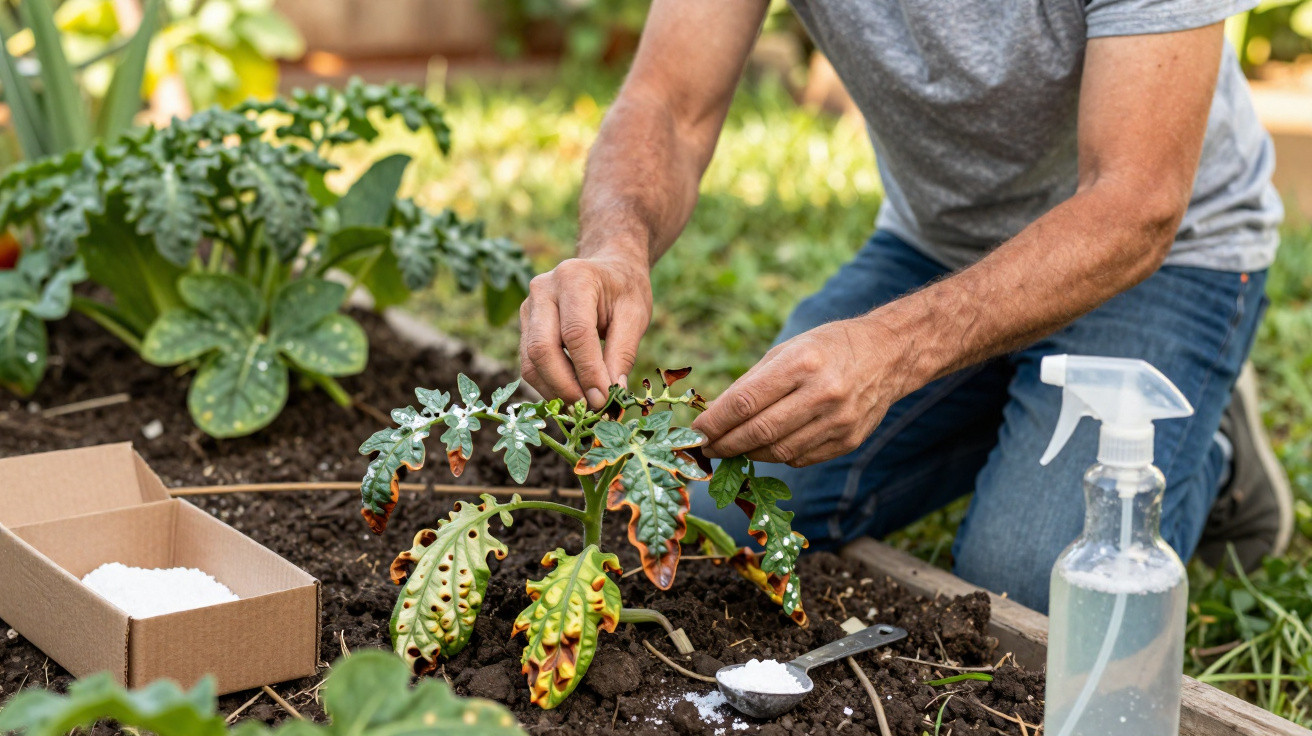
It sounds ideal: an inexpensive, supposedly harmless baking-soda solution for fungi, weeds and pests, promoted on forums, YouTube and WhatsApp groups. Yet what begins as an ecological alternative to conventional plant-protection products can cause a chemical shock in a vegetable garden – leaving scorched leaves, yellow tomatoes and soil that remains stressed for weeks.
The dream of a “natural” all-purpose garden remedy
Anyone keen to avoid toxic sprays in the garden can quickly turn to home remedies. One white powder from the kitchen cupboard, baking soda, has generated considerable hype in recent years. It is said to whiten teeth, absorb odours, clean grout – and control fungal diseases on roses, cucumbers and courgettes.
Countless recipes circulate on social media: a spoonful of baking soda, a little soap and a dash of oil, then shake vigorously – and the “organic spray” is ready. Many amateur gardeners believe this keeps them on the safe side because they are not using a conventional plant-protection product.
“Natural” does not automatically mean gentle in the garden – particularly for sensitive leaves and the soil.
That is precisely where the mistake lies. Something that causes people little harm and is useful around the home can affect delicate plant tissue and soil organisms very differently. A lettuce leaf is not a bathroom tile.
How a popular recipe brought my vegetable garden to a standstill
It started with a familiar problem: powdery mildew. Many gardeners recognise the typical white coating on courgettes, pumpkins, cucumbers and roses. Rather than choosing an approved fungicide, increasing numbers of amateur gardeners are following supposedly “gentle” online recipes.
One especially widespread mixture is roughly as follows:
- 1 litre of water, often rainwater
- 1 teaspoon of baking soda from the kitchen cupboard, around 5 g
- 1 teaspoon of liquid soap, often black soap
- 1 tablespoon of vegetable oil
The mixture is shaken thoroughly and sprayed generously over the entire plant – on both upper and lower leaf surfaces, often in bright weather so that it will supposedly “work properly”.
At first, the approach appears successful: the white spots diminish slightly and the coating seems less dense. The unpleasant surprise, however, often only emerges a few days later.
Scorched leaf edges, limp plants and dead buds
Common consequences of an overly concentrated treatment include:
- brown, dry leaf margins
- leaves that appear stiff and brittle
- shrivelled tips on tomato and courgette leaves
- rose buds that draw in or drop off
- sudden wilting even though the soil is moist
Visually, this can resemble a heatwave or a dry spell – except that the soil still contains enough water. This is where the baking soda’s hidden effect becomes apparent: it affects not only the leaves, but also the soil.
What baking soda really does chemically
Behind this seemingly harmless white substance is a sodium-based salt. It is unproblematic in the household, but at higher levels it becomes a significant source of stress in the garden.
Salt shock on the leaf surface
If the solution is too strong or applied across the whole plant, the salt concentration on leaf surfaces rises abruptly. This has several effects:
- the leaves’ protective waxy layer is damaged
- cells around the leaf edges die, creating brown patches
- moisture is drawn from the leaf tissue, so the plant looks dried out
The supposed cure can very quickly become a mild but effective “burner” – especially for young, sensitive plants.
Hidden stress in the soil
Anything that does not remain on the foliage drips into the ground. The sodium does not simply disappear there. Rain does not wash it out completely, and some remains in the root zone.
The underground consequences are as follows:
- the soil becomes saltier and holds water more tightly
- roots struggle to take up water even when the soil is moist
- the plant experiences a form of “internal drought”
The pH level also changes, with the soil tending to become more alkaline. Iron, magnesium and phosphorus then become less available. A typical sign is yellow leaves whose veins remain green – a classic symptom of nutrient deficiency, even when there is actually enough fertiliser in the soil.
At the same time, soil organisms are thrown out of balance. Earthworms, fungi and bacteria that create a crumbly soil structure and drive nutrient cycles react sensitively to rising salt levels.
Is there a safe way to use baking soda, or should it be avoided altogether?
Baking soda does not need to be condemned completely. Used at a very low concentration and only on affected areas, it can indeed help against powdery mildew, because the fungus does not tolerate a slightly alkaline film on the leaf surface well. In the garden, however, the line between “helpful” and “harmful” is extremely narrow.
The maximum level recommended by specialists
Trial series and practical testing provide fairly clear guidelines:
- no more than 1–2 g of baking soda per 1 litre of water, roughly half a teaspoon
- only a few drops of soap as a wetting agent, with no added dash of oil
- use a fine mist and spray only affected areas
- treat early in the morning or late in the evening, never in the midday sun
- leave at least 7–10 days before the next application
Anyone repeatedly spraying during a dry summer will allow sodium to build up in the soil – and this is where long-term damage begins. Using “just a little too much” may not be obvious initially, but plants become weaker week by week.
Gentler alternatives for powdery mildew and more
After bad experiences with baking-soda solutions, many gardeners switch to milder methods. Practical examples include:
- Milk or whey: mix about 1 part milk with 9 parts water and spray it regularly onto vulnerable leaves. The microorganisms and compounds it contains support natural defences.
- Space between plants: tight spacing encourages humid air and therefore fungal diseases. Giving plants more room allows foliage to dry faster.
- Watering correctly: water the root area wherever possible, rather than the leaves. Evening “showers” over foliage are a feast for fungal spores.
- Mulching: a layer of straw, grass clippings or bark mulch regulates moisture and temperature, putting plants under less stress.
- Plant-strengthening products: liquid feeds made from nettles or horsetail can improve plants’ defences over the long term.
Those who prevent disease have less to “put out” later – and are less likely to be tempted to apply hastily mixed home remedies.
Why the “natural = harmless” misconception is so dangerous
The boom in garden home remedies has much to do with mistrust of the chemical industry – an understandable reaction when headlines report resistant pests or residues. But that mistrust can quickly create a new imbalance: anything from the kitchen is automatically regarded as gentle and safe.
This is exactly why it is worth looking more closely. Salt, vinegar and highly concentrated alcohol are all “natural”, yet can be extremely dangerous in the garden when used in larger quantities. The same applies to the popular baking soda: a blessing in baking, but an underestimated cause of salt stress in a vegetable bed over time.
Practical rules of thumb for next summer in the garden
To protect a bed from similar damage, follow a few straightforward principles:
- Always assess online recipes critically, especially those with high dosages.
- Test new mixtures on just a few leaves first, wait several days and watch for a reaction.
- If an infestation is severe, favour proven, approved products.
- Put more effort into prevention and strengthening plants than into emergency spraying.
- Keep an eye on water balance and soil quality, not merely the visible leaves.
Simple measures can achieve a great deal, particularly in a home garden: airy plant spacing, resilient varieties, mulching and moderate fertilising. Those who focus on these basics will need to reach for “miracle remedies” far less often – whether they come from a chemical factory or the kitchen cupboard.
Comments
No comments yet. Be the first to comment!
Leave a Comment