
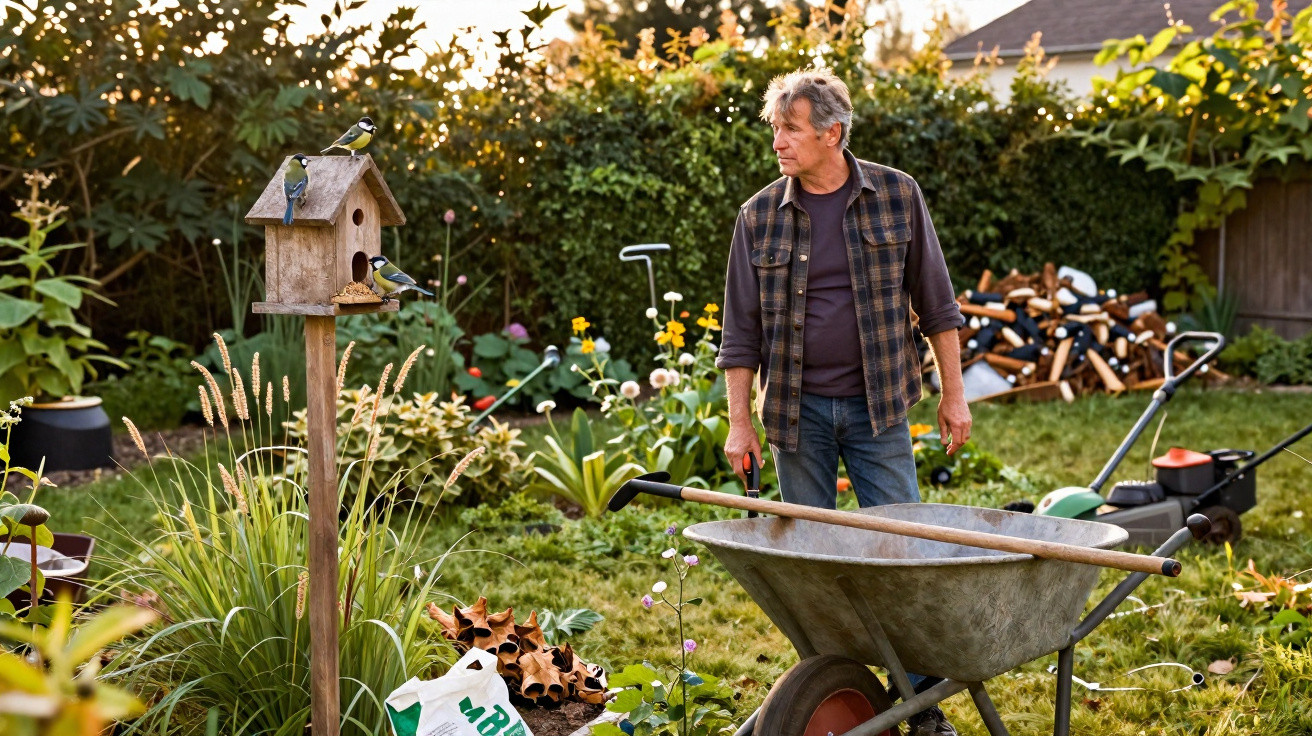
Many keen gardeners tend their gardens with great care – yet, without meaning to, they drive away the very birds they hope to attract.
Tits, blackbirds and goldfinches: anyone with a garden often wants it to be filled with birdsong and fluttering wings. However, common gardening routines in spring and summer can make life difficult for precisely these animals. The good news is that by reconsidering a few habits, you can turn your garden into a small haven for birds and insects almost effortlessly.
Five common mistakes that drive tits out of the garden
1. Pruning in spring: completely the wrong timing
Many people cut back shrubs, hedges and trees just as everything outdoors begins to come to life. It may seem sensible, but it can be disastrous for birds. Conservation organisations advise avoiding work on trees and hedges wherever possible from mid-March until the end of August.
During this period, songbirds look for dense branches, cavities and sheltered forks in which to build nests, lay eggs and raise their young. Any major pruning can:
- expose or destroy nests
- frighten adult birds into abandoning their clutch
- remove vital cover from cats and crows
Anyone who “tidies up” their hedges in spring often unknowingly takes away the nursery of tits, blackbirds and other birds.
Better still: postpone substantial pruning until late autumn or winter, and even then remove only what is genuinely necessary.
2. A perfectly close-cut lawn: not paradise, but a desert
A meticulously short lawn is regarded as the pride of many front gardens. Yet for insects and birds, it resembles a green concrete surface. Short grass provides hardly any flowers, no shelter and very little food.
Tall grasses and seemingly insignificant flowers such as dandelions and daisies are small supermarkets for pollinators and insect larvae. Butterflies, solitary bees and countless other small creatures gather there – exactly the food that families of tits depend on.
- Longer grass blades help prevent the soil from drying out
- Wildflowers provide nectar and pollen
- More insects mean more food for young birds
A practical approach is to mow only paths, seating areas and a small section of the lawn closely. Cut the rest less often and allow parts of it to grow freely. Just a few square metres of “mini meadow” can bring noticeably more life into the garden.
3. Ruthlessly removing “weeds”: a mistake with consequences
What many people instinctively pull out is essential to the survival of numerous species. Seed heads from wild plants provide food, leaves act as nurseries for butterfly caterpillars, while hollow stems offer insects winter shelter.
Typical wild plants that gardeners often fight have surprisingly valuable roles:
- Ribwort plantain: used by insects and considered a traditional home-remedy plant
- Stinging nettle: an important food plant for the caterpillars of many butterflies
- Amaranth and species of wood sorrel: provide seeds and leaves for animals – and in some cases for the kitchen too
Anyone who removes every “weed” empties the menu for garden birds – and takes away their hiding places at the same time.
Rather than weeding relentlessly, it is worth deliberately leaving certain areas wilder. An “untidy” strip along a fence can become a lifeline for birds and insects.
4. Constantly digging over the soil: the hidden damage
The upper layers of soil are full of life: earthworms, woodlice, beetle larvae, springtails and countless microorganisms work there around the clock. They break down plant matter, aerate the soil and make nutrients available.
Regular deep digging or rotavating disrupts this entire system:
- small creatures die or lose their habitat
- bird food literally disappears into the soil
- soil structure suffers, so water drains away less effectively
Gentler approaches work better: hoe lightly only where planting is actually needed, mulch beds instead of digging them over, and leave fallen leaves in corners. Tits benefit too, as they like to probe loose soil for worms and larvae.
5. Refilling bird feeders in spring: well meant, poorly timed
Helping birds at a feeder in winter makes sense. In spring, though, many bird species change their diet: insects are now the priority because young birds need animal protein to grow.
Continuing to offer large quantities of seed in March can, in some circumstances, distract birds from hunting insects. It is far more useful to create features that provide natural food:
- naturally growing perennials with flowers and seeds
- hedges with berries in late summer and autumn
- undisturbed areas of leaves and dead wood for insects
The best “feeding place” for tits is not a dispenser from the garden centre, but a living garden that is as wild as possible.
One thing that remains useful in spring is a shallow water source, ideally with stones or a gentle slope so birds can drink and bathe safely.
The simple approach: put the tools down and let nature work
Anyone who intervenes less from mid-March to the end of August will almost automatically create a small paradise. Between flowerbeds, the patio and the play area, much can simply be allowed to grow. Flowers, buds, wild herbs and self-seeded plants then form a closely connected system.
- Birds find nesting sites and plentiful insect food
- Butterflies, grasshoppers and beetles return
- The garden stays moist for longer and copes better with heat
There is another benefit: mowing and cutting less saves time, money and stress – while giving you a nature documentary right outside your door in return.
What should you do about young birds or hedgehogs in the garden?
A young bird on the ground: intervene or leave it alone?
In early summer, partially fledged young birds are often seen sitting on the ground. Many have already left the nest but cannot yet fly properly. In many cases, their parents continue feeding them on the ground.
- No car or cat nearby: usually, simply leave the bird undisturbed
- Danger from a road or cat: carefully place the bird in nearby shrubbery
- Maimed or unconscious animals: contact a wildlife rescue centre or vet
The thought, “It is alone, I have to save it”, is often misleading. Adult birds are frequently watching from nearby and merely waiting for people to move away.
Hedgehogs in the garden: observe rather than feed
A hedgehog wandering around at night is behaving entirely normally. It is searching for insects, worms and other small creatures. Many people mean well and put out food – often unsuitable items such as milk or bread. Both harm the animal.
More helpful measures include:
- dense hedges and piles of leaves for shelter
- avoiding poison in the garden
- open gaps in fences so hedgehogs can move between gardens
Only hedgehogs that are injured, lethargic or staggering about during the day need help from a specialist organisation.
Why every garden matters for biodiversity
Studies show that populations of many common bird species have declined dramatically for decades, especially in towns and residential areas. Sealed surfaces, sterile gardens and chemical products are causing refuges to disappear.
Every square metre of wild garden space acts like a small nature reserve in the urban jungle.
A wildlife-friendly garden does more than help tits and blackbirds. It cools the surrounding area on hot days, stores water during heavy rain and locks carbon into plants and soil over the long term. Anyone willing to embrace a little “controlled untidiness” therefore gains twice over: more life outside the window and a measure of climate protection right behind the house.
To get started, a small change is often enough: stop cutting every part of the lawn short, prune a hedge later, or leave a pile of leaves where it falls. The response comes faster than many expect – sometimes one season is all it takes before tits are suddenly sitting where there was once only silence.


Comments
No comments yet. Be the first to comment!
Leave a Comment