
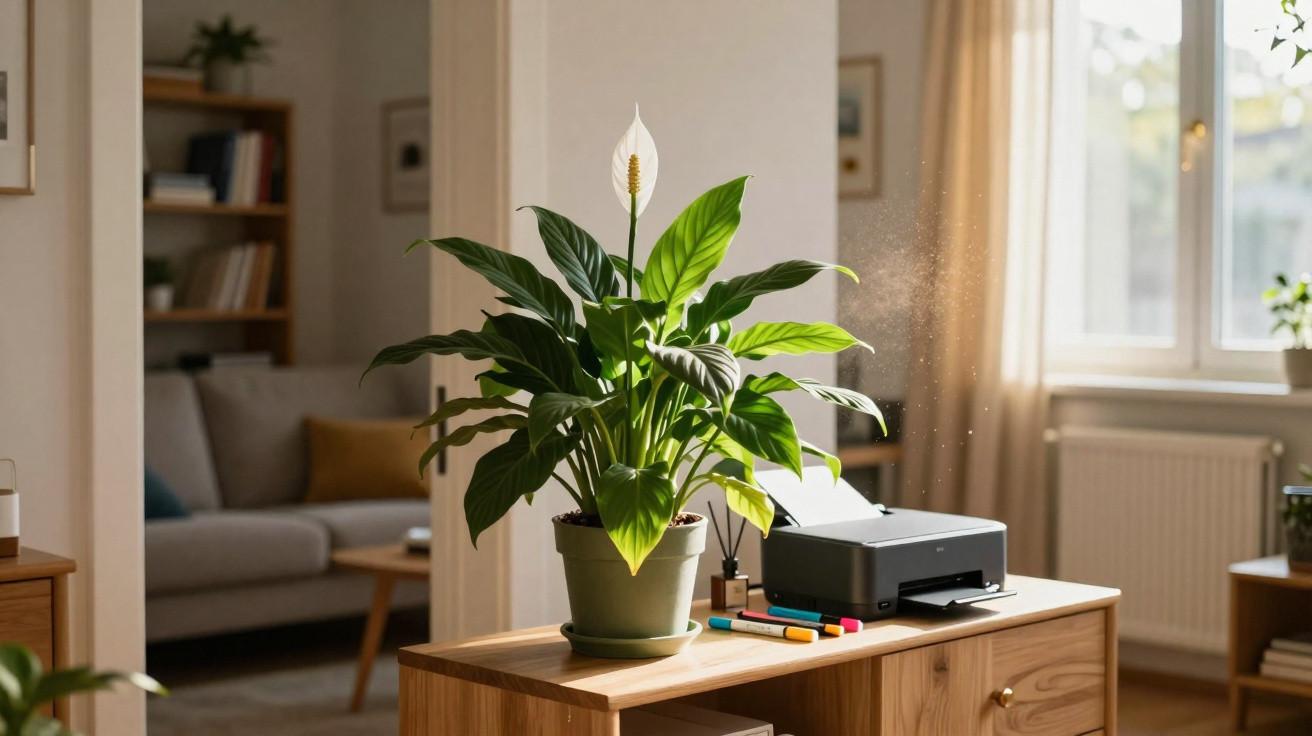
A particular houseplant can, however, make a surprisingly big difference – provided it is placed in the right spot.
We spend most of daily life indoors, where air can often be more polluted than it is beside a busy road. Paints, furniture, carpet adhesives, cleaning products and even printers release substances that can cause headaches, tiredness and irritation. Certain houseplants act as compact biological filtration systems. One in particular stands out: it captures pollutants, improves the indoor climate and can even reduce unpleasant odours – as long as it is positioned appropriately.
Why houseplants do more than simply look attractive
Houseplants absorb gases that cannot be seen or smelled through their leaves and roots. They use some of these substances in their metabolism and convert the remainder. At the same time, they release water vapour, which raises humidity levels slightly.
Many rooms are up to one hundred times more polluted than outdoor air – carefully placed plants can noticeably reduce this invisible burden.
Many people notice the result after just a few days: drier eyes are less of an issue, throats feel less scratchy and headaches may occur less often. Those who work from home extensively or spend long evenings in the living room can benefit in particular.
The quiet star: which plant suits problem areas
Indoor-air research repeatedly identifies several species that are especially hardy and effective at absorbing airborne substances. In homes affected by odours and “stuffy air”, one group has proved reliable time and again: plants with large, deep-green leaves, such as the peace lily (Spathiphyllum), devil’s ivy (Epipremnum) and dragon tree (Dracaena).
The peace lily in particular is regarded as an all-rounder. It copes well with typical indoor air, filters various pollutants and continues to grow well even in semi-shaded positions.
- Large leaf surfaces: provide plenty of contact area with room air
- Consistent evaporation: slightly raises humidity and reduces irritation
- Relatively easy to care for: ideal for people without “green fingers”
- Odour-reducing: many people complain less about stale or musty air
Everyday pollutants: their sources and the plants that can help
Tobacco smoke, adhesives and solvents in living spaces
Smoking indoors or having carpet fitted with strong adhesive introduces benzene and other volatile substances into the air. Ivy, snake plant (Sansevieria) and dragon tree are classic choices for this type of exposure. Through their leaves, they absorb and break down part of these substances.
These plants are best placed:
- in the living room beside a sofa or armchair
- near windows, where air circulates
- not directly in the path of smoke, but slightly to one side
Many people report less pressure in their head and an easier feeling when breathing when plants remain in the room permanently.
Gases from furniture and paint: hidden exposure in the bedroom
New wardrobes, chipboard, varnishes and textiles can release substances, including formaldehyde, for months. This is particularly problematic in the bedroom, where we breathe in and out for several uninterrupted hours.
Commonly used options include:
- cycads and kentia palms
- peace lilies
- ficus varieties with plenty of leaves
They should be positioned where air moves gently past them: not in a direct draught, but not in a completely stagnant corner either. Regular short, intensive ventilation remains essential; plants serve as an additional natural barrier.
Dry heated air: why large leaves are invaluable in winter
Central heating and air conditioning substantially reduce humidity. Mucous membranes dry out, skin feels tight and infections can take hold more easily. Species such as dumb cane, gerbera and Boston fern release comparatively large amounts of water vapour into the air.
A handful of large houseplants can raise humidity in an average-sized living space by several percentage points – without electricity or noise.
A position near a window is ideal, not directly above a radiator but just beside it. Watering regularly and occasionally misting the leaves with water intensifies the effect further.
Cleaner home office: plants for office emissions and screen stress
Device emissions, pens and printers: what is really in the air around a desk
The home office brings additional sources into play: printers, photocopiers, marker pens and solvents from inks. They release ozone, fine particles and various gases. Trailing plants such as devil’s ivy or philodendron, along with robust dragon trees, have proved useful here.
Practical office placement:
- one pot directly beside the printer or beneath the shelf holding pens
- a trailing plant on top of a cupboard, hanging down at the side
- a larger plant close to the door, where air is constantly moving
Many companies that have introduced green areas in open-plan offices report fewer sickness absences and better concentration.
Waves and radiation: what a cactus beside the screen really does
The famous “cactus by the monitor” contains both truth and myth. Like every plant, it absorbs substances from the air and releases water vapour. It does not block the direct magnetic fields produced by screens. Nevertheless, a cactus on the desk can be worthwhile: it needs very little care, adds a splash of colour and serves as a reminder to look away from the screen from time to time. This reduces stress and ultimately benefits performance.
The right location delivers the best results
Where the problem areas are in the home
The highest exposure usually occurs in very specific locations. Anyone wanting to place their main houseplant where it will be genuinely useful should first look at these areas:
| Room | Typical exposure | Useful position for a plant |
|---|---|---|
| Living room | Tobacco smoke, carpet adhesive, scented candles | Near the sofa, beside a window, away from direct radiator heat |
| Bedroom | Emissions from furniture, mattress and wall paint | A daylight-lit corner opposite the bed |
| Kitchen | Cleaning products, cooking odours, grease | On a windowsill, well away from the hob and steam |
| Bathroom | Cleaners, high humidity | A shelf or corner with indirect light |
| Home office | Printer emissions, solvents from marker pens | Beside the printer, on the edge of the desk or a sideboard |
The single “wonder plant” works most effectively when it is located where the principal source of exposure is, rather than placed randomly somewhere in the room.
Keeping odours under control: where plants can help with bad air
Odours from food, shoes, rubbish and textiles tend to build up especially in kitchens, hallways and living rooms. Put your peace lily or another large-leaved plant:
- in the entrance area, where shoe smells and outdoor air meet
- beside the bin, but not directly above it
- close to the dining table, so that remnants of food odours in the air can be broken down more quickly
Plants do not mask smells in the way air fresheners do; instead, they gradually absorb components from the air. The effect builds over time when the plant remains healthy and grows well.
Care, risks and sensible combinations
Keeping an air-filtering houseplant effective
For this green helper to do its job, it needs to remain healthy. A few basic rules are often enough:
- Wipe dust from leaves regularly, otherwise air exchange is obstructed.
- Avoid waterlogging in the pot, as it can cause roots to rot.
- Meet the plant’s light requirements: peace lilies and devil’s ivy prefer bright conditions but no harsh midday sun.
- Repot every few years so the roots have room to spread.
Anyone with children or pets should check whether a plant is toxic before buying it. Some popular species irritate mucous membranes if eaten or can lead to stomach problems. In that case, the pot should be kept out of reach of curious hands and paws.
When several plants make sense – and what they achieve together
One large plant can noticeably improve how a room feels. Several species can have a stronger effect, especially when they bring different qualities: one moisture-loving species for improved humidity, a hardy filtering type such as a dragon tree for pollutants, and a trailing plant for visual calm.
Anyone who deliberately creates a small “green cluster” in a problem area often achieves more than they would with an air purifier running continuously – while also saving electricity.
This also makes it possible to benefit from the psychology of living spaces: many people relax more quickly when they see greenery. During stressful periods, this helps lower the pulse and makes breathing calmer. Combined with regular ventilation, restrained use of harsh cleaners and sensible furniture choices, this gradually creates a room in which you can genuinely recover – rather than merely function.



Comments
No comments yet. Be the first to comment!
Leave a Comment