
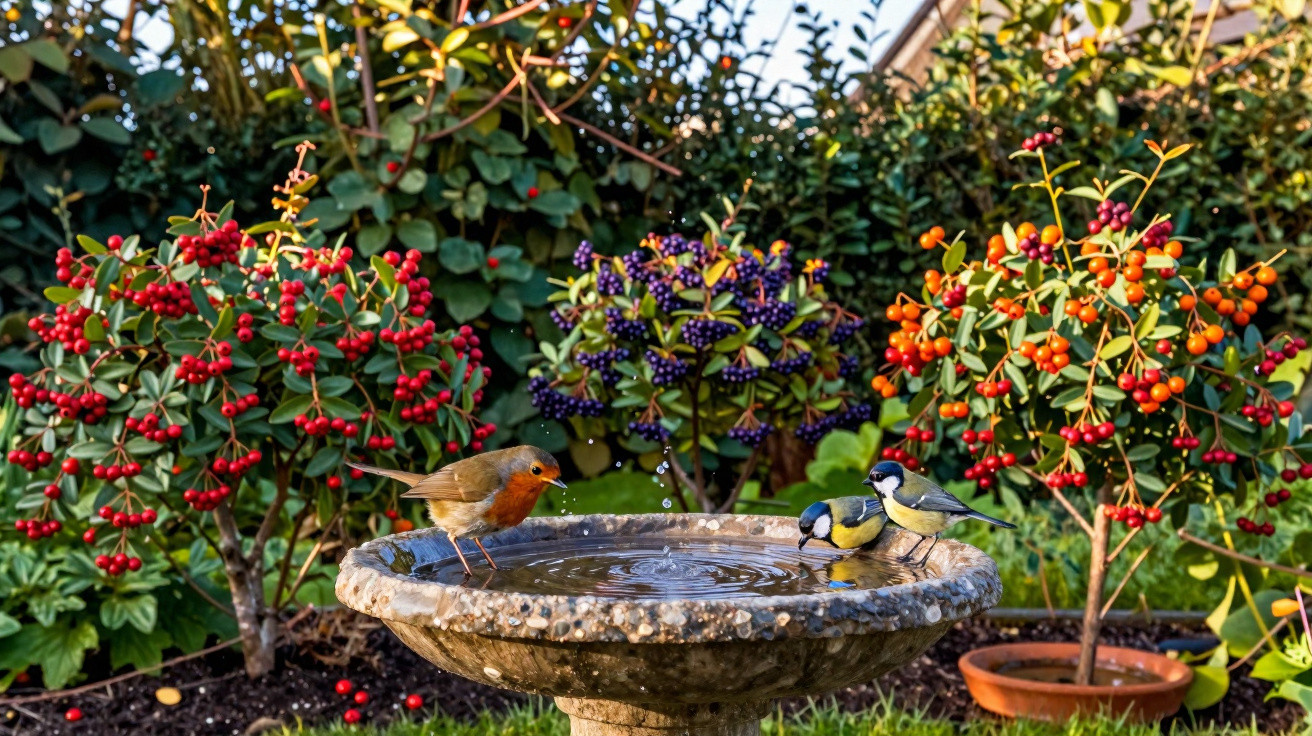
Many garden owners instinctively turn to artificial feeders, hoping to attract more feathered visitors. This often works in the short term, yet the lasting results can be surprisingly limited. Anyone who wants tits, robins and sparrows to visit their garden regularly needs a different approach: less plastic and fewer seed dispensers, more living, natural habitat.
Why conventional feeding stations often fall short
Bird feeders seem convenient: buy a seed mix from a garden centre, hang it up and wait. On some days they are bustling with activity, while on others they are completely deserted. The reason is simple: birds need more than a temporary buffet.
“Garden birds only remain where they can find food, shelter and water together – throughout the entire year.”
A bird feeder cannot replace this three-part provision. At worst, birds may become accustomed to an artificial food source that can disappear from one day to the next when the feeder is forgotten or left empty. There are further drawbacks too:
- Feeding areas can spread disease-causing germs if they are not cleaned properly.
- They can attract more cats and other predators, which can catch prey there easily.
- Limited seed mixes do not meet the needs of every species.
A much better option is to make the garden itself into a “bird table”, with berries, insects, seeds, hiding places and water.
Three shrubs that turn your garden into a natural bird buffet
Why berry-bearing shrubs appeal to tits and robins
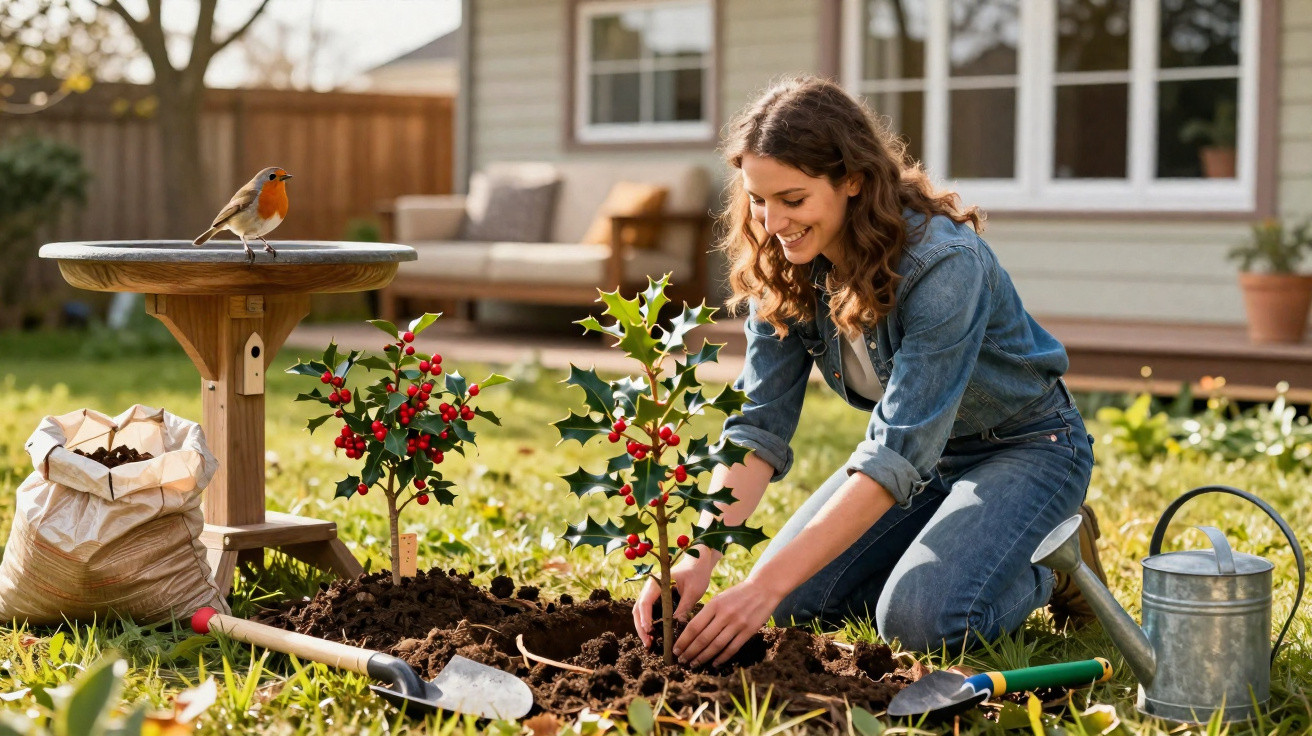
Rather than repeatedly buying costly bird food, it is worth making a one-off investment in three carefully chosen fruiting shrubs. These plants provide food for years, free of charge and precisely when birds need it most.
Birds eat berries straight from the branches. They peck, hop and fly on, incidentally spreading seeds around the garden. Over time, this modest cycle gradually transforms a sterile patch of lawn into a thriving habitat.
“Three suitable berry-bearing shrubs can do more for the variety of birds in your garden than ten feeders.”
Suitable species for UK gardens
Different shrubs suit different conditions. One possible combination for many gardens is as follows:
| Shrub | Benefit for birds | Features in the garden |
|---|---|---|
| Rowan | Plenty of berries in late summer and autumn | Attracts thrushes, blackbirds and starlings |
| Elder | Dense clusters of fruit, with flowers that also attract insects | Provides food from summer through to autumn |
| Blackthorn or dog rose | Thorny branches protect nests, while fruit is available in winter | Highly valuable for insects and small mammals |
If there is not enough room for larger shrubs, choose more compact varieties such as cotoneaster, barberry (thorny and useful as protective cover) or crab apple. The key point is that plants produce flowers, berries or seeds over the course of the year and are left as natural as possible.
Without secure shelter, many birds will stay away
A dense hedge is a vital protective barrier
Food on its own is not enough. Garden birds are constantly alert to danger. Birds of prey, magpies, cats and martens are never far away. A handful of bare ornamental shrubs provides very little cover. Birds need an area that predators cannot easily enter.
“A dense, slightly untidy corner of hedge feels like a fortress to birds – and merely like a wild patch to neighbours.”
Ideally, leave a hedge, shrubbery or small thicket untouched in one corner of the garden. Avoid drastic pruning and overly “clinical” tidiness. Thorny plants such as bramble, hawthorn and blackthorn are especially effective at protecting nests and roosting places.
Winter is the real test for your garden
During summer, it is easy to overlook how dependent birds are on shelter. In winter, however, a dense area protected from the wind can be life-saving. Among interwoven branches, they find:
- Protection from freezing wind and damp conditions
- Hiding places from predators active at night
- Peaceful roosting spots during extended cold spells
Anyone who clears away every leaf and neatly shapes every hedge in autumn removes this refuge. A deliberately “imperfect” part of the garden may look a little untamed, but it greatly supports biodiversity, not just birdlife.
No water, no life: the quiet power of a shallow dish
Drinking, bathing and feather care – why water matters so much
When thinking about helping birds, many amateur gardeners focus first on food rather than water. Yet a reliable water source is just as important to birds. They drink from it, bathe in it and clean their feathers so that they remain insulating and aerodynamic.
“A simple shallow dish of fresh water often attracts more species than an expensive automatic feeder.”
A wide, low-sided dish is ideal, allowing birds to stand securely. It should be fairly shallow so that no bird can drown; 5 centimetres is usually more than enough. A few small stones or a brick placed in the water provide extra footing.
How to maintain a bird bath with minimal effort
Keeping a water source hygienic does not require much work:
- Change the water every day in summer and every few days during the rest of the year.
- Scrub the dish regularly with a brush to remove algae and droppings.
- Top it up with lukewarm water in winter, but do not use chemicals to prevent freezing.
Positioning it slightly above ground level, for instance on a tree stump or wall, also lowers the risk of attacks by cats.
The ideal combination: food plants, cover and water
How an ordinary garden becomes a lively refuge for birds
A garden becomes truly inviting only when berry-bearing shrubs, a dense hedge and a water source work together. Individual measures help, but the real benefit comes when all three elements are present.
One possible basic plan:
- Set aside an area at the back of the garden that can remain a little wilder.
- Plant at least three fruiting shrubs there, choosing varieties with different ripening periods.
- Stop cutting back an existing shrubbery so severely and instead allow it to become denser.
- Place a shallow water dish within sight of the house, slightly raised and easy to reach.
Those who follow this approach will notice new visitors as the seasons change: insect-eating birds among spring blossom, young birds learning to bathe in summer, berry lovers in autumn, and hungry seed-eaters searching for the final fruits in winter.
More life in the garden: practical advice and overlooked effects
What else you can do for birds
Shrubs, hedges and water form the foundation. Anyone wishing to go a step further can achieve a great deal with small changes:
- Allow part of the lawn to become a flower meadow, with wild plants that support insects.
- A pile of dead wood creates habitat for insects and therefore food for tits.
- Avoid chemical pesticides so that the food chain remains intact.
Many garden birds feed their young mainly on insects rather than seeds. A natural garden therefore also improves breeding success indirectly.
Risks to keep in mind
Where many animals live, new challenges arise as well. Anyone attracting birds should consider a few points:
- Cats nearby: bells on collars reduce hunting success, while safe escape routes provide additional help.
- Window panes: silhouettes or patterns stop birds flying into them.
- Too much food: if you also provide supplementary feeding, do so sparingly and keep feeding areas clean.
The basic principle is this: ideally, the garden should function without human assistance. Plants supply food, dense areas offer protection and water supports vitality. Any occasional extra help simply strengthens that effect.
In this way, a green space develops step by step that is not only attractive, but also full of life, sound and movement. Eventually, you may wonder how empty the garden once seemed despite all those artificial bird feeders.
Comments
No comments yet. Be the first to comment!
Leave a Comment