
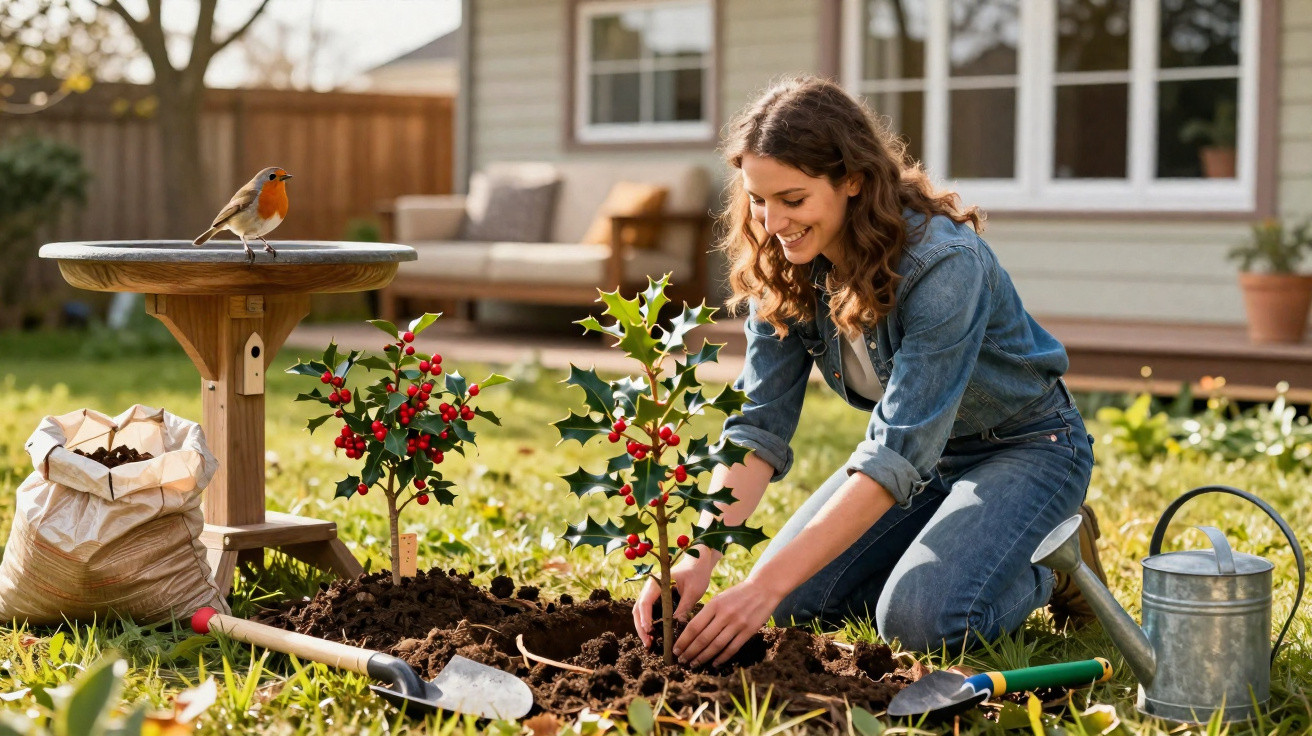
If you love birds, you may often put out fat balls and scatter seed during winter. However, there is a far more elegant, natural option that can even cost less over time. By choosing one smart plant, you can lay the foundations in spring for a thriving bird haven in autumn and winter.
Why March is the crucial time for bird lovers
Ideal conditions for strong roots
Early spring is the best planting period for new shrubs. The soil is thawing, the sun is beginning to warm it and rainfall is regular. These mild conditions allow young plants to develop a deep, resilient root system.
Planting now gives a shrub a head start before summer. Its roots can grow downwards undisturbed before the first heatwave arrives. A shrub planted in a border during March will cope with dry spells in July much better than one planted only in May or June.
Plant in March and you will provide native birds with a well-stocked winter table – without having to refill it every day.
Plant now, harvest in winter – for the birds
For a berry-bearing shrub to be laden with fruit in autumn, it needs time: time to establish, put on new growth, flower and form fruit. Delaying planting removes precisely those valuable weeks. The result is fewer berries, or none at all, meaning less food for birds when insects disappear.
Those who act now are planning like professional gardeners: the shrub can settle into its spot, build up strength and turn into a natural bird buffet by late autumn. This can be vital through winter for resident birds such as blackbirds, robins and tits.
The unsung stars: berry-bearing shrubs with thorny protection
Firethorn and holly – berries like red fireworks
Shrubs with decorative berries are particularly well suited to a bird-friendly garden. Two especially reliable choices are:
- Firethorn (Pyracantha) – usually with vivid orange or red berries
- Holly (Ilex) – with deep-red fruit and glossy, dark foliage
Both shrubs carry dense clusters of fleshy berries in late autumn. They are primarily attractive to us, but for many bird species they are a valuable source of energy. The fruit provides sugars, vitamins and minerals at a time when caterpillars, beetles and spiders are scarcely available.
Even a small garden, or simply a front garden, can benefit greatly from these shrubs. A single well-established firethorn can support several bird species at the same time during winter.
A thorny fortress against cats and other predators
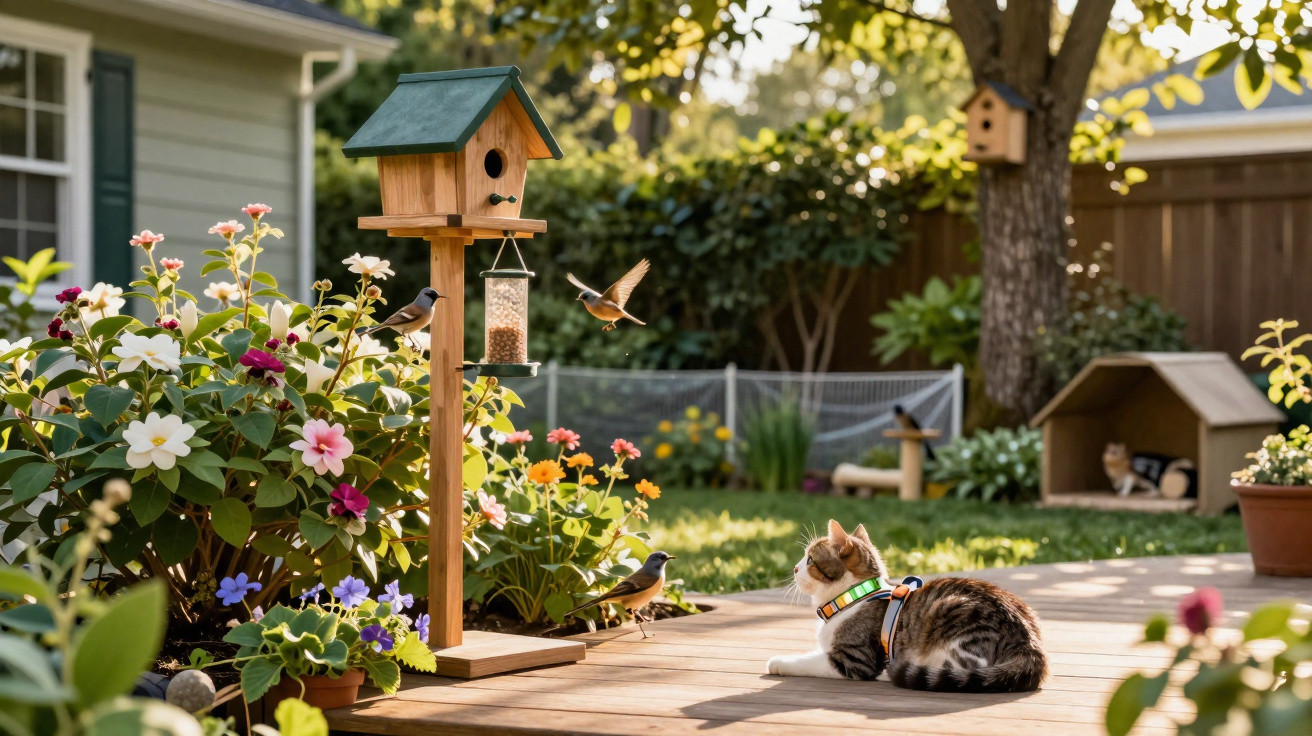
Firethorn and holly offer more than berries alone. Their foliage forms a dense framework that can be extremely prickly. This is a major advantage for birds, which can hide among the branches while cats, martens and other predators struggle to get through.
The thick evergreen foliage also provides shelter from wind, screening and protected nesting sites. Cats will think twice before attempting to climb through this “thorny thicket”. The result is a safe refuge where birds can feed, sleep and breed undisturbed.
A single thorny berry shrub can provide birds with food, shelter and a nursery all in one.
How to plant correctly: a step-by-step guide to a bird magnet
The right position and a strong start in the soil
First, consider the location. Firethorn thrives in sun or partial shade and also works well as a hedge or trained against a house wall. Holly copes well with partial shade and prefers humus-rich soil that does not become too dry.
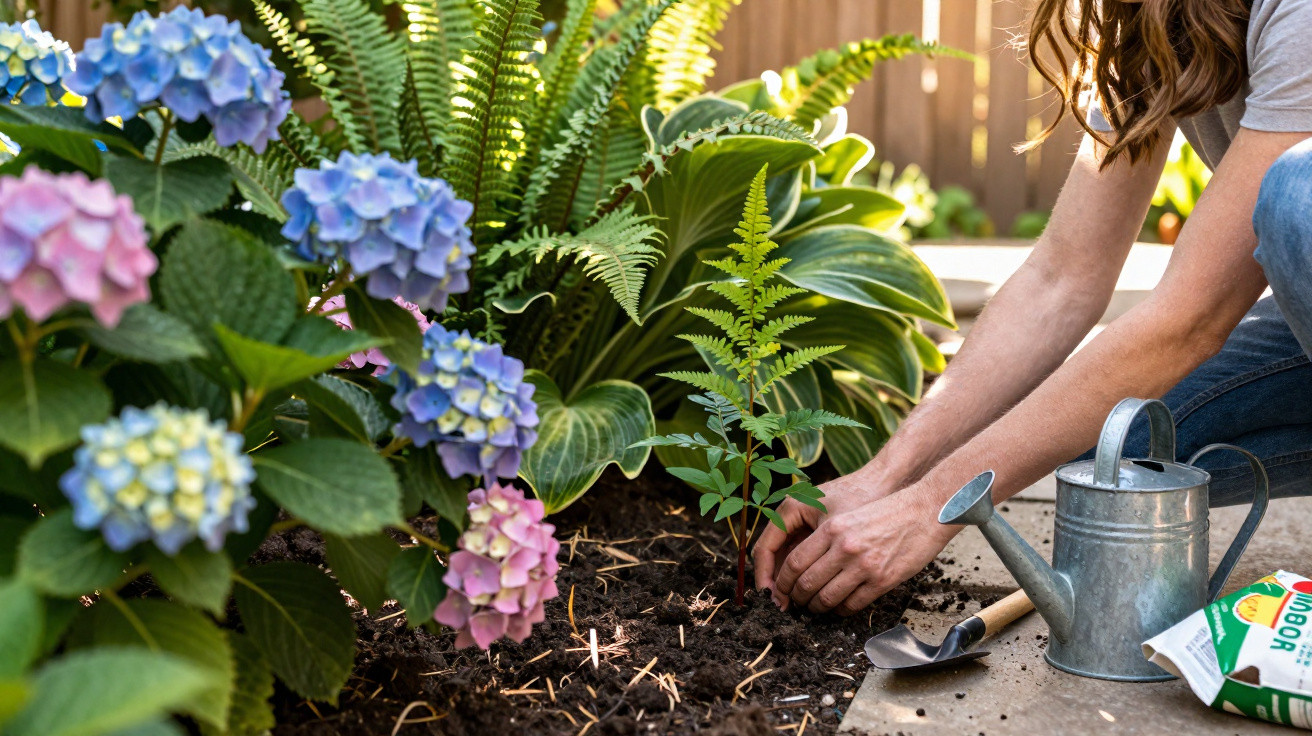
- Dig the planting hole: Make it at least three times as wide and deep as the root ball.
- Loosen the soil: Use a garden fork to break up compacted earth around the edge of the hole.
- Add compost: Mix mature garden compost or well-rotted farmyard manure into the excavated soil.
- Position the plant: Set the shrub so the top of the root ball sits just level with the soil surface.
- Refill and firm the soil: Avoid gaps so that no air pockets remain in the ground.
Chemical fertiliser is unnecessary here. A generous addition of compost provides everything the plant needs during its early stage while encouraging healthy soil life, including earthworms.
Watering and mulching properly – its lifeline
Immediately after planting, the shrub needs plenty of water. The soil should be thoroughly soaked so that any remaining air pockets disappear and the roots make contact with the surrounding soil.
A layer of mulch around the base will then help. Suitable materials include:
- dried leaves
- grass clippings from the most recent mow, left to dry first
- woodchips or pieces of bark
- immature, coarse compost
The mulch layer limits evaporation, keeps the soil moist for longer and suppresses weeds that would compete with the shrub for water and nutrients. As it breaks down, the mulch also improves soil structure over the long term.
When the rest of the garden sleeps, bird season begins
Winter food that remains even after snowfall
November is when berry-bearing shrubs take centre stage, as many perennials have faded and trees lose their leaves. While lawns look grey and borders appear bare, firethorn and holly are hung with hundreds or thousands of colourful fruits.
Unlike loose bird food, which can be blown away or spoil in wet grass, these berries stay firmly attached to the branches. They continue to offer food even during frost and heavy snowfall. Birds actively seek out the bushes and return to them again and again.
Robin TV from the living room
Plant the shrub within sight of your living room and winter brings genuine live entertainment. Rather than streaming, you can watch “Bird TV” from the window:
- Robins hop beneath the branches, picking up berries that have fallen.
- Great tits and blue tits move from branch to branch and peck at the smaller fruits.
- Blackbirds and thrushes squabble over the most densely packed clusters.
Many amateur gardeners report seeing significantly more bird species in their gardens after planting such a shrub. A previously quiet corner becomes a lively meeting place and a small mood-lifter on gloomy winter days.
A well-positioned berry shrub turns an ordinary garden into a retreat for wildlife – and a daily nature documentary for people.
What else matters when choosing a variety
Native varieties, safety and space requirements
Choosing native or site-appropriate varieties provides even greater support for local wildlife. Many wild birds have adapted to particular berry species. At the garden centre, it is worth checking the variety description: “suitable for birds”, “bird-friendly” or “for hedge planting” are useful indicators.
It is also important to plan for the space required. Firethorn can quickly develop into a substantial hedge. Where space is limited, prune it regularly and train the shrub on a trellis against a house wall. Holly usually grows more slowly, but can also reach an impressive height over time.
| Shrub | Position | Benefit for birds |
|---|---|---|
| Firethorn | Sun to partial shade | Lots of berries, dense thorny protection |
| Holly (Ilex) | Partial shade, preferably humus-rich soil | Evergreen cover, red berries in winter |
Risks, care and useful combinations
The berries of many ornamental shrubs are mildly poisonous to people but are well tolerated by birds. If you have young children, bear this in mind and explain that berries on a bush are off limits. Pets generally leave the berries alone anyway.
Maintenance needs remain manageable: water on dry days during the first two years, while natural rainfall is often sufficient later on. Light pruning after the fruiting period keeps the plant in shape and encourages fresh growth.
The garden becomes even more appealing when several elements are combined: a berry-bearing shrub, a small insect hotel, an area of leaves providing an overwintering spot for small creatures and a shallow dish of water together create a small but complete ecosystem.
So, anyone planting a firethorn or holly in March is planting much more than a shrub. An ornamental plant becomes a lively gathering place – for birds, insects and people who want to enjoy their garden not only in summer, but in the depths of winter too.
Comments
No comments yet. Be the first to comment!
Leave a Comment