
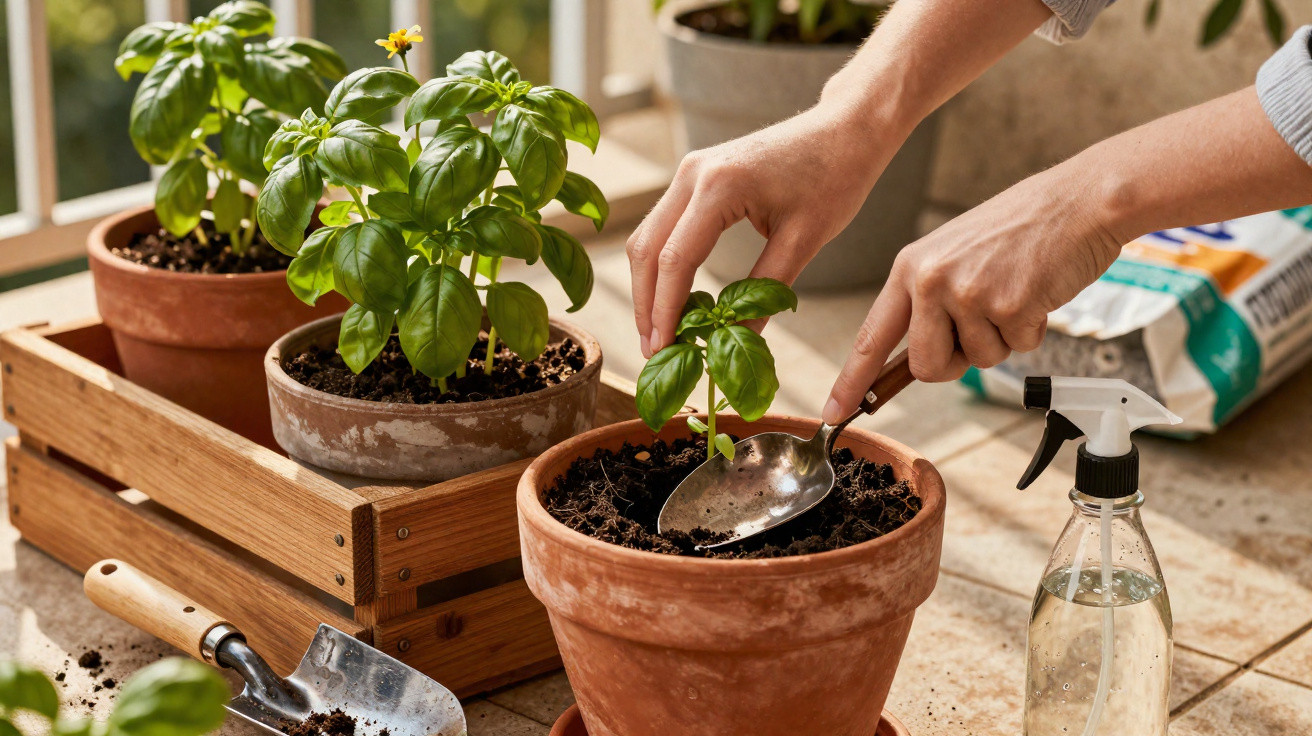
What may initially look like forgetfulness has long become an established trick in many homes. Balcony and indoor gardeners deliberately push old spoons into flowerpots to help their plants. It may sound odd, but the idea is prompting plenty of debate in forums and gardening groups. What is behind it, and is it actually worthwhile?
Why put a metal spoon in a flowerpot?
The basic idea comes from something many people already know: using metal in the garden is nothing new. Some gardeners place copper coins in pots or beds to deter slugs or improve water drainage. A spoon in a flowerpot follows the same improvised logic: repurposing an everyday object to influence the pot’s miniature ecosystem.
The method could hardly be simpler. Push an uncoated metal spoon, with no varnish or decorative finish, into the compost. The handle may point upwards or downwards; what matters is that the metal touches the growing medium. However, in very small pots or around exceptionally fine roots, a spoon can get in the way or damage roots, so many gardeners choose other methods in those cases.
“An old spoon in a pot acts like a mini experiment: little effort, a small intervention and a potentially noticeable result – at least from the perspective of hobby gardeners.”
Benefits plant enthusiasts hope for from a spoon in the compost
A minor mineral source for depleted potting compost
Potting compost is a limited system. Nutrients are washed out each time a plant is watered, while the growing medium becomes depleted if it is not repotted regularly. This is where the spoon theory comes in: moisture may cause the metal to react very slightly, releasing trace elements into the surrounding compost.
With old spoons made from steel or mixed metals in particular, many people hope that minute amounts of minerals reach the root zone and support steadier growth. In theory, this could result in plants that grow a little more evenly, especially if they are rarely repotted or fed.
In realistic terms, though, any effect is likely to be at trace level. Stainless steel and aluminium release very little, and there are currently no scientific studies demonstrating a clearly measurable growth benefit. Most reports from gardeners describe only subtle differences, if any effect can be identified at all.
A physical obstacle and disruption for pests
The second potential advantage is more tangible: the spoon can disrupt small pests. Positioned near the base of the plant, it creates an obstacle in the compost. Ants, tiny larvae and other crawling visitors have to make their way around it.
There is also the reflective aspect. Some insects and crawling pests avoid shiny surfaces. A bare metal spoon placed in the upper layer of compost may confuse them, particularly on sunny balconies. It will not turn the pot into a fortress, but it may make conditions slightly less convenient for certain pests.
- The spoon interrupts routes immediately around the root collar.
- Reflections may disturb pests that avoid light.
- There are no poisons or sprays involved, only a mechanical effect.
- It is particularly relevant in small balcony gardens, where any infestation is quickly noticed.
How balcony and indoor gardeners can use the spoon trick safely
Anyone wanting to try it should not simply force the nearest spoon into the compost. A few basic precautions can help prevent harm to the roots and the plant.
Choosing a suitable spoon
An old stainless-steel teaspoon or coffee spoon is most commonly used. It hardly rusts, has no paint on it and is sturdy. Silver-plated cutlery and brightly painted spoons are less suitable, as their coatings can flake off and end up in the compost.
| Spoon type | Suitability | Note |
|---|---|---|
| Stainless-steel teaspoon | well suited | use it clean and without decoration |
| Aluminium spoon | conditionally suitable | only for ornamental plants, not vegetables |
| Silver-plated cutlery | less suitable | coatings may come away |
| Brightly painted spoons | unsuitable | paint particles do not belong near plant roots |
Finding the right spot in the pot
Rather than placing the spoon directly beside the stem, it is better positioned close to the edge of the pot. This is less disruptive to the roots and leaves the plant more room. One spoon is entirely sufficient for an average houseplant pot.
Insert it deeply enough for the bowl of the spoon to sit securely within the rooted area, but do not force it harshly through the root ball. If in doubt, ease the spoon in carefully, turn it slightly and stop as soon as you feel resistance.
Plants for which the trick is more suitable
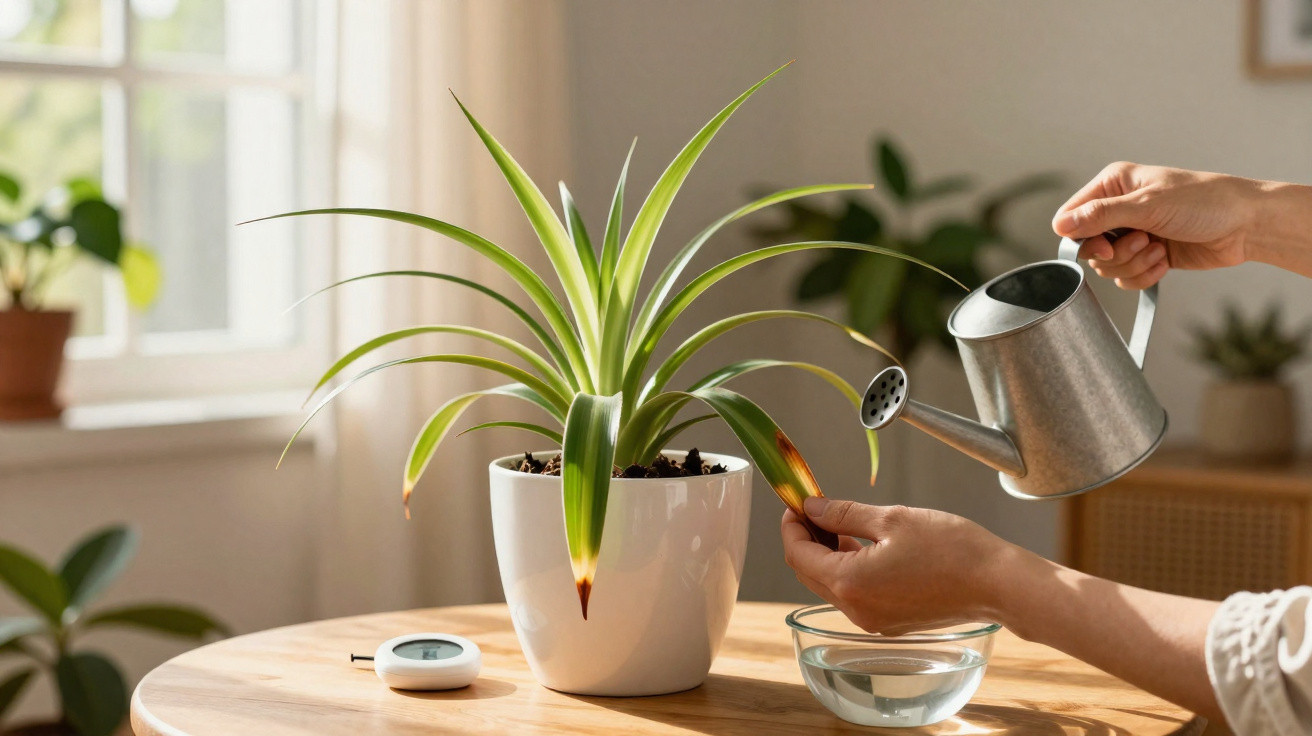
Many gardeners deliberately limit this method to ornamental plants, including ficus, spider plants, monstera, balcony geraniums and traditional container plants. People tend to be more cautious with potted herbs, salads and vegetables because they do not want to risk introducing additional metal elements into the growing medium, even though the effect is likely to remain minimal.
The spoon test is best suited to plants that rarely receive fresh compost and already have a robust root system. Delicate species with extremely fine roots, including some orchids, are much less appropriate.
How to test whether a metal spoon works for your own plants
If you want to see rather than simply believe, it is best to set up a small comparison experiment. It takes little effort and offers far more insight than trying the method with only one pot.
A typical approach for hobby gardeners is:
- Select two plants that are as identical as possible in pots of the same size.
- Place a metal spoon in one pot and leave the other without one.
- Water, feed and position both plants in exactly the same way.
- Over several weeks, monitor growth, leaf colour, pests and root behaviour.
A careful comparison will usually reveal quickly whether the spoon makes a noticeable difference, or whether factors such as light, water and compost have a far greater influence.
Risks and limitations of the spoon method
Although the spoon trick seems harmless, several points need consideration. In very wet pots, certain metals can react more quickly, which may eventually introduce unwanted substances into the compost. For edible plants grown in pots, this creates an uncertainty that many people would simply rather avoid.
There is another concern: forcing a spoon carelessly into the root ball and severely damaging roots weakens the plant rather than helping it. Yellow leaves, pauses in growth and rot around the root collar may then be mistaken for an “effect” of the metal, when mechanical damage is actually to blame.
Why conventional plant care still makes the biggest difference
For this reason, most experienced gardeners regard the spoon as an interesting extra rather than a miracle cure. Anyone genuinely aiming to strengthen plants over the long term should focus above all on sound basics: good-quality compost, an appropriately sized pot, suitable watering and timely repotting.
Especially in small urban flats, plants are often left permanently in containers that are too cramped. A spoon cannot solve this fundamental lack of space. When a pot is refreshed regularly and supplied with new compost, most species do not need a “metallic supplement” to remain healthy.
Combining the spoon with other balcony gardening tricks
Those who enjoy experimenting can pair the spoon with other straightforward measures. Many gardeners combine it, for example, with a thin surface layer of mineral material such as fine gravel or expanded clay. This makes it harder for fungus gnats to lay eggs and also improves the appearance of the pot.
Another interesting option is to combine it with a small dose of natural fertiliser. While the spoon may contribute traces of metal, organic fertilisers provide a broad range of nutrients. The plant then receives a stable basic supply, while the spoon remains a small additional experiment.
Ultimately, a metal spoon in a flowerpot is above all an intriguing balcony experiment. Anyone who stays curious, watches their plants closely and does not treat every gardening trend as a miracle solution can have a go without burying the entire cutlery drawer.
Comments
No comments yet. Be the first to comment!
Leave a Comment