
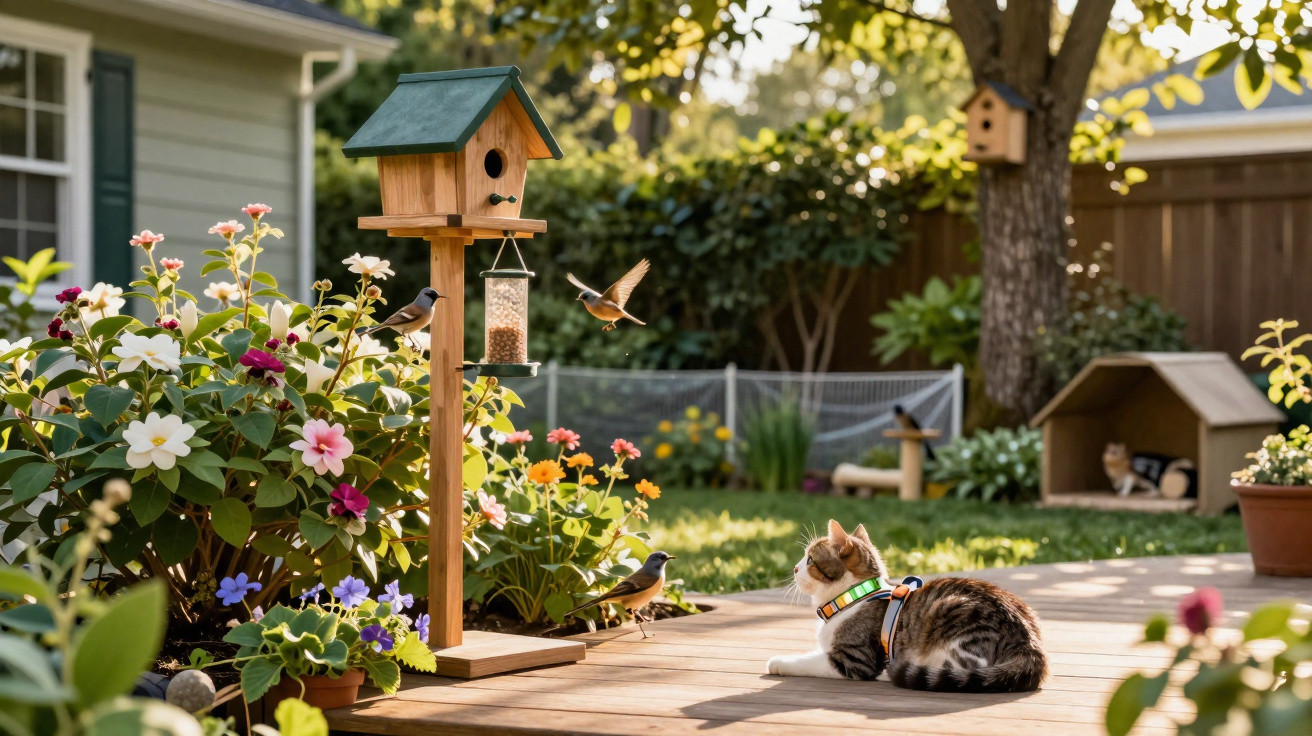
Anyone who loves cats while also worrying about blackbirds, tits and robins will know the dilemma well. Pet cats are charming and self-assured – but they are also relentless hunters. The conflict is not impossible to resolve, however: a few carefully chosen changes can make a garden safer for birds while allowing the cat to retain its territory.
When a cuddly cat becomes a bird hunter
Millions of pet cats across Europe have easy access to the outdoors. Research from France, Great Britain and Switzerland shows that, together, they kill tens of millions of songbirds each year. They do not do so because they are hungry, but because they are driven to hunt. The figures come as a shock to many owners – especially after finding the first bird on the doormat.
Cats are predators regardless of how full their food bowl may be. Their instinct runs deep. They pose a particular risk during spring and early summer, when young birds are fledging and many species nest low in hedges or on the ground, making them easy prey. Anyone hoping to encourage biodiversity in the garden must therefore consider both sides: the cat’s behaviour and the garden’s layout.
“Anyone who plans their garden wisely removes opportunities for the cat without taking away its freedom entirely – and significantly improves birds’ chances of survival.”
What a truly bird-friendly garden looks like
Many amateur gardeners maintain their lawn as neatly as a golf course, clear away every leaf and prune shrubs into strict shapes. It may look tidy, but ecologically it is a problem: birds have little cover, and nesting material and hiding places are absent. For cats, this type of garden is ideal – they can spot every movement and reach every corner quickly.
To support birds, this approach needs to be reversed. Structure, dense planting and differences in height are crucial. One simple rule of thumb has proved useful in practice: the 3-2-1 rule for a garden refuge.
The 3-2-1 rule for greater safety in the garden
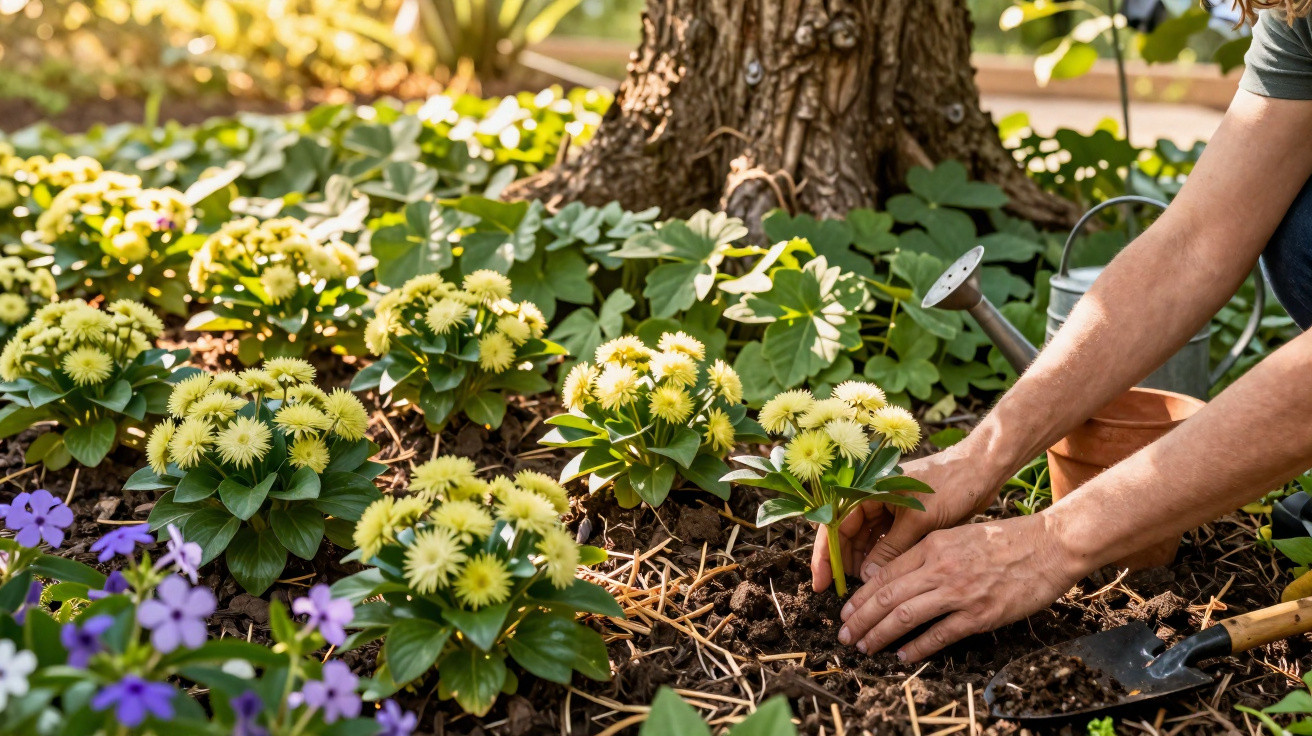
- Dense ground cover: Plants such as Carex, cranesbill, periwinkle or other thick greenery provide small birds with hiding places and escape routes.
- Protection from shrubs: Thorny or dense woody plants such as blackthorn, hawthorn, wild roses, barberry or hazel make it harder for cats to get to nests.
- A tree canopy: A few trees or tall shrubs obstruct the cat’s view while offering extra perches and nesting opportunities at a safer height.
The fewer open, easily visible areas there are, the more difficult it becomes for a cat to hunt. Tall grasses, leaf piles and corners with dead wood may appear “wild” compared with manicured gardens, but they can be life-saving for birds – and are equally valuable for insects.
Safe nest boxes: small details, major results
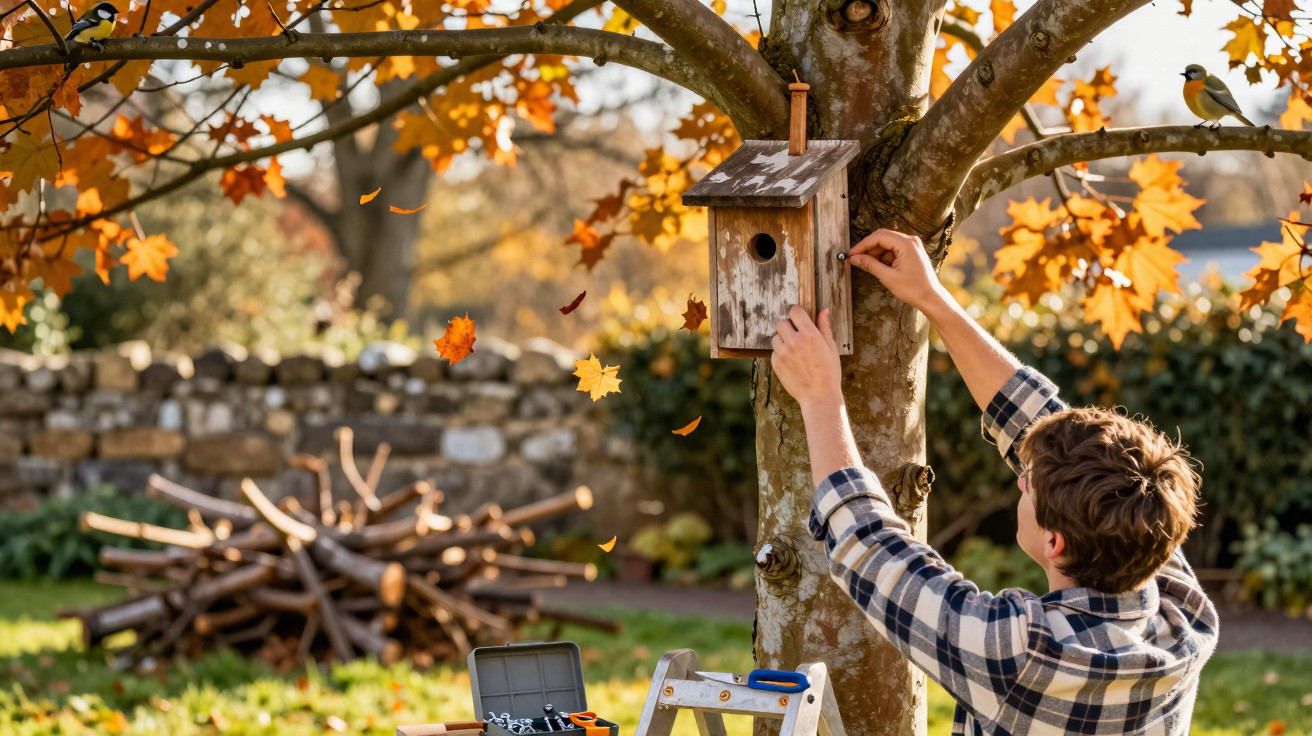
Nest boxes have become almost standard equipment in wildlife-friendly gardens. Yet many are fitted incorrectly or designed in a way that still gives cats an opportunity. A handful of straightforward measures can make nesting sites much safer.
What owners should consider when installing nest boxes
- Height: Around three metres above ground is considered a useful guideline.
- Distance from branches and ledges: There should be no nearby branch from which a cat could jump onto the box.
- Direction of the entrance: An east- or south-east-facing entrance is ideal, protected from extreme weather.
- No decorative perch: The attractive little rod beneath the entrance helps predators more than it helps birds.
- Box depth: There should be approximately 15 to 20 centimetres between the entrance hole and the floor.
“The fewer climbing and jumping aids there are, the less likely a cat is to reach a nest – even if it notices the box.”
When the cat is better kept indoors
It is not only space that matters; timing is equally important. Cats hunt most often at dawn and dusk, meaning early in the morning and late in the evening. These are precisely the times when many songbirds are particularly active, foraging or feeding their young.
Keeping a cat indoors at these times during the sensitive breeding season – broadly from March to July – can substantially reduce successful hunts. Many owners establish set outdoor hours, which cats usually adapt to fairly quickly.
- Let the cat out later in the morning, once the birds’ first busy breakfast hours have passed.
- Bring it indoors earlier in the evening, before dusk begins.
- During intensive breeding periods, in poor weather or when bird activity is high, avoid outdoor access altogether during the day.
Bright collars and other useful measures
Another option is to make the cat easier for birds to notice. Brightly coloured collar covers or reflective designs disrupt a hunter’s camouflage. Studies indicate that birds can detect these signals from farther away and flee sooner.
Some owners also use gentle deterrents to make particular parts of the garden less appealing to cats. These include, for example:
- Wire guards around tree trunks, preventing cats from climbing towards nests in the canopy.
- Coffee grounds or citrus peel in especially sensitive spots; many cats avoid these smells.
- Plants such as Coleus canina, whose scent cats generally find unpleasant.
These steps will not solve the issue on their own, but they can shield nesting areas in a targeted way. Combined with garden structure and controlled outdoor access, they create a considerably safer setting.
Long-term responsibility: fewer kittens, less hunting pressure
One important issue is often overlooked: every unneutered outdoor cat can eventually result in many more animals that hunt too. Neutering and identification, such as microchipping, reduce uncontrolled breeding and make it easier to reunite lost animals with their owners.
Those living in neighbourhoods with many roaming cats can raise the matter within their housing community or local area. Some councils already require outdoor cats to be neutered in order to ease pressure on wildlife.
Creating a “reconciliation garden”
A clear plan is helpful for many owners. The overview below shows how an average garden can gradually become a safer place for birds, without banning the cat from everything.
| Area | Measure | Benefit for birds | Effect on the cat |
|---|---|---|---|
| Lawn | Sections of tall grass, leaf piles | Cover and insects for food | Poorer visibility, less successful hunting |
| Hedges | Thorny shrubs, dense growth | Safe nesting places within the hedge | More difficult climbing and access |
| Trees | Install nest boxes high up and securely against cats | Protected elevated breeding sites | Hardly any chance of reaching nests |
| Patio / close to the house | Keep feeding stations beyond the cat’s jumping range | Fewer traps directly beside the house | Less hunting success near windows and doors |
What owners should understand
Cats rarely experience these measures as a “punishment”. Dense bushes, varied levels and hiding places can actually make a garden more interesting for them. Their hunting success declines, but the experiences remain: climbing, stalking and exploring – only with much less risk to young birds.
Birds benefit twice over: they gain better protection from cats and, thanks to more natural growth, have more insects and seeds available as food. Adding native plants also supports numerous species that no longer have a place in sterile gravel gardens.
Practical examples for everyday life
A typical example is a terraced-house garden with closely cut grass and a single thuja hedge. A great deal can be changed with little effort: turn one strip into a wild corner, add a few wild roses, move a nest box to the house wall at a height of three metres, and keep the tomcat indoors until 9 am in April. As early as the first year, many owners notice more birdsong and fewer dead animals.
Even those with only a small urban garden or courtyard can make a difference: a large container planted with a dense shrub, a nest box on the façade, some leaves left in a garden corner and a colourful collar cover for the house cat – retreats can be created even in just a few square metres.
Ultimately, it is about a fair compromise. The cat can still be a cat, with exercise, stimulation and adventure. Birds are given a genuine chance to survive the breeding season. A thoughtfully designed garden, secure nesting places and a little discipline around outdoor hours can make this balancing act work remarkably well.


Comments
No comments yet. Be the first to comment!
Leave a Comment