
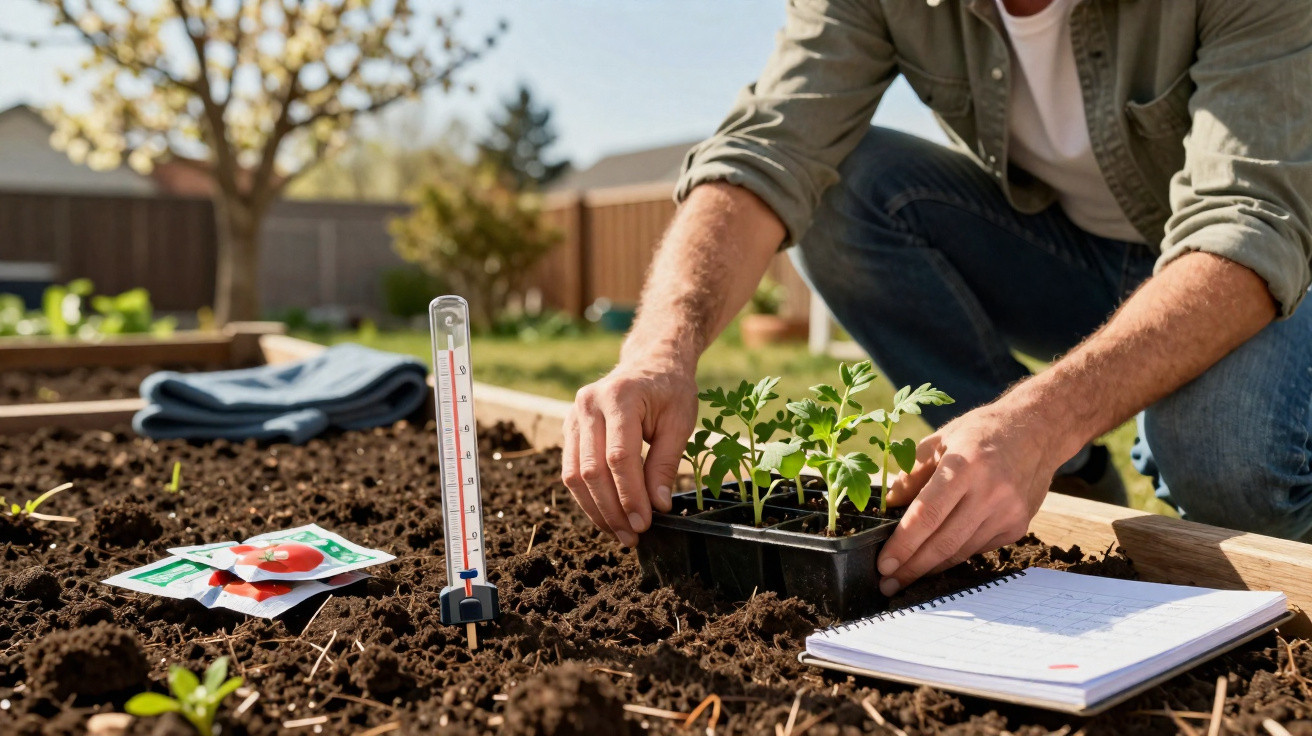
The sun already feels surprisingly kind, garden centres are piling up packets of seeds, and visions of round red tomatoes are already filling your mind. Yet this is precisely when the biggest mistakes in the vegetable garden happen every year: tomatoes are put outside too soon, nearly freeze, or remain stuck in a growth slump for months. Knowing the right temperatures and timing can turn a few seeds into an almost unbelievable harvest.
Why tomatoes so often fail in spring
The deceptive appeal of the first warm days
As daylight hours increase, amateur gardeners flock to DIY stores and garden centres. The sun warms their faces, the soil appears crumbly, and the urge to “finally get started” is enormous. Many people then sow tomato seeds or plant young plants straight into open ground – laying the foundations for trouble.
Spring sunshine may warm the air, but it does not necessarily heat the soil at depth. That is crucial for tomatoes. Seeds germinate slowly in soil that is still cold, while young plants develop thin, unstable stems. They may look “sort of alive”, but they are highly vulnerable to every change in the weather.
The most common mistake in the home garden: sowing tomatoes according to instinct and sunshine rather than a thermometer and the calendar.
What cold shocks do to young tomatoes
Things become genuinely critical when a cold night or a brief frosty spell follows several mild days. Tomatoes originally come from warm areas of South America, and even temperatures only just above freezing can seriously affect them.
Just one overly cold night may be enough to push a plant into a kind of emergency mode: sap flow slows, growth stops and the leaves become discoloured. Even where the tomato survives outwardly, it is weakened:
- a greater risk of fungal diseases such as blight
- delayed flower formation
- a substantially lower summer yield
Starting too early therefore often costs more than a few leaves: it can mean losing weeks of growth and, with them, a large share of the potential harvest.
The temperatures tomatoes really need
The key soil threshold: at least 15 °C
For tomatoes, what matters less is the midday temperature shown by the weather app and more what is happening in the ground. Seeds and fine roots respond to soil temperatures, effectively “deciding” whether to get growing or remain on hold.
Only from around 15 °C in the soil do roots grow strongly, branch well and reliably supply the plant with water and nutrients. In colder ground, roots remain stunted and the plant seems permanently “unhappy”, regardless of how much it is fed or watered.
| Temperature | Effect on tomatoes |
|---|---|
| < 10 °C soil | Almost complete halt in growth, causing stress to the plant |
| 10–15 °C soil | Slow, hesitant root growth |
| > 15 °C soil | Strong roots and rapid growth |
At night: air temperatures must remain above 10 °C
The second crucial threshold is in the air. Daytime temperatures of 18 or 20 °C may feel pleasant, but conditions can change rapidly once the sun disappears. Night-time temperatures for tomatoes should stay consistently above 10 °C, for several nights in succession.
If they do not, typical signs of stress appear:
- leaves curl or hang limply
- young leaves take on a yellowish hue
- flower buds develop much later – or drop off
Tomatoes only truly take off when soil is above 15 °C and nights consistently stay above 10 °C – before that, it is a gamble.
The right time: when tomatoes can go into open ground
Why waiting until mid-May is nearly always worthwhile
Across central Europe, gardeners have used a simple calendar rule for generations: do not plant tomatoes until after the late frosts. In Germany, this is usually around mid-May and often falls in the second half of the month. The higher up or farther inland a garden is, the more likely the date is to shift towards late May or even early June.
Sowing or planting outdoors before then is essentially weather roulette. A late frost or run of cold nights can undo weeks of work within hours. It is far wiser to raise plants in pots or modular trays, protected in a bright spot – on a windowsill, in a mini greenhouse, or in an unheated but frost-free polytunnel.
An advantage for mild areas and coastal locations
Naturally, conditions vary from one region to another. In wine-growing areas, towns with a strong urban heat-island effect, or coastal areas with mild weather, air and soil warm up sooner. Tomatoes can often go outside one or two weeks earlier there, provided the forecast does not indicate a return of cold conditions.
The opposite applies in exposed areas at risk of late frost, such as higher valleys or the Alpine foothills: gaining time on the calendar achieves virtually nothing there. Plants set into warm ground from late May catch up with prematurely planted tomatoes within only a few weeks, and often clearly overtake them.
What to do when the weather app goes haywire
Harden off young plants gradually rather than shocking them
Tomatoes raised indoors are used to cosy temperatures and the absence of draughts. Moving them directly from the windowsill into open ground is stressful. A period of “hardening off” is much gentler.
It is straightforward:
- Put plants outside in a sheltered, partially shaded spot – initially for only 2–3 hours per day.
- Gradually increase both the length of time outside and their sun exposure.
- Bring them back indoors during the first few days if temperatures drop below roughly 8–10 °C.
After about a week, plants are noticeably sturdier: their stems become firmer and their leaves more resilient. They will then cope far better with their final move into the bed.
Emergency plan: protection during a sudden cold spell
Already planted out and the forecast predicts a cold night? Fast action is the only answer. Simple materials can create a small buffer against lower temperatures:
- Plastic cloches or covers: protect individual plants and retain warmth gathered during the day.
- Horticultural fleece covers: placed over hoops or directly over plants, these keep out a few degrees of cold.
- Makeshift mini tunnels: constructed from plastic sheeting and simple hoops, they are ideal for several rows of tomatoes.
The benefit is that a cover not only raises the temperature slightly, but also keeps out wind and direct cold. Air must still be able to circulate, however, so that moisture does not linger; otherwise fungal diseases may follow.
What the ideal tomato start looks like
Tomato temperatures and approximate dates at a glance
Following a few clear guidelines makes growing tomatoes much easier:
- Raise plants indoors from roughly late February to April.
- Harden young plants off outdoors over 7–10 days.
- Plant into open ground:
- when no further frosts are forecast
- when the soil is above 15 °C
- when nights reliably remain above 10 °C
A late, warm start almost always produces stronger plants than an early, cold one.
Why patience pays off with tomatoes
Tomatoes planted into pleasantly warm soil gather pace within a few weeks in a way early starters can only dream of. The contrast soon becomes clear: robust stems, deep green foliage and plenty of flower trusses. By contrast, anyone who plants too soon “out of impatience” often spends early summer mounting rescue operations, adding extra feed and wondering why the plants simply refuse to grow properly.
Patience also reduces the need for spraying and maintenance. A robust tomato that has not been stressed copes much better with aphids, wind, rain and periods of heat. Diseases spread more slowly, while many of the problems complained about in gardening forums never arise in the first place.
Practical tips and common misconceptions
Frequent errors in tomato growing
Many problems recur each year, often because of the same assumptions:
- “The earlier, the better” – this is rarely true for warmth-loving plants in open ground.
- “It was so warm today, it will be fine” – night-time readings and soil temperature matter far more.
- “I can make up for everything with fertiliser” – cold stress can rarely be corrected afterwards.
Knowing these traps makes it possible to plan the start of the tomato season more carefully and avoid plenty of disappointment.
Practical terms and examples
The term “soil temperature” can sound theoretical to amateur gardeners. In practice, a simple soil thermometer inserted a few centimetres into the earth is enough. After only a handful of readings, the difference between air and soil temperature becomes obvious.
A typical everyday garden example involves two neighbours planting tomatoes. One puts plants out at the end of April, while the other waits until the end of May. By July, the later-planted tomatoes are often stronger, carrying more flowers and ripening fruit. Their earlier calendar start did not compensate for the colder initial period.
Anyone who sows and plants tomatoes according to these simple climate rules does not need elaborate equipment. Checking the thermometer and having a little discipline to wait can greatly improve the chances of a plentiful tomato harvest. Right now, shortly before the ideal planting window, watching the calendar is more worthwhile than reaching for the spade too soon.

Comments
No comments yet. Be the first to comment!
Leave a Comment