
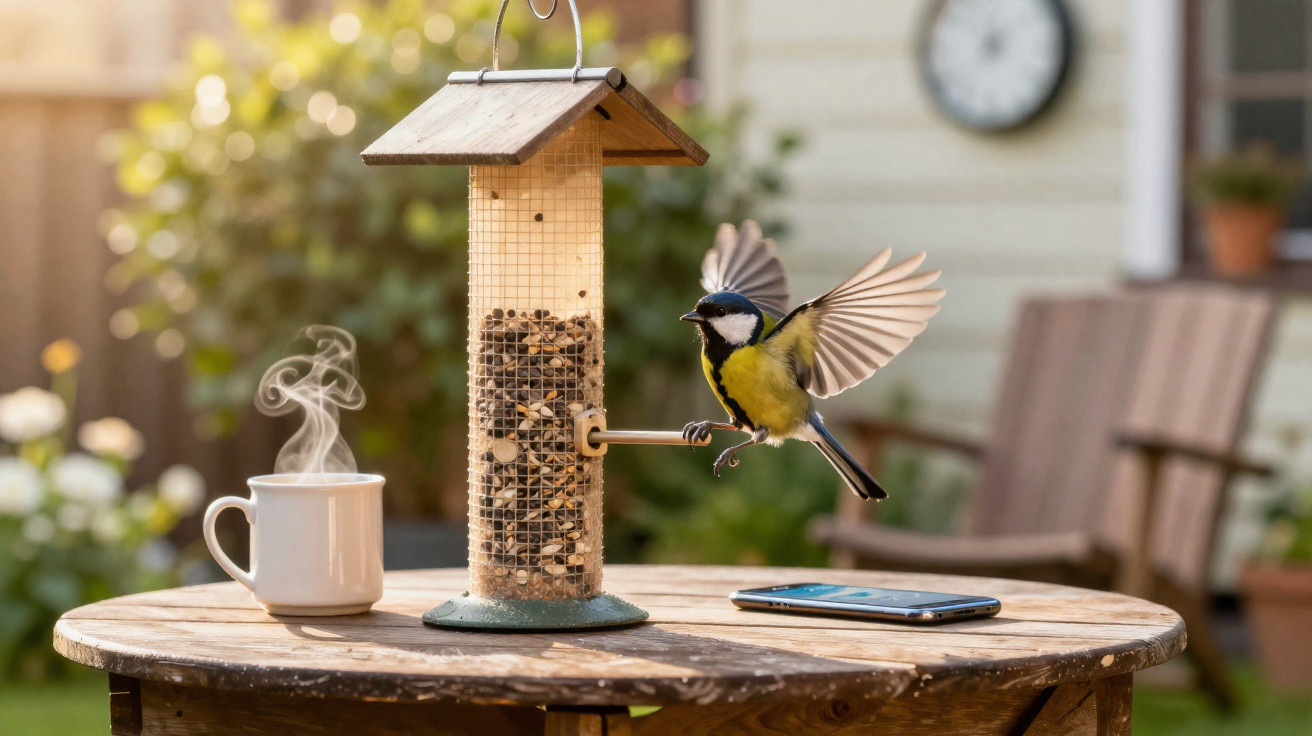
Many garden owners wonder why tits are flocking to feeders next door while their own garden remains completely empty. The good news is that this is rarely due to having the “wrong” garden. Almost always, it comes down to two straightforward factors: timing and food. Get both right, and your garden can become a regular winter stop for these colourful visitors.
Why tits love – or avoid – your garden
Tits are among the most noticeable birds in winter. Small and agile, they have striking yellow, blue, white and black plumage. Their bright, clear calls bring a hint of spring to the window, even on the greyest days.
Yet many gardens are quiet throughout winter. This is seldom simply bad luck. Tits are remarkably consistent in their daily routines. They follow a clear pattern: if they can depend on food in one place, they return. If the supply is unreliable, they move on.
Tits mainly visit gardens where they can rely on food being available at the same time every day.
So, if you want a lively winter garden full of tits, it is not enough to scatter food now and then. Instead, establish a regular “appointment” with the birds.
The key time of day: when tits come to feed
The time at which you feed them matters most. During winter, tits depend heavily on daylight and dependable feeding sites. Every burst of energy counts, particularly after a cold night.
The best time in the morning
You are most likely to attract birds by filling the feeding station shortly before or at sunrise. At that point, the birds are already in their roosting trees, ready to head for the first dependable food source.
- Put out food: at the same time every day in the early morning
- Timing: around 30 minutes before sunrise until shortly afterwards
- Result: tits firmly associate your garden with the day’s first “breakfast”
Birds have an impressively accurate “internal clock”. If they repeatedly find food available at a particular time, they remember that routine. Within just a few days, they will begin arriving punctually as if by instinct.
Anyone who feeds consistently in the morning will often find that the tits are already waiting before anyone has even opened the patio door.
Why feeding at random has little effect
Many people put out food whenever they happen to have time: sometimes in the morning, sometimes in the afternoon and sometimes only at weekends. For tits, this is simply too unreliable. A feeding station filled only occasionally is hardly worth visiting.
As a result, they choose other gardens or public green spaces where feeders are full at the same time every day. This conserves energy and reduces the risk of becoming weak in winter.
Consistency: how tits become regular visitors
The most important “trick” for a busy winter garden is therefore to keep going. Once you have started feeding, maintain the routine for as much of the cold season as possible.
How long it makes sense to continue feeding
As a rule of thumb, regular feeding is worthwhile from the first cold spells in late autumn until around March. It makes a noticeable difference for the birds, especially during frosty weather or when snow covers the ground.
If you feed at roughly the same hour each day throughout this period, the birds will become accustomed to your garden – and you will see visitor numbers rise.
What to do when you are away
If feeding stops for several days, the birds will quickly look elsewhere. It is therefore worth making a simple plan for times when you are away:
- Ask neighbours:
Comments
No comments yet. Be the first to comment!
Leave a Comment