
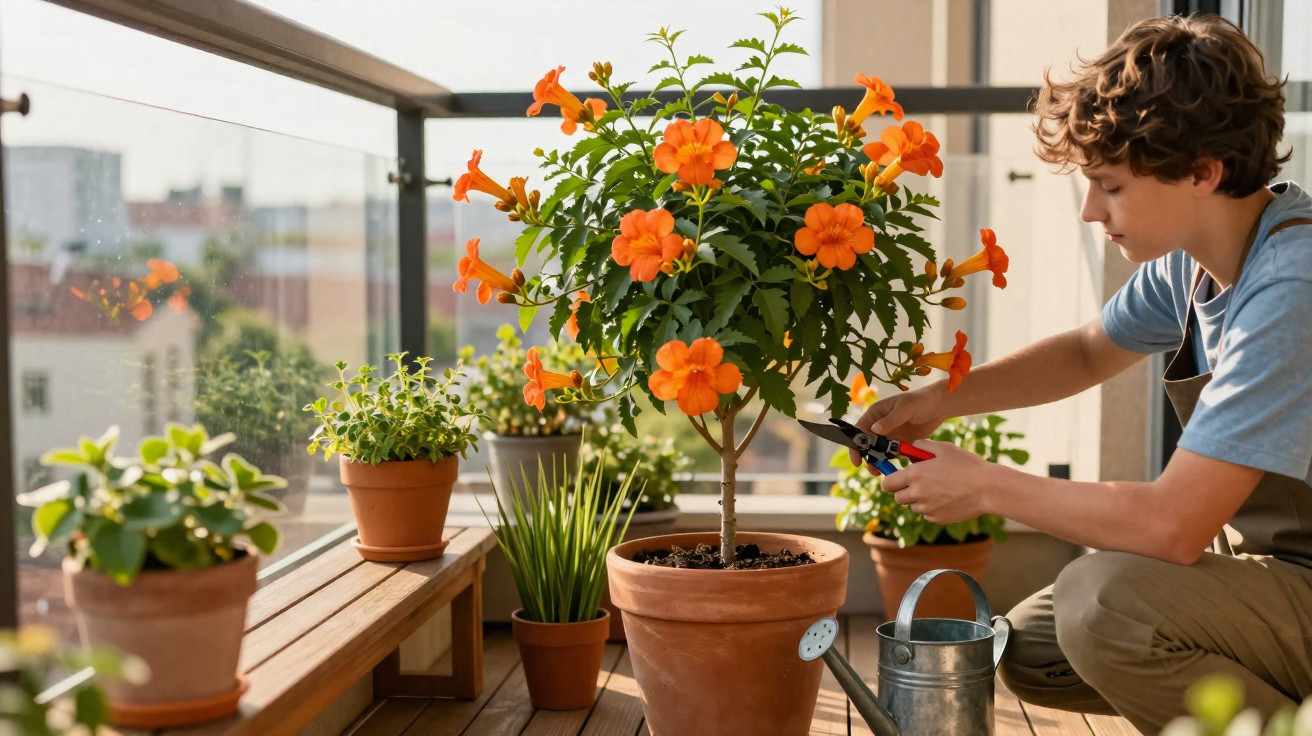
A compact, long-flowering shrub in vivid orange proves that even the smallest space can deliver months of colour.
Owners of small gardens, courtyards and terraces often face the same problem: they would like a shrub to create a focal point, but worry about planting an oversized monster that will eventually take over. The result is often a few low perennials and some seasonal plants in containers – and by high summer, the whole display can start to look tired. One particular compact, perennial shrub with bright orange flowers offers an unexpectedly elegant answer.
Why this compact shrub makes small gardens stand out
Often sold as Tecomaria ‘Cape Town Orange’, this cultivar is a low-growing form of Cape jasmine (botanically Tecomaria capensis). While the species itself can easily grow to two metres or more, this version remains far more manageable.
“At around 1.50 metres tall and approximately 1.80 metres wide, the shrub is ideal for small gardens, terraced-house back gardens and urban terraces.”
Its habit is dense and bushy. Within a few years, it forms a compact, rounded cushion shrub that visually anchors a bed or neatly frames the edge of a terrace. It is neither imposing nor sparse – precisely the balance that is so difficult to achieve in limited spaces.
Its strongest selling point, however, is its flowering display. Clusters of trumpet-shaped blooms in intense orange keep appearing from late spring well into autumn. In especially mild areas, flowering can even continue through winter.
Colour from May to autumn: how long Tecomaria flowers
Many ornamental shrubs offer only a brief display lasting two or three weeks, followed by months of foliage alone. Tecomaria is different: its floral display extends across the whole gardening season.
- Start: from around May, depending on the region and weather
- Peak period: continuous flowering during the summer months
- Later flowering: continuing into autumn
- In very mild areas: flowers may persist into winter
The long, slender flower tubes contain plenty of nectar. Wherever the shrub is planted, it attracts bees, solitary bees and butterflies. Anyone wanting a small garden that is not only attractive but also insect-friendly therefore gains two benefits at once.
The foliage stays fresh green throughout the season, ensuring a well-kept appearance even during short breaks in flowering. The shrub is also considered relatively unattractive to deer, which can be a real advantage in rural areas.
Location, climate and soil: where the shrub thrives
Tecomaria originates from warmer regions and is botanically regarded as a more tropical, perennial outdoor plant. Its suitability varies according to location across German-speaking countries:
| Region / climate | Use | Notes |
|---|---|---|
| Very mild wine-growing and coastal areas | Outdoors all year | Usually possible long term with winter protection |
| Typical locations in Germany, Austria and Switzerland | In the ground with winter protection or in a large container | Shoots may be damaged by frost, but the plant will regrow from the base |
| Cool upland areas | Better grown as a container plant | Overwinter frost-free, for example in a bright conservatory |
A sunny position is best. This is where the shrub produces the most flowers and develops its densest growth. In very hot regions, a site with a few hours of partial shade is welcome, helping to prevent the foliage from scorching.
Tecomaria is surprisingly accommodating when it comes to soil. Sandy, loamy or humus-rich ground is all suitable, but two things matter most: reliable drainage and even moisture during the first few years. The plant does not tolerate waterlogging, as its roots may rot.
How much water does the shrub need?
After planting, do not allow the soil to dry out. A thorough watering once a week is usually sufficient, although more frequent watering is needed during heatwaves. Once established, the shrub copes with considerably less water.
“Once established, Tecomaria is considered remarkably drought-tolerant – a benefit during hot summers.”
Gardeners report that it continues to flower reliably even in low-rainfall periods, provided the soil does not become completely dry for weeks at a time. An organic mulch helps the soil retain moisture for longer and reduces the need for watering.
Planting step by step: how to give it the best start
Spring is the ideal planting time, once severe frosts are no longer expected. This gives the shrub an entire season to establish its roots.
- Water the pot thoroughly until the root ball is fully soaked.
- Dig a planting hole roughly twice as wide as the root ball.
- Loosen the soil in the hole, breaking up stony or heavily compacted layers.
- Position the shrub so that the root collar sits at soil level.
- Backfill with the excavated soil and a little compost, then firm gently.
- Water deeply so that no air pockets remain.
- Apply a 5–8 centimetre layer of mulch, keeping it away from the shoots.
In small gardens especially, it is worth planning for the plant's final dimensions: it will eventually require around two square metres of space. If placed too close to paths or walls, it will need pruning more often.
Care and pruning: keeping Tecomaria compact and free-flowering
Ongoing maintenance is straightforward. Once a year, preferably in spring, Tecomaria benefits from a dose of organic fertiliser or a slow-release feed intended for flowering shrubs. This encourages bud formation.
Pruning should be timed around the main flowering period. The best moment is immediately after the strongest flush of flowers in summer or early autumn. Proceed as follows:
- Remove all dead or frost-damaged shoots.
- Lightly shorten branches that extend too far outwards.
- Cut back overly long shoots to a strong, outward-facing bud.
A gardening tip originally given for a Mahonia shrub works surprisingly well here too: if the shrub becomes too tall, it can be cut back firmly after flowering, just above a lower pair of leaves. New side shoots will then develop, making the shrub denser and more balanced.
Winter protection: helping the plant through cold nights
In areas with harsh winters, the above-ground growth often dies back. This does not necessarily mean the plant has been lost. Protecting the base gives it a good chance of producing fresh growth in spring.
Useful measures include:
- applying a thick layer of leaves or bark mulch around the root area
- wrapping the shrub in garden fleece when cold snaps are forecast
- moving container-grown plants close to a sheltered wall and insulating the pot
When fresh shoots appear in spring, frost-damaged stems can be removed close to ground level. In most cases, vigorous new growth quickly makes up for the losses.
Where the shrub works particularly well: practical ideas for small spaces
To make the most of this shrub's potential, use it deliberately within the planting scheme. In small gardens, the following positions have proved particularly effective:
- as a standalone focal point beside the terrace
- at the end of a narrow path, creating a colourful destination
- in a mixed border with grasses and perennials
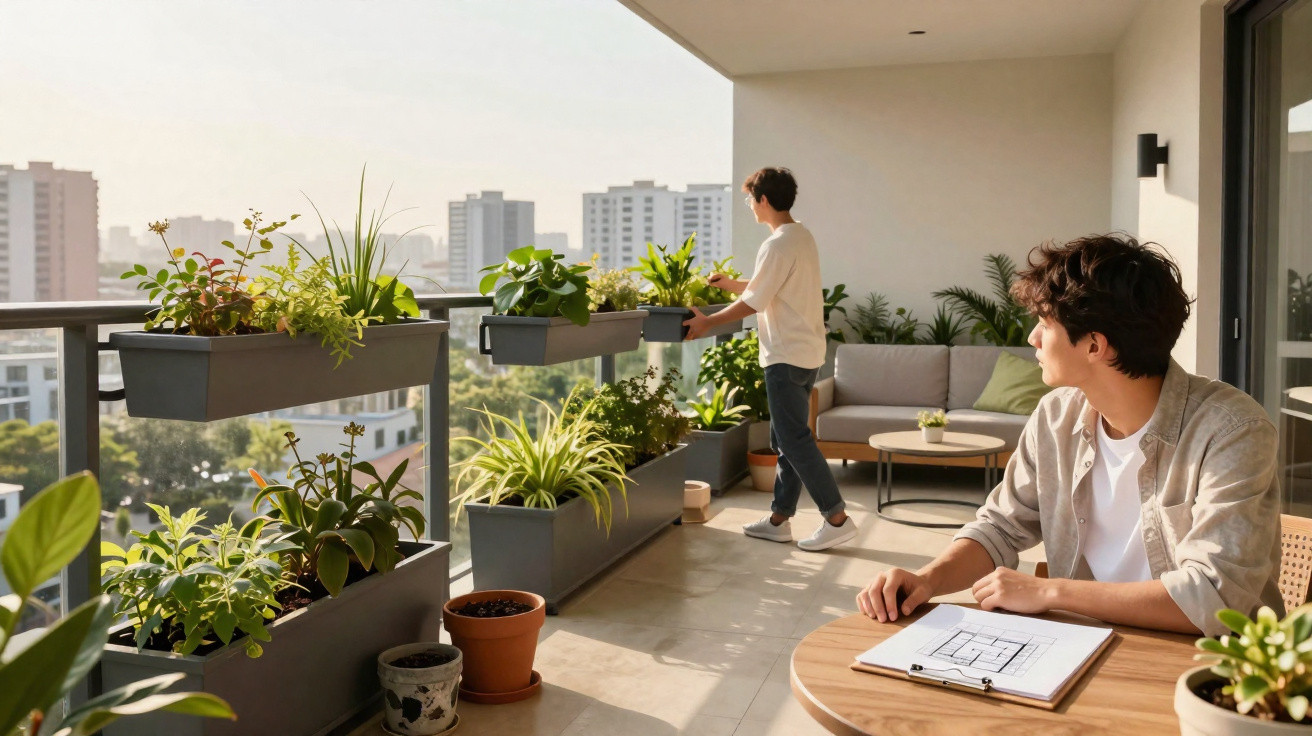
- in a large container on a balcony, combined with trailing plants
It looks especially harmonious alongside purple- or blue-flowering perennials such as salvias or Russian sage. Against these shades, Tecomaria's rich orange appears almost picture-book bright.
What amateur gardeners should know before buying
The shrub is still something of an insider tip in DIY stores, garden centres and specialist nurseries. Asking specifically for the ‘Cape Town Orange’ cultivar improves the chances of finding it. Plants in well-rooted containers establish more successfully than very young, weak specimens.
Important: in exposed locations, it is sensible to expect the plant to behave more like a dense, floriferous subshrub, repeatedly regrowing from the base. Those who can accept this will gain a striking, low-maintenance structural plant with an unusual colour – ideal for giving a small garden a distinctive “face”.
Comments
No comments yet. Be the first to comment!
Leave a Comment