
Many amateur gardeners realise that March is an important month, yet few know exactly which shrubs, perennials and trees should actually be pruned now – or how hard they can be cut back. This guide explains precisely what needs doing in the spring month of March, so that roses, hydrangeas and other plants do not disappoint in summer.
Why March is such an important month for pruning
In many areas, the harshest frosts are over by March. Plants are gradually emerging from winter dormancy, but have not yet come fully into growth. During this transitional period, they cope especially well with pruning and respond with vigorous fresh growth.
"Pruning selectively in March directs a plant’s energy into young, vigorous shoots and encourages abundant flowers rather than lanky growth on old wood."
At the same time, foliage is usually not yet fully developed. This makes it much easier to see a plant’s structure and neatly remove old, diseased or poorly positioned shoots.
Restoring trained plants and espalier trees to shape
Many front gardens use espalier trees and climbing plants trained on supports as a green privacy screen. March is the time to give them a shaping prune.
How to prune espalier limes, planes and similar trees
With young espalier trees, the priority is to establish the basic framework. Rather than shortening the structural shoots, secure them firmly in place.
- Do not cut back young shoots; tie them to the espalier frame using suitable ties.
- Remove loose shoots, those growing across the framework, and shoots pointing inwards.
- Only reduce old, thick branches if they disrupt the intended shape.
For espalier trees that have been in the garden for more than two or three years, a different approach is possible. There are two options:
- Cutting back to old wood: Shorten all young shoots substantially so that the underlying framework is clearly exposed. This works well for traditional espalier limes.
- Hedge-style pruning: Trim the plant into the shape of a green block. This is particularly practical for planes and evergreen espalier trees such as cherry laurel.
Evergreen espalier trees, including certain cherry laurel varieties, remain dense through winter. A careful block prune in March keeps them compact and stops them spreading too far sideways.
Roses: prune boldly for plentiful flowers
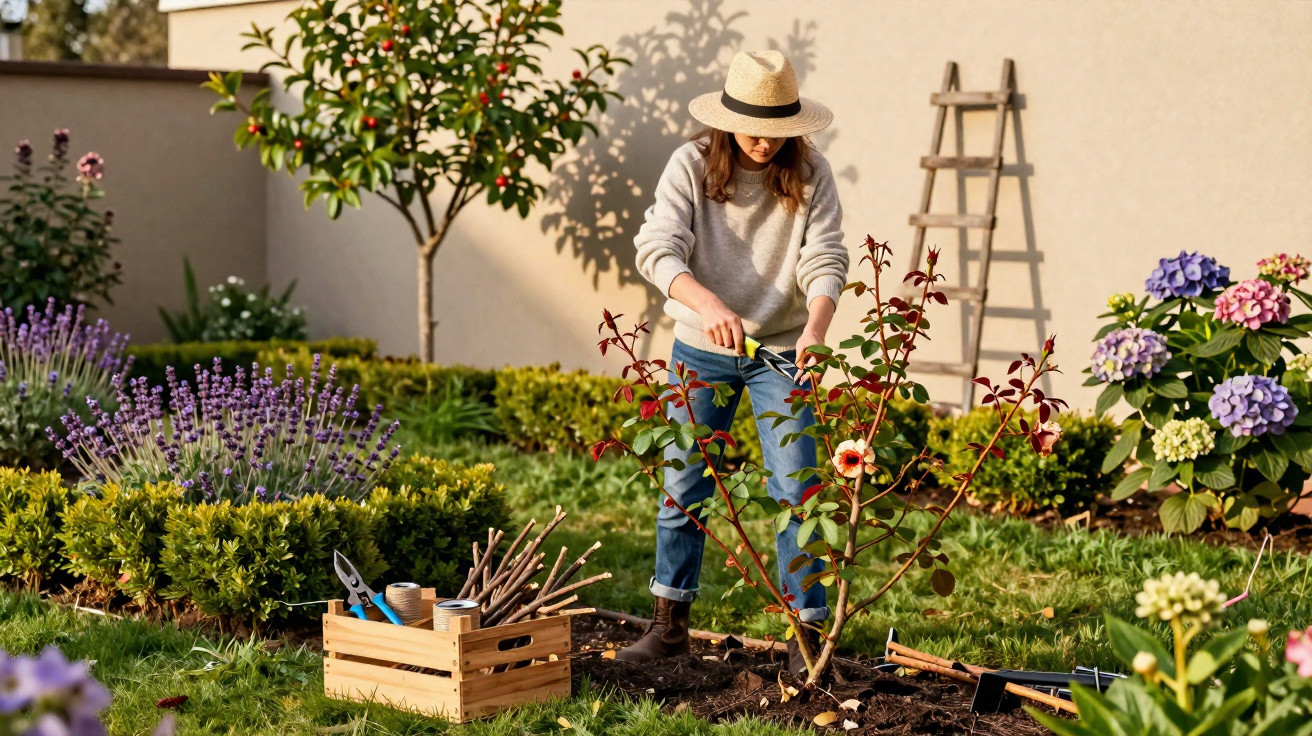
Roses may look delicate, but they are remarkably tolerant of pruning when a few basic rules are followed. March is the time for their main prune.
Floribunda, shrub and standard roses
Old woody stems drain a rose’s energy. Cut them back to just above an outward-facing bud. The bud is the small growth point from which the new shoot will emerge.
- Cut back brown, thick, old stems hard.
- Prune down to the second outward-facing bud.
- Remove branches growing inwards or rubbing and crossing one another.
The result may look drastic, but it is exactly what the plant needs. Strong new shoots will grow from the short stubs and flower abundantly in summer.
Training climbing roses correctly
Climbing roses require a slightly different method. Their flower display is produced mainly by side shoots growing from a small number of strong framework stems.
Proceed as follows:
- Choose three or four sturdy main shoots and fasten them to a trellis or wall.
- Shorten side shoots along these main stems to a few buds.
- Remove dry, frost-damaged or dead shoots completely.
"Training climbing roses outwards – by fixing shoots more horizontally – produces considerably more flowers than allowing strictly vertical growth."
Summer fragrance: pruning lavender and heather
Keeping lavender compact
Without regular pruning, lavender becomes woody and bare in the centre. March is the time for a firm cut-back.
Recommendation:
- Cut all shoots back to around 15 centimetres above ground level.
- Never cut into entirely old brown wood where no green growth is visible.
- Prune consistently every year to keep the plant dense and bushy.
This applies equally to standard lavender varieties and the distinctive French lavender, with its decorative flower bracts.
Heather – choose the timing according to the variety
Heather is easy to maintain and brings colour to beds, even during the sparse part of the year. However, it will only remain attractive if it is pruned regularly.
| Type of heather | Pruning time | Pruning height |
|---|---|---|
| Summer heather (Calluna) | March | approx. 8–12 cm above the ground |
| Winter heather (Erica) | Summer | also just above the old wood |
As a general rule, never cut right back into bare brown wood. Always leave some green tissue so the plant can produce fresh growth.
Hydrangeas: know the variety and avoid mistakes
Few shrubs produce such lavish summer flower heads as hydrangeas. Most types are pruned in March, but they must not all be treated in the same way.
Mophead and lacecap hydrangeas
These types often form their flower buds during the previous year. Cutting them back too hard can cost you the entire season’s display.
- Remove only some of the oldest, thickest stems – about one fifth – at the base.
- Cut faded flower heads just above the first strong pair of buds.
- Never cut into bare old wood with no buds.
"Removing old flower heads too low on mophead hydrangeas risks an entirely flowerless season."
Panicle, smooth and oakleaf hydrangeas
Panicle hydrangeas, with their cone-shaped flower heads, tolerate much harder pruning. They flower predominantly on new wood.
- Generally cut panicle hydrangeas back to around 40 centimetres in height.
- White smooth hydrangeas such as "Annabelle" can even be cut back to around 10 centimetres.
- Prune oakleaf hydrangeas only moderately, to around 10–20 centimetres above the ground – unless they are grown as specimen shrubs.
Leave more height on prominent specimen shrubs, removing mainly any awkward and dried-out shoots. Climbing hydrangeas, by contrast, form their buds before winter and should only be pruned after flowering.
Butterfly bush: a hard prune creates a spectacular flower display
The popular butterfly magnet, Buddleja, benefits from a vigorous cut-back. Without pruning, it becomes old and leggy, grows tall and flowers only at the top.
- Cut large shrubs back to around 30–50 centimetres in March.
- Reduce dwarf varieties even harder, to about 15 centimetres.
- Always make cuts just above small new shoots or buds.
Fresh, strong branches develop from the shortened stems in spring, carrying dense clusters of flowers in summer.
Keeping the climber under control: ivy
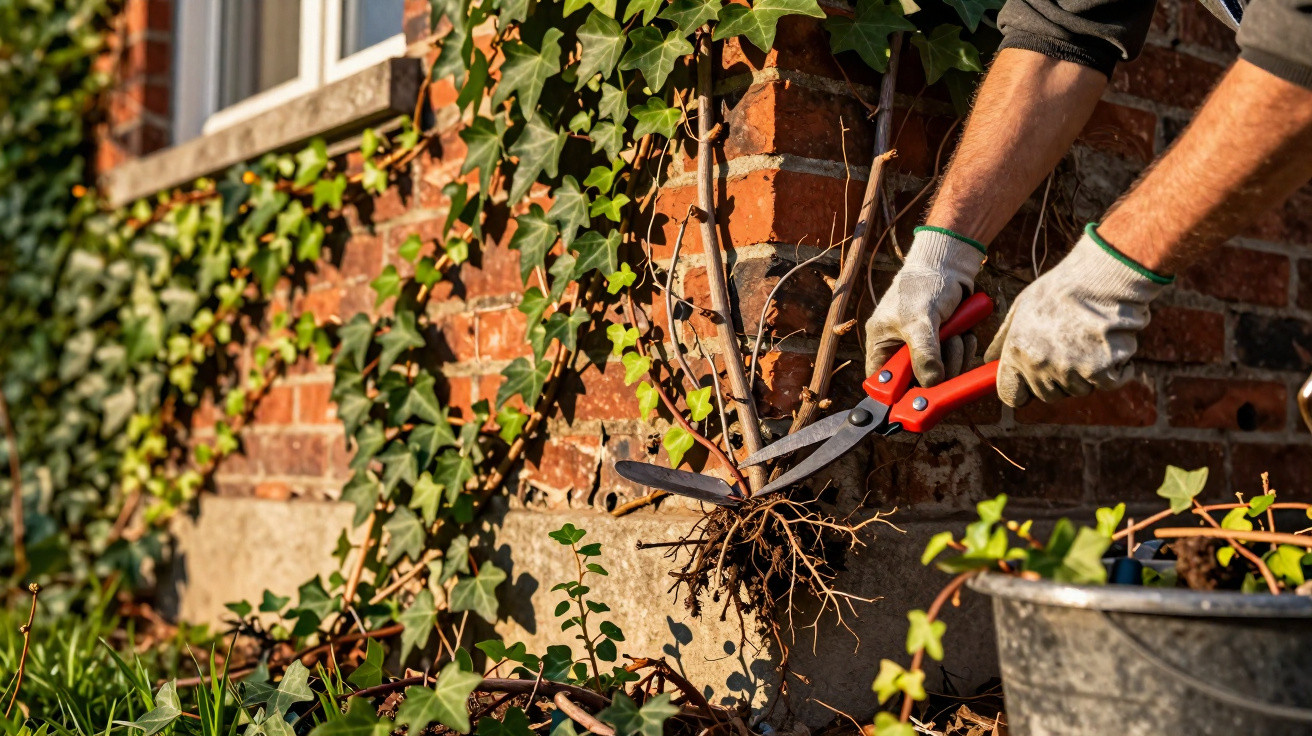
Ivy grows for almost the entire year, only slowing down in winter. March is a good time for a thorough control prune.
Gardeners should look out for the following:
- Remove all shoots that have come away from their support or are hanging freely.
- Cut off branches that are attaching themselves to timber cladding, gutters or window frames.
- Shorten ground-level shoots so that the ivy does not quietly take over beds and paths.
Just one year without pruning is enough for ivy to spread several metres. Limiting it firmly once in March saves a great deal of work later on.
Caring for St John’s wort, olive trees and oleander in March
Keeping St John’s wort compact
Bright yellow-flowering St John’s wort (Hypericum) tends to become bare at the base if it is never pruned. Cutting it back in March keeps the shrub dense.
As a guide, shorten all shoots to roughly 20 centimetres high. This encourages more branching and helps the plant remain low and bushy.
Thinning an olive tree
Olive trees are common on patios and in gardens. They tolerate pruning surprisingly well.
- Remove every dead, thin and inward-growing branch.
- Thin out crossing shoots so that more light reaches the centre of the crown.
- Shape the tree according to personal preference – olives readily produce new growth.
Maintaining an open, light-filled crown reduces the risk of fungal diseases and encourages even growth.
Cutting oleander back hard – with care
Oleander is considered a Mediterranean flowering shrub, but it is surprisingly tough. After frost damage, it often has brown, soft shoots, and these can be removed.
- Cut damaged or frost-killed parts back into healthy wood.
- If necessary, reduce the plant by up to 50 percent.
- Ensure a sunny position and regular watering.
"Oleander sap is poisonous – always wear gloves when pruning and keep the shrub out of reach of children and pets."
If oleander is grown in a container, place it temporarily on a raised surface or behind a barrier after pruning so that curious children or animals cannot come into contact with the leaves.
Common pruning mistakes and how to avoid them
Many plants forgive a great deal, but certain mistakes reliably lead to disappointment in summer.
- Pruning too early: If pruning is done during severe frost, cut surfaces can suffer frost damage and shoots may die back.
- Cutting flowering plants on old wood too hard: This is particularly damaging for mophead hydrangeas, some roses and climbing plants, as flowers may then fail to appear.
- Blunt tools: These crush rather than cut and give pathogens an easy route into the plant.
- Ignoring the framework: Cutting indiscriminately without recognising the structural shoots strips plants of their shape.
Sharp, clean tools and a quick look at the growth habit before making the first cut will prevent most problems.
Useful extra jobs for the March garden
After pruning, it is worth lightly loosening the soil around plants and clearing away dead leaves. This improves airflow around the roots and gives fungal spores fewer opportunities. A thin layer of mature compost acts as a starter feed for the new season.
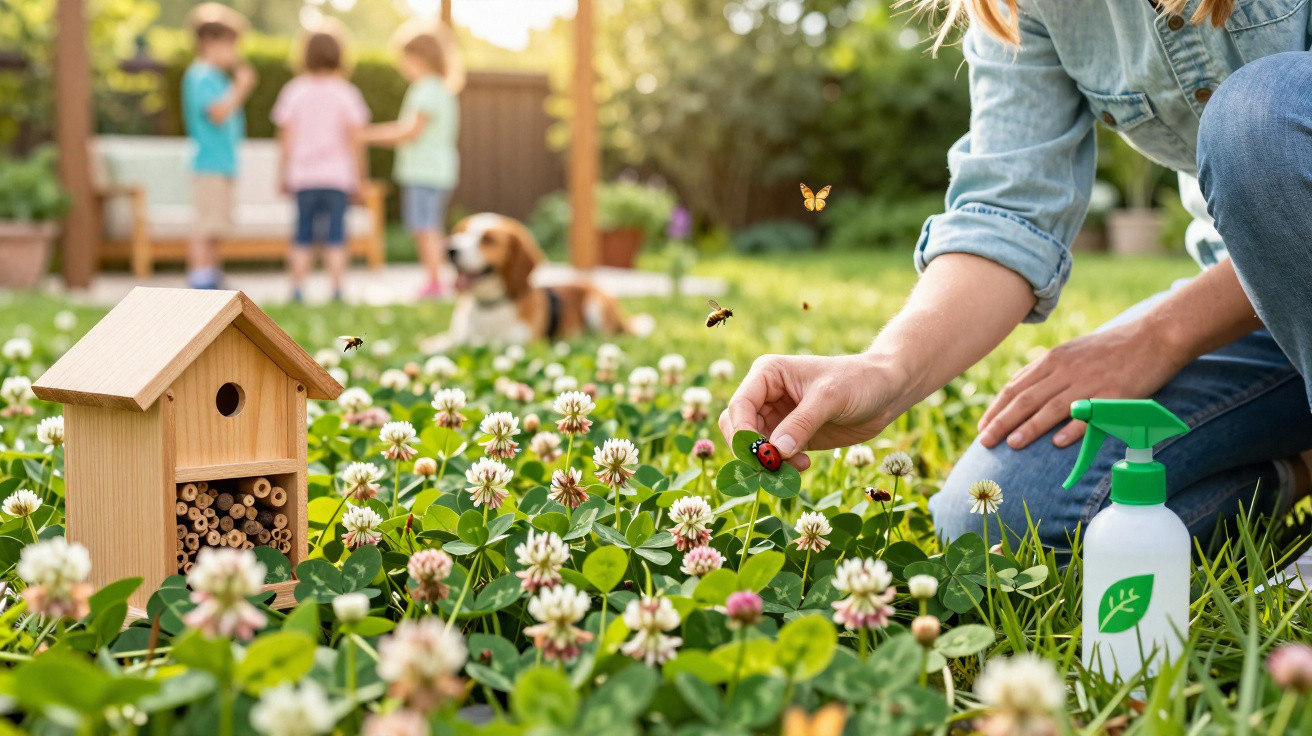
Anyone already thinking about insects can deliberately leave some early-flowering shrubs a little wilder and cut back only what is essential. Butterfly bushes, lavender, heather and flower-rich shrub roses in particular later provide valuable food for bees, bumblebees and butterflies – provided they have been shaped correctly in March.



Comments
No comments yet. Be the first to comment!
Leave a Comment