
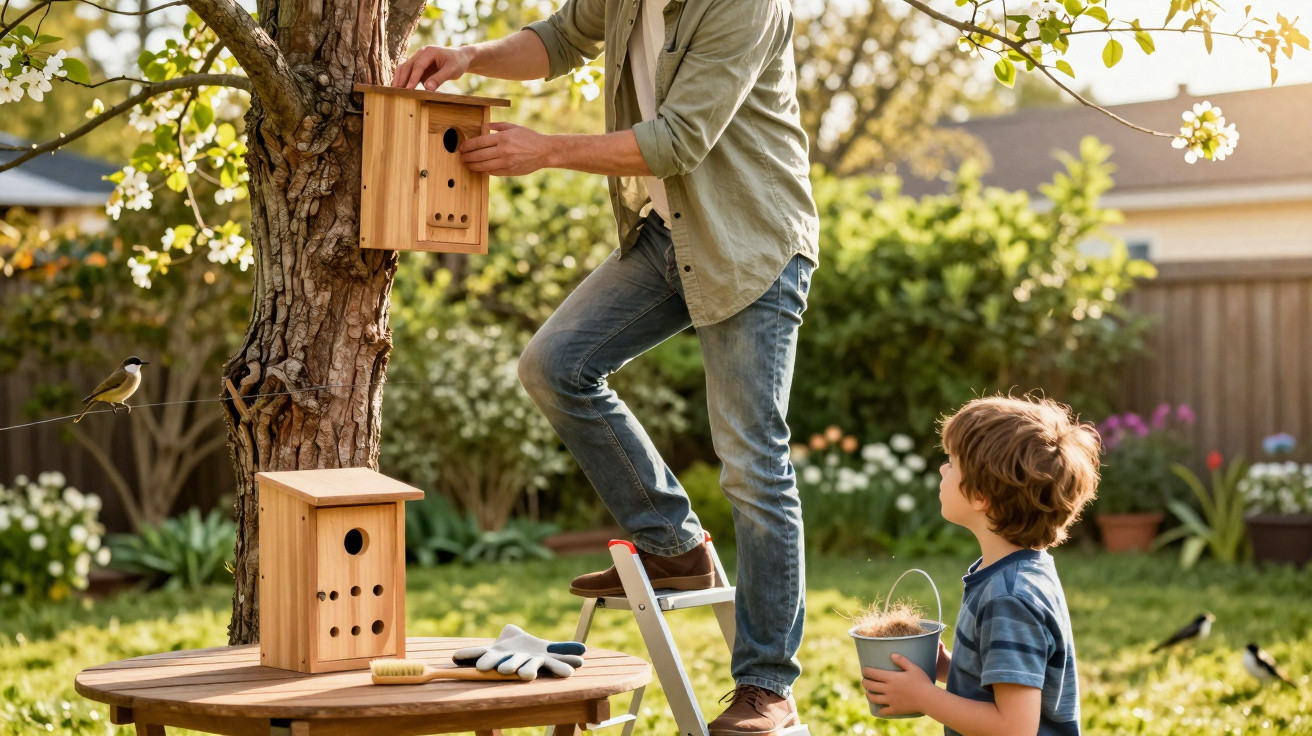
While we are still shivering and thinking about winter, tits, robins and sparrows are already entering the busiest stage of their home search. Ornithologists have warned for years: anyone wanting to help garden birds needs to act now, with one simple yet frequently overlooked task involving the nest box.
Why the breeding season starts much earlier than many people expect
Many amateur gardeners assume that the garden is virtually lifeless in February. There are no masses of flowers, hardly any insects and little activity. For birds, however, the picture is very different. From mid-February onwards, many species begin their search for somewhere to breed.
Cavity-nesting birds in particular, including blue tits, great tits, sparrows and redstarts, are already inspecting every possible nesting space in trees, walls and nest boxes. If no suitable home is available at this stage, offering one in April will usually be too late.
A clean nest box put up in February often determines whether young birds hatch in your own garden – or not.
The pressure is even greater in towns and suburbs. Old hollow trees are felled, building façades are thoroughly insulated and natural crevices disappear. Nest boxes can replace these lost nesting sites – provided they are installed early enough and remain in good condition.
The key task: clear out old nests and clean nest boxes thoroughly
Anyone who already has nest boxes in the garden should not simply wait at the start of the year. The inside can harbour an unseen threat to the next brood.
Parasites such as fleas, mites and other blood-sucking insects overwinter in the old nesting material. Once new chicks hatch, these pests have an abundant food source. Entire broods can die as a result or be severely weakened.
How to clean nest boxes properly
- Open the box and remove all old nesting material.
- Brush out the interior thoroughly using a stiff brush.
- Rinse it afterwards with very hot or boiling water.
- Allow the box to dry completely, ideally outdoors in the fresh air.
- Reattach it in its usual position.
Chemical cleaners, fragranced sprays and disinfectants should be kept firmly in the cupboard. Their residues may be toxic, irritate birds’ airways or damage their feathers. In normal circumstances, hot water and a brush are entirely sufficient.
Anyone who cleans their nest box once a year with a brush and hot water often saves several broods in succession.
New nest boxes: which size suits which species
Where no nest boxes have yet been installed, now is the ideal time to put some up. Shops offer an overwhelming range of options, but not every model is suitable.
The diameter of the entrance hole is particularly important. It determines which species can move in and prevents larger, more dominant birds or predators from entering.
| Hole size / entrance | Suitable species |
|---|---|
| approx. 26–28 mm | smaller tit species, such as blue tits and coal tits |
| approx. 32–34 mm | great tits, house sparrows and nuthatches |
| Partially open front | robins, spotted flycatchers and, in some cases, black redstarts |
If you are unsure, it is better to choose a slightly smaller entrance rather than one that is too large. This can prevent conflicts with starlings or more aggressive species.
Materials and construction: what birds really need
Nest boxes do not need to win a design award. Birds value very different features from bright colours:
- Untreated, preferably thick timber, at least 1.5 cm thick
- Weather-resistant woods such as larch, oak or cedar
- No metal boxes, as they become extremely hot in spring
- An opening lid, so the box can still be cleaned
- No vivid paint finishes or strong solvents
Bold colours and shiny metal fittings may look appealing in a garden centre, but they can heat up intensely in sunlight or discourage birds. Subtle natural wood shades blend more successfully into the surroundings and appear more natural.
The ideal position for a nest box: direction, height and safety
Even the finest nest box offers little benefit if it is hung in the wrong place. A few straightforward principles can prevent many problems.
Which direction to choose
The entrance should not face directly towards the direction most exposed to the weather. In central Europe, wind and driving rain often arrive from the west. Ornithologists therefore recommend positioning nest boxes to face east or south-east.
This gives the box some morning sunshine while keeping it shadier in the afternoon, making overheating less likely. On a south-facing wall, a spot with partial shade is worthwhile, such as within a tree canopy with light foliage.
Height and fixing: protection from cats and martens
In most gardens, a height of two to three metres has proved effective. This is high enough to make access harder for cats, dogs and curious children, while still allowing annual checks from a small ladder.
The box should be firmly attached to a tree or wall and must not sway. Tilting it slightly forwards helps channel rainwater away from the entrance hole. There must be no branches directly in front of the opening that could serve as a “launching platform” for cats or martens.
Anyone who hangs their nest box securely and with a slight forward tilt turns it from a potential trap into a genuine shelter.
Why you should act now – rather than waiting for the first chicks to chirp
Many people only take notice when quiet chirping can be heard from a nest box in April or May. Yet the race for safe nesting cavities begins weeks earlier for birds.
When a box is cleaned and rehung in February, it has time to “air out”, lose its human smell and blend visually back into the garden. Birds are wary and do not like freshly fitted boards that smell of a workshop.
A box installed early is also less likely to attract the attention of magpies, crows or squirrels, which actively look for nests in spring.
How nest boxes can change the whole garden
An occupied nest box is not merely an attractive sight. It can alter the entire balance of a garden – in the best possible way. Over a breeding season, a family of tits consumes thousands of insects and caterpillars. Many amateur gardeners report noticeably fewer aphid and caterpillar problems in years when nest boxes are occupied.
If you put up several boxes, leave some space between them. Two boxes intended for the same species should ideally not be hung right next to one another, otherwise territorial disputes can soon arise. Different entrance-hole sizes in separate locations allow several species to breed alongside each other.
Practical advice for beginners and curious children
Nest boxes are an excellent way to introduce children to nature. A joint inspection in late summer or autumn, once the brood has long since fledged, turns looking inside the box into a small adventure. Anyone wishing to learn more can keep a notebook: when was the box visited? Which species moved in? How often were feeding flights observed?
One point remains essential: during nesting and chick-rearing, the box must be left alone. Do not open it or handle it, as stress can cause birds to abandon the brood. The real help takes place in winter and late winter: clean, inspect and secure the box safely.
Once you understand this timing, you can turn your garden into a small refuge for birds within just a few years. The reward arrives with every spring dawn: more song, more life – and the reassuring feeling that one simple task in February has genuinely made a difference.

Comments
No comments yet. Be the first to comment!
Leave a Comment