
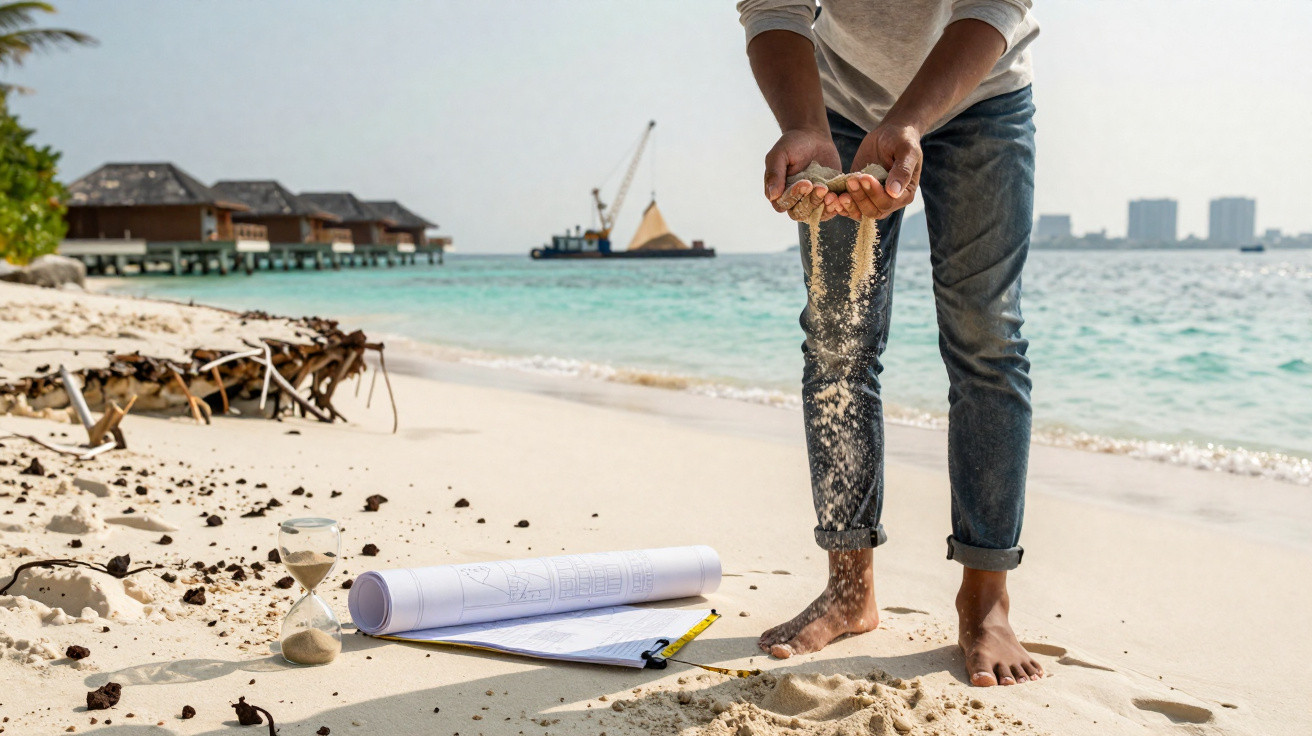
The global shortage of sand is a quiet threat to modern development and environmental conservation. Every year, the planet uses enormous quantities of this valuable resource, creating a crisis that could soon affect construction worldwide.
Why has sand become a scarce resource worldwide?
Rapid infrastructure growth consumes 50 billion tonnes of sand around the world each year. This essential mineral is vital for producing concrete, asphalt and glass, making it the second most exploited natural resource in modern society.
Uncontrolled consumption is depleting available geological reserves while causing serious environmental damage across a range of coastal ecosystems. Monitoring industrial activity reveals the main consequences of this accelerated global depletion, as set out in the key points below.
- Construction industry: Producing concrete for homes and modern buildings.
- Urban infrastructure: Used in asphalt for roads and city surfacing.
- Glass manufacturing: Making windows and photovoltaic solar-energy panels.
- Land expansion: Complex beach nourishment and coastal land-reclamation projects.
- Coastal protection: A natural defence against severe erosion and powerful ocean storms.
What are the ecological impacts of sand extraction?
Large-scale removal of sediment from riverbeds and oceans causes severe harm to local biodiversity. Many dredgers operate illegally within protected marine areas, damaging the seabed and destroying crucial habitats for numerous valuable aquatic species.
Furthermore, losing this natural resource impairs water filtration and reduces protection against powerful storm surges. Coastal aquifers are affected by excessive salinisation, jeopardising drinking-water supplies for people living in these impacted areas.
How does the Maldives case illustrate this global crisis?
The city of Malé faces major space constraints as sea levels rise in the region. To enlarge its territory, the local government launched a vast land-reclamation project that required the extraction of millions of cubic metres of mineral material.
Gulhifalhu Project
Environmental Impact in the Maldives
Sand dredging destroyed around 200 hectares of protected coral reefs in northern Malé.
This destruction directly affected local fishing and ecotourism, which support many island families economically.
The environmental degradation caused by urban expansion on the islands is an urgent warning to other coastal nations. This ecological disaster highlights the principal real dangers faced by fishing communities and the local economy, detailed in the following points.
- Destruction of essential protected marine areas.
- Severe financial losses for small-scale fishers.
- Reduced tourism resulting from the loss of reefs.
What alternatives can prevent sand depletion?
Replacing this input with sustainable materials is emerging as a viable solution for the construction industry. New technologies make it possible to reuse industrial waste and substantially reduce global reliance on this rapidly disappearing scarce natural resource.
The main recommendations put forward by experts include using recycled industrial by-products in paving and structural works. The following points present some of the most practical and effective options for replacing predatory mineral extraction from ecosystems.
- Recycled construction materials from demolition projects.
- Crushed rock from regulated quarries.
- Residual sand produced by mining activity.
How should governments manage this strategic resource?
Effective governance requires world leaders to treat sand as a valuable strategic resource. Accurate mapping must be developed, alongside strict oversight of licence approvals, to curb predatory exploitation in vulnerable regions of the planet.
Co-operation between the public sector and private industry can secure a more balanced and environmentally responsible urban future. Responsible planning that balances economic progress with environmental preservation will prevent mineral scarcity from causing the future collapse of modern societies.
References: Sand: Wanted dead and alive. Use it wisely, warns the UN






Comments
No comments yet. Be the first to comment!
Leave a Comment