
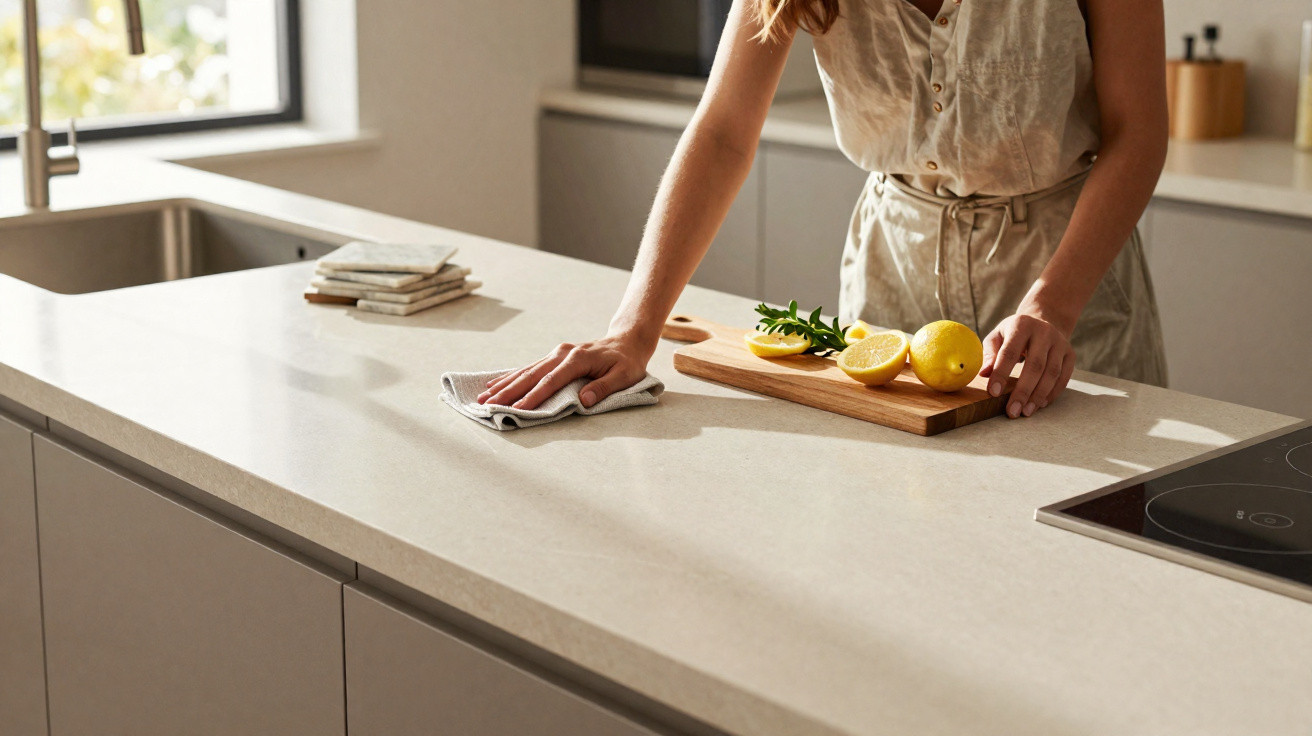
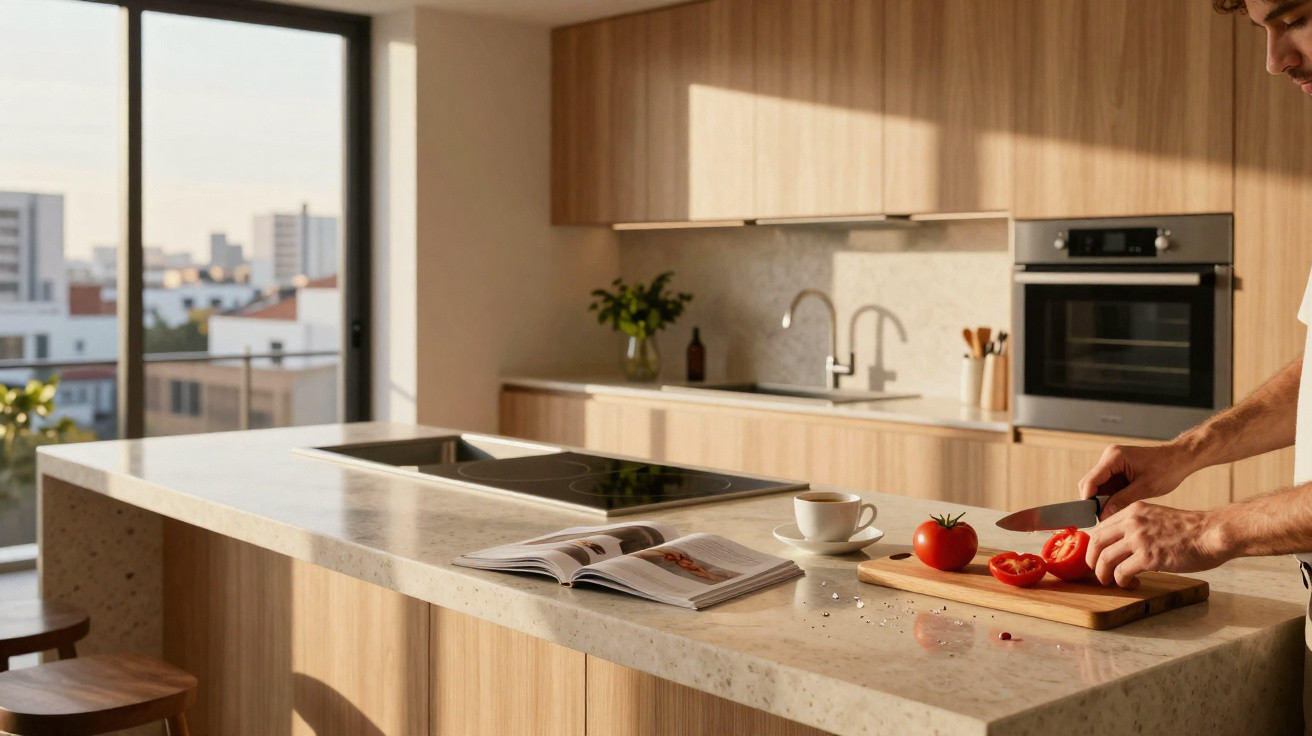
Refurbishing a kitchen calls for sensible decisions that prevent future problems with continual maintenance. The traditional marble worktop is increasingly being replaced by innovative sintered stone, a revolutionary material that combines outstanding strength with sophistication in the space.
Why is marble losing ground in the kitchen?
Natural marble has always represented luxury, yet it has significant drawbacks in today’s cooking routine. As it is a highly porous rock, it quickly absorbs liquids, leading to permanent stains from everyday products such as coffee and oil.
As well as being highly porous, marble scratches easily and cannot withstand the direct heat of boiling pans. These vulnerabilities frustrate those seeking a practical routine and have increased demand for technological surfaces that can endure intensive daily use.
The key limitations of this conventional material highlight the need for progress in contemporary projects:
- Heat resistance: Withstands hot pans placed directly on the surface without damage.
- Zero porosity: Prevents deep staining from wine, coffee or seasonings.
- High durability: Provides excellent protection against mechanical scratching and everyday impacts.
- Practical hygiene: Removes the need for complex sealants and makes cleaning easier.
- Modern design: Delivers sophisticated patterns that faithfully replicate premium marbles.
What are the everyday benefits of sintered stone?
Sintered stone stands out for its almost zero porosity, completely preventing the absorption of dirt. This innovative feature ensures that oils and seasonings do not damage the surface, making the product an excellent option for a modern kitchen.
Another exceptional advantage is the material’s superior heat resistance, which allows it to handle heated objects without aesthetic damage. Its exceptional durability makes meal preparation a more relaxed task, removing constant concerns about unwanted stains or cracks in a new worktop.
Below is a video from the Casa Sul Channel on YouTube, which explores the points discussed in this subject in greater depth:
How does the Neolith manufacturing process work?
Renowned brands such as Neolith, distributed by Alicante, use advanced technology to reproduce the natural rock-forming process. Under extremely high pressure and intense heat, mineral elements are perfectly fused to create ultra-compact slabs with extreme rigidity.
Alicante High Technology
Neolith’s architectural advantage
Advanced manufacturing uses high pressure and temperature to produce ultra-compact slabs with exceptionally high structural performance.
This process provides complete impermeability and weather resistance, making it ideal for the most demanding residential projects.
This innovative engineering produces a uniform surface that accurately reproduces the elegant veining of premium marbles. Consumers gain the sophisticated aesthetic they want for their home, combined with the flawless technical performance essential for daily cleaning.
Industrial development has delivered fundamental competitive advantages for the technical specification of this cladding:
- Sintering of pure minerals under extreme pressure conditions.
- Advanced thermal fusion that eliminates all internal porosity.
- High-definition digital printing to recreate natural veining.
How should this surface be cleaned correctly?
The daily upkeep of sintered stone is remarkably simple and cost-effective for homeowners. Thanks to its impermeable composition, there is no need to apply periodic chemical sealants or specialist waxes to maintain the original beauty of your kitchen worktop.
A damp cloth and neutral detergent are all that is needed to remove food residue quickly and conveniently. This ease saves valuable time when organising the home, ensuring a fully sanitised environment free from bacteria that may harm the health of your modern décor.
Straightforward everyday care includes practices recommended by leading market specialists:
- Daily use of a soft sponge with warm water.
- Targeted application of neutral detergent to remove grease.
- Quick drying with a microfibre cloth to prevent surface marks.
Is sintered stone worth the investment?
Although its upfront cost is higher than that of some traditional stones, its cost-benefit ratio is highly favourable over the long term. Avoiding expenditure on frequent restorations and early replacement of damaged surfaces fully offsets every penny invested in the residential project.
Choosing this technology enhances the value of the property and provides complete peace of mind during everyday cooking activities. It is the ideal combination of impeccable functionality and contemporary beauty, setting a new standard of excellence for anyone planning a refurbishment without any headaches.
Read also: Marble kitchen worktop is out of fashion and gains a durable replacement
Comments
No comments yet. Be the first to comment!
Leave a Comment