
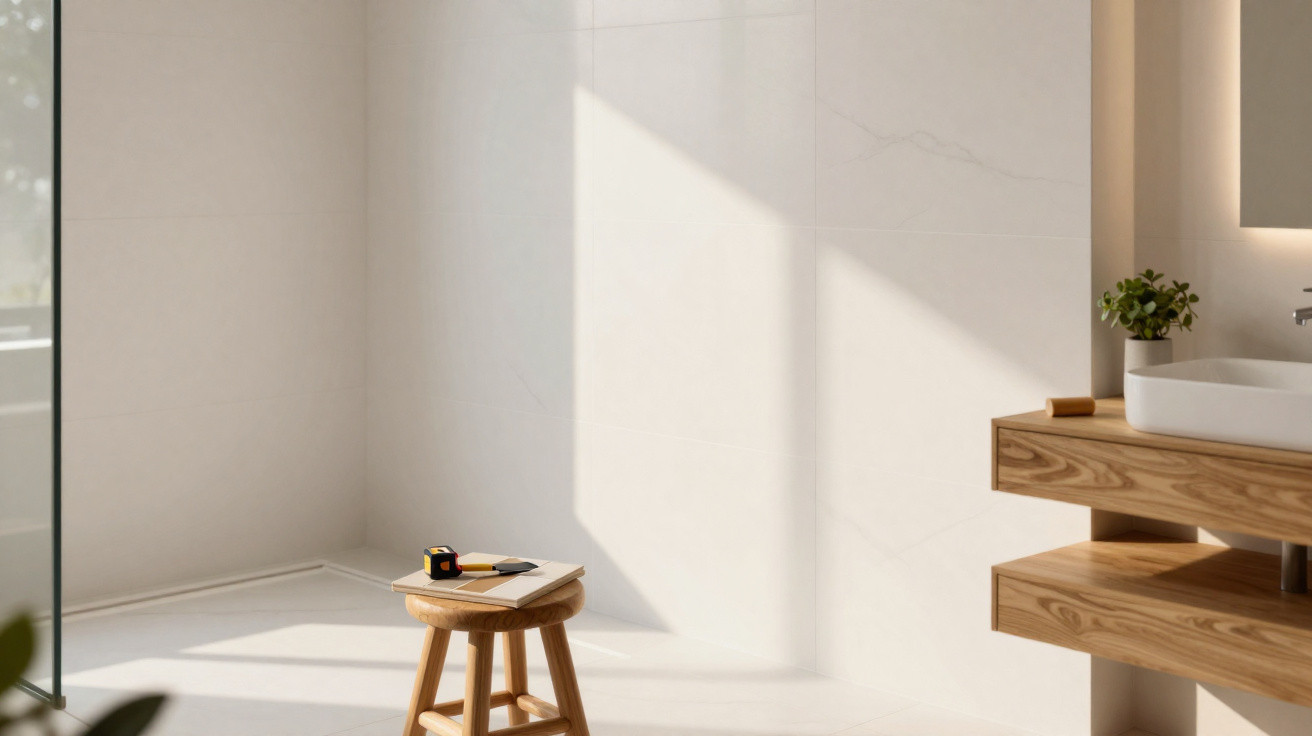
White bathroom tiles still have their place, but they have lost ground in quick renovations because they require numerous visible grout lines. For 2026, the growing preference is for large slabs, with fewer cuts, less grout and easier cleaning.
Why have traditional white tiles fallen out of favour?
Small white tiles deliver a clean look, yet they also create many grout lines between individual pieces. In a bathroom, these gaps collect moisture, soap, body oils and dust, making maintenance more frequent.
A tile is a thin ceramic piece, normally used in large quantities to cover surfaces. Because this type of finish relies on multiple pieces fitted side by side, it creates more visible joints and areas where residue can build up.
This shift in trend is driven by the following reasons:
- Fewer joints: large slabs minimise the lines where dirt becomes visible.
- Cleaning: more continuous surfaces need less intensive scrubbing.
- Moisture: fewer gaps mean fewer areas that encourage mould.
- ⏱ Quick renovation: larger formats can speed up installation.
- Appearance: the bathroom looks larger, more uniform and more contemporary.
What is the new bathroom trend for 2026?
The trend is moving towards large-format slab finishes, continuous panels and products with minimal joints. Rather than using dozens of small tiles, bathrooms are being finished with broad surfaces that have fewer visual breaks and a more uniform finish.
Some projects also use flexible grout, epoxy grout or self-expanding solutions in particular areas, according to the material and installation method. The aim is not to overlook sealing, but to reduce visible gaps and make daily care easier.
How does maintenance change with large slabs?
With traditional tiles, dirt often shows up first in the grout, which can darken, stain and collect mould. With large slabs, by contrast, cleaning is focused on the main surface, leaving fewer lines to scrub and causing less wear.
Bathroom with fewer gaps
The benefit becomes clear in the cleaning routine.
The less exposed grout there is, the fewer areas there are that can stain.
Even so, correct installation remains essential to prevent leaks.
In practical terms, the difference is most noticeable in the shower enclosure, behind the basin and near the toilet, where splashes and cleaning products are common. With fewer joins, a cloth moves across the surface more easily and the bathroom keeps a clean appearance for longer.
In a direct comparison, consider the following:
- Small tiles require more grout and more scrubbing between pieces.
- Large slabs reduce gaps and produce a more continuous surface.
- Epoxy or flexible grout tends to withstand moisture more effectively.
- Poor installation removes the benefit of any wall finish.
Is this option genuinely cheaper?
The cost is determined by the material, labour and the bathroom's condition. Large slabs may cost more per piece, but they can reduce setting-out time, the number of joints and future maintenance, making the renovation economical in some situations.
For quick renovations, the benefit usually comes from a cleaner installation, an updated look and less need to restore stained grout later on. However, uneven walls, complicated cuts and heavy pieces can increase the renovation budget.
Before making a choice, assess these points:
- Price per square metre of the selected finish.
- The cost of specialist labour for large slabs.
- Whether walls need levelling before installation.
- Future savings on cleaning, grout and maintenance.
Why is this trend growing in quick renovations?
The search for the wall finish set to dominate bathrooms in 2026 is linked to practicality. Homeowners want to refresh the look without creating a demanding routine of cleaning and maintenance.
White tile is not disappearing, but it is no longer the automatic choice. In small bathrooms, large slabs, minimal joints and a continuous finish create a greater sense of space, reduce grout stains and make the renovation more modern and functional.


Comments
No comments yet. Be the first to comment!
Leave a Comment