
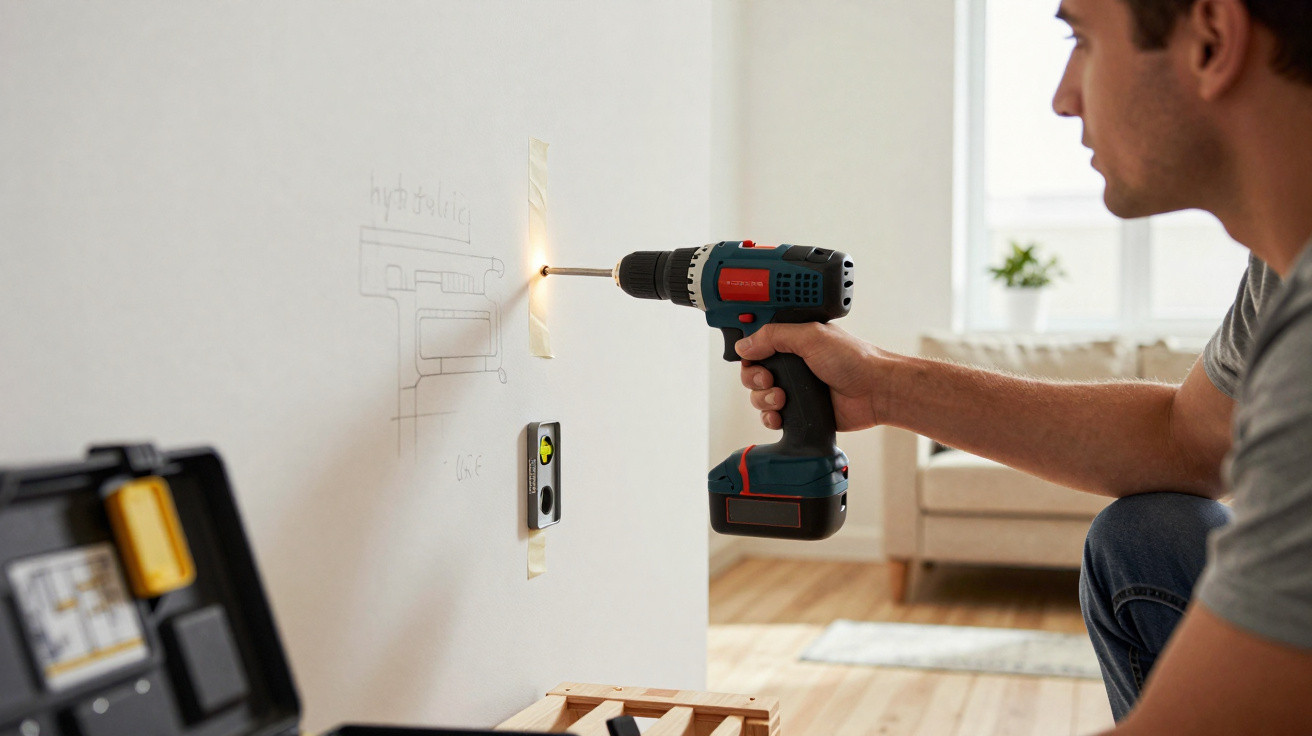
Drilling into a wall without knowing where the pipes run can turn a straightforward renovation into a leak, water ingress and damaged wall covering. Before picking up the drill, a few quick checks can lower the risk of striking pipework.
Why is it dangerous to drill without locating pipes?
Concealed water pipes sit behind plaster, tiles or concrete, yet they remain susceptible to drill bits and screws. Drilling in the wrong spot may lead to an immediate leak, damp staining, reduced water pressure and an expensive repair.
Plumbing is the system that carries fluids through pipes. In houses and flats, this network runs through walls, floors and service risers, so care is needed before any drilling or fixing work.
Before drilling, look out for the following signs:
- Water points: taps, stop valves and showers can indicate the likely pipe route.
- Vertical routing: pipework often runs up and down close to plumbing fixtures.
- The adjoining room: a bathroom, kitchen or utility room may share the same plumbing wall.
- Sound: light tapping can reveal differences between hollow and solid sections.
- Detector: metal and moisture detectors reduce the risk before using the drill.
How can you follow the wall’s plumbing layout?
Start by checking the locations of taps, showers, stop valves, filters, washing machines and toilet cisterns. In many installations, pipes run vertically above and below these fittings, meaning that drilling along this line can be risky without checking first.
It is equally important to inspect the other side of the wall. A seemingly dry living room may share masonry with a bathroom, kitchen or utility room. In that situation, the pipework could be concealed exactly where you plan to fit a shelf, picture or heavy-duty bracket.
How should you use the sound test before drilling?
Tap the wall gently with your knuckle, comparing several areas around the intended location. Sections that sound especially hollow, solid or abruptly different may point to a change in material, electrical conduit, an earlier repair or an internal void.
Stop before drilling
The wall often provides clues before the drill bit does.
Map taps, stop valves and water points before marking the hole.
If you are unsure, use a detector or call a professional before drilling.
This test does not pinpoint pipes with complete accuracy, but it can show that the wall is not uniform. Combine it with an understanding of the plumbing layout, an inspection of neighbouring rooms and, where possible, a review of plans, renovation photographs or renovation records.
Use the sound test as follows:
- Select the area where you intend to fit the item.
- Tap nearby points above, below and to either side.
- Compare hollow, dry, metallic and very solid sounds.
- Avoid drilling along lines that align with taps and stop valves.
- Stop the installation if you notice dampness, mould or blistered paint.
Do metal and moisture detectors actually help?
Yes, affordable detectors can be very useful for domestic renovation work. Basic models can identify metal, conduit and nearby structural elements, while moisture meters highlight areas that may have a leak, water ingress or trapped water behind the wall covering.
Move the detector slowly in several directions and mark warning points with tape. Even so, the device does not replace common sense: PVC pipes may not register on a metal detector, and moisture readings can vary according to the plaster, paint and conditions.
In practice, combine the following resources:
- A metal detector to locate metal components, screws, conduit and old pipes.
- A moisture meter to identify wet or suspicious sections.
- A plumbing plan, where available, to confirm routes.
- A visual inspection of water points on both sides of the wall.
- A qualified professional if the hole will be large, deep or in a critical area.
What should you do if you suspect a pipe in the wall?
Just as a wall that is damp inside despite no recent rain may indicate a concealed leak, any sign of moisture near the drilling area requires attention. In these circumstances, do not force the installation or try to solve the issue using only filler or paint.
If the wall has a nearby plumbing fixture, bulging tiles, a mouldy smell or a detector showing moisture, choose a different spot or call a plumber. Prevention costs less than opening up the wall afterwards: a few minutes of checking can prevent leaks, water ingress and renovation losses.
Comments
No comments yet. Be the first to comment!
Leave a Comment