
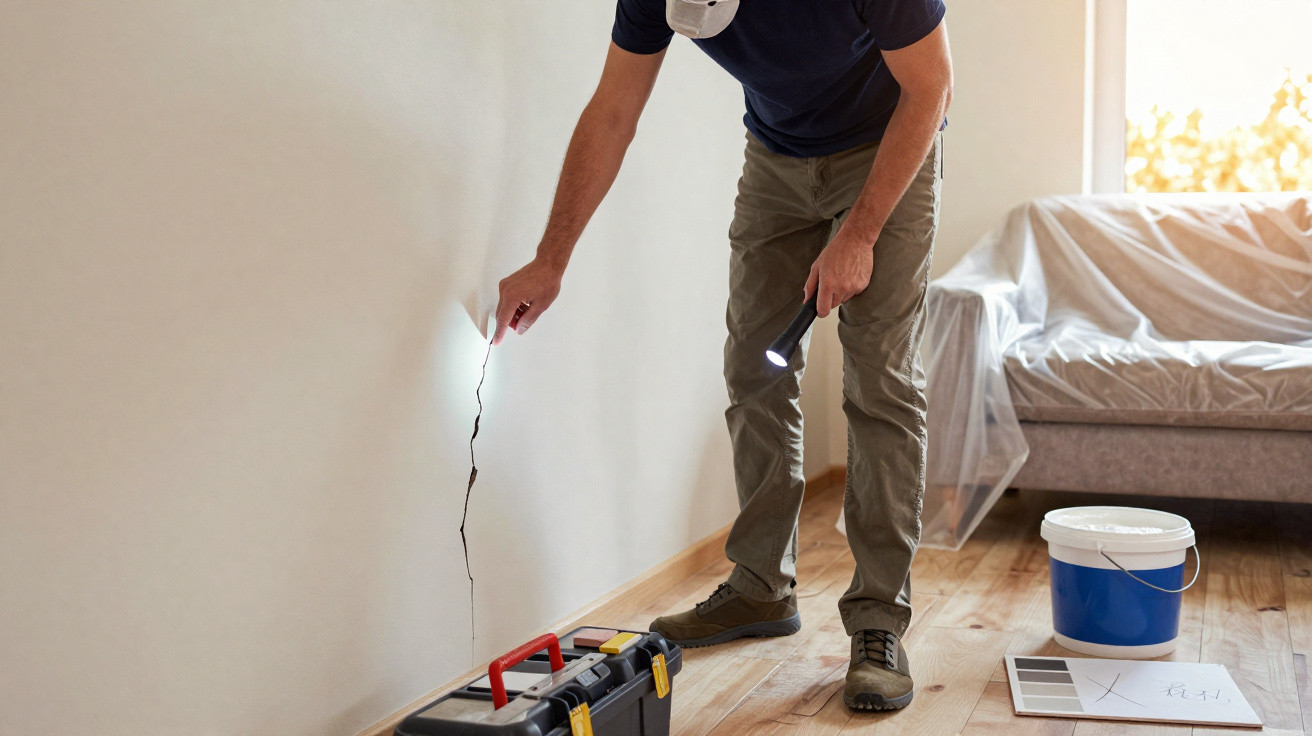
Renovation work often exposes issues that have been concealed for years, such as cracks in walls beneath wallpaper or within old plaster. These splits may point to natural structural movement, mortar shrinkage or even application defects from earlier building work. In many cases, the homeowner only recognises the extent of the issue after removing finishes and finding walls covered in open lines and uneven areas.
How can you identify cracks in walls before starting repairs?
Before selecting a repair technique, it is vital to establish the type of crack in the wall. Not every opening signals a serious structural problem; many affect only the plaster or surface finish.
In practical terms, three main situations can usually be distinguished by assessing their depth, width and position. This initial assessment guides the choice of material and repair approach, and determines whether a qualified professional should be called.
- Fine surface cracks: narrow lines affecting only paint or finishing compound;
- Medium cracks: extend into the plaster and can be felt when running a finger over them;
- Deep cracks: reach the masonry or concrete and may sometimes pass through the entire wall.
What traditional and modern methods can repair cracks in walls?
Cracks in walls are often linked with expensive solutions, yet older methods using straightforward materials can still deliver reliable results. Techniques based on simple materials remain widely used for internal refurbishment in flats and masonry houses.
Alongside ready-made products, certain established techniques remain effective when the substrate is properly prepared and curing times are observed, helping to prevent cracks from returning.
- Reinforcement with fibres and adhesives: fibres, such as hessian, are soaked in adhesive to fill and “stitch” the crack together;
- Levelling with plaster compounds or mortar: these smooth the area after the initial filling stage;
- Using reinforcement tape: applied over recurring cracks and plasterboard joints to limit further opening.
Which materials should be used for cracks in indoor and outdoor walls?
Indoors, the usual priority is a smooth finish and a long-lasting repair, without direct exposure to rain or sunlight. Outdoors, materials need to withstand moisture, temperature changes and structural movement.
When selecting the most suitable material, consider not only the size of the opening, but also the wall type and the likelihood of future movement.
- PVA-based adhesives: act as a bonding agent between the inside of the crack and the filling material;
- Plaster compounds or fine render: level the surface and can be sanded effectively;
- Ready-mixed interior fillers: suitable for the final layer before painting;
- Polyurethane foam: suited to larger openings in external walls and should be covered once cured;
- Silicone sealant: used for small cracks, expansion joints and damp areas because it remains flexible.
How do you choose the best method for each type of crack in a wall?
The repair method should be chosen using practical factors including the crack’s size, location and substrate type. For concrete, clay brick, concrete block and plasterboard walls, compatibility between the product and substrate directly affects the quality of the outcome.
Future maintenance should also be taken into account. In areas subject to regular movement, more flexible products generally help reduce recurring cracks. Thorough surface preparation, including removing loose material, cleaning carefully and allowing the proper curing time, produces more durable repairs and a stable finish over the years.


Comments
No comments yet. Be the first to comment!
Leave a Comment