
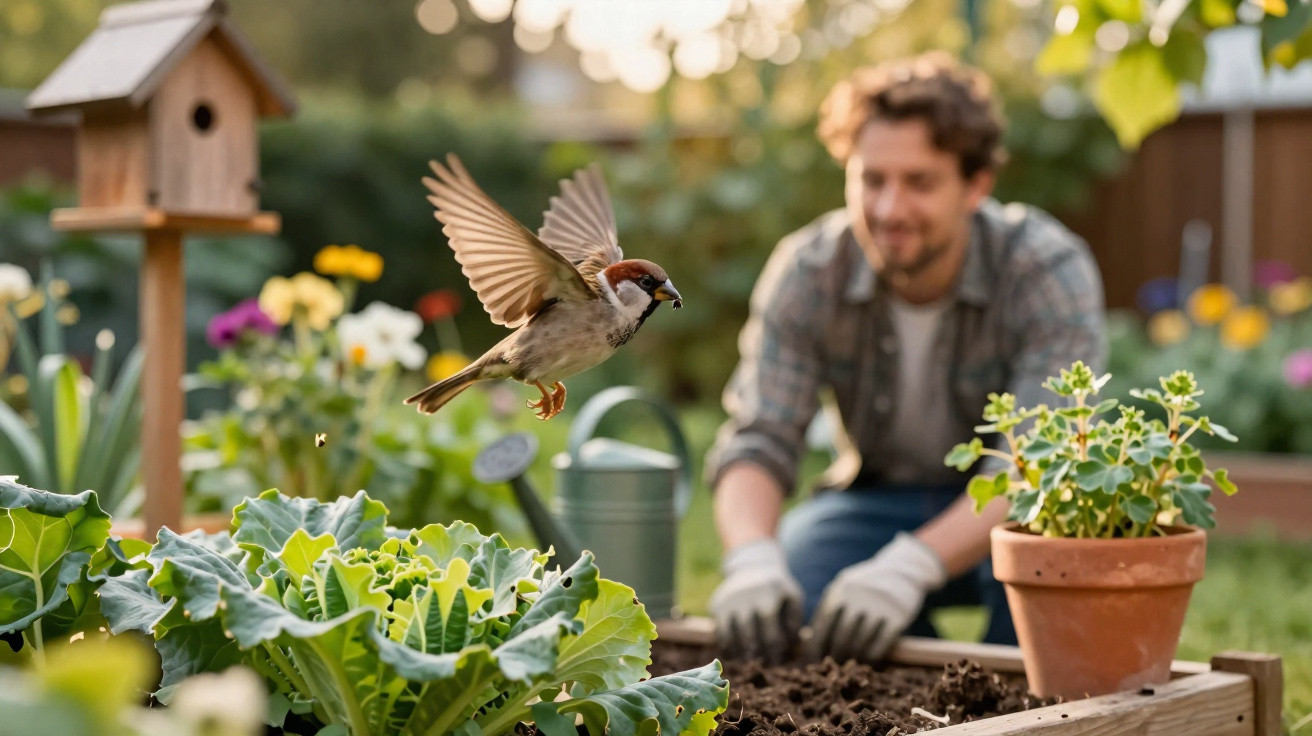
When the sun begins to gain strength again, buds start to swell and the first pollen drifts through the air, it is not only the garden that comes back to life. Anyone standing by a bird feeder at this time will usually notice tits or the robin’s red breast. Another visitor, however, is often overlooked – or even deliberately chased away: the house sparrow, better known as the sparrow. Yet, according to the Ligue pour la Protection des Oiseaux (LPO), France’s equivalent of the NABU, this very bird is an unsung hero of the garden.
From “pest” to indispensable garden helper
For decades, sparrows were regarded as troublesome birds in agriculture. They peck at cereal grains, help themselves to seed and appear in flocks across fields. This image of a grain eater has become deeply ingrained, and many garden owners still apply that judgement to their flowerbeds and vegetable patches.
Experts at the LPO consider this view outdated. Labelling the bird broadly as “useless” or “harmful” mainly comes from an economic perspective: the deciding factor is whether an animal costs or delivers a short-term yield. From a biological standpoint, however, every species has a role within nature’s wider system. Provided an ecosystem remains reasonably balanced, no single species can completely overturn that balance.
The sparrow does not merely eat a few seeds – it is an actively working part of the garden’s natural balance.
This matters especially in residential areas, where hedges are disappearing, front gardens are becoming gravel plots and insect diversity is low. Every animal species that helps maintain variety counts. The LPO therefore clearly classifies the sparrow as beneficial to a healthy garden habitat.
Sparrows and people: a long-standing neighbourhood
For centuries, the house sparrow has been a familiar companion to people. It nests beneath roof eaves, in gaps in walls, in hedges and in old barns. Wherever people live, it can find food and shelter. In many towns and cities, sparrows and pigeons are now almost the only permanent bird residents.
This close relationship can occasionally cause friction – for instance, when sparrows make themselves heard noisily in roof spaces. In everyday life, though, it also has benefits: right outside the front door, the bird helps by eating insects and their larvae. During the breeding season in particular, its young are fed almost entirely on animal food.
Why sparrows are so keen to hunt insects
Grains and seeds provide a dependable food source for adult birds. Young chicks, by contrast, need protein in order to grow quickly. Their parents therefore tirelessly gather caterpillars, beetle larvae, small spiders and other invertebrates. This “animal food” is rich in protein and easier to digest.
In doing so, the sparrow performs a key role in the garden: it keeps insect numbers in check before they can multiply excessively. This includes species gardeners would rather avoid, such as aphids and caterpillars that feed on leaves and buds.
Where sparrows breed, aphids, caterpillars and the rest are less likely to get out of control – without poison, and almost as a side effect.
Practical benefits for your garden
Anyone who tolerates sparrows in the garden, or even actively encourages them, gains several advantages. These birds act as a natural control system for pest insects and help create a more stable mini-ecosystem around the home.
Effects amateur gardeners notice directly
- Fewer pests on roses and perennials: Sparrows pick larvae and caterpillars from leaves before they can cause major damage.
- Better balance in the vegetable garden: With lettuce, cabbage or beans, natural predators can considerably reduce the need for sprays.
- A lively garden instead of a “dead” gravel area: Bird activity attracts other species too, including other songbirds and beneficial insects.
- Fewer mosquitoes and flies: Sparrows also feed on small flying insects active close to the ground or near water sources.
- More enjoyment from watching wildlife: For families with children, they offer a direct way to show how natural cycles work from the window.
Naturally, a sparrow may also eat a few seeds from a newly sown lawn or from sunflowers. Overall, however, its positive effects clearly outweigh this, as it keeps pest insect populations within limits.
How to make your garden sparrow-friendly
Helping house sparrows does not mean redesigning the entire garden. A few straightforward steps are enough to encourage the birds to settle permanently and carry out their role as the garden’s “team”.
Structure rather than perfection
Sparrows favour corners that provide cover and a little untidiness. A perfectly styled garden with gravel areas and regularly close-mown lawns offers them scarcely any food or hiding places. Better options include:
- loose, dense hedges made up of native shrubs;
- small wild areas with nettles, herbs and faded perennials;
- undisturbed piles of leaves where insects can survive;
- old wall recesses or dedicated nest boxes for sparrows.
Water is important too. A shallow dish or a small pond, cleaned regularly, provides somewhere to drink and bathe. This reduces the risk of disease and is welcomed by many bird species.
Gardening without pesticides – essential for more birds
Anyone using insecticides or weedkillers removes the basis of life for sparrows and other birds. Chemical treatments kill not only “unwanted” insects, but also those birds urgently need to rear their young. Gardens treated heavily often have fewer birds, even where bird feeders are available.
Without insects, there are no baby birds – anyone who sprays is effectively taking the sparrows’ nursery away.
Mechanical methods, mixed planting, robust varieties and avoiding sterile areas create stable balance over the long term. Sparrows and other insect-eating birds can then take on the work that expensive products would otherwise be expected to do.
Why sparrows are declining in many areas
Although house sparrows are still common in some towns and cities, they already appear on warning lists in certain regions. Sealed surfaces, renovated façades without gaps, sterile front gardens and declining insect numbers all affect the species severely. Where there are no nesting opportunities and hardly any food, the birds gradually disappear without much notice.
This has consequences for urban wildlife as a whole. When sparrows vanish, part of the natural pest control system and an important link in the food chain disappear with them. Organisations such as the LPO and the NABU therefore call for built-up areas to become more bird-friendly again.
| Problem | Consequence for sparrows | Simple garden-based response |
|---|---|---|
| Gravel and stone front gardens | Hardly any insects and no cover | Plant flowering strips, native perennials and shrubs |
| Tightly sealed building renovations | Loss of nesting places in wall gaps | Put up nest boxes for sparrows |
| Frequent use of chemicals | Decline in insect food | Garden organically and avoid poisons |
Protecting sparrows matters far beyond your own fence
Giving sparrows space does not only benefit the gardener. The bird represents many species that depend on the same features: insects, other songbirds, hedgehogs and bats. A varied garden provides all these animals with places to retreat to, while making entire neighbourhoods more resilient during heatwaves and heavy rainfall, because plants retain water and provide shade.
The sparrow was once considered a nuisance in many places partly because its role within the system received little attention. It is now attracting more notice, as it has become clearer what happens when such “common” species disappear: places become quieter, more monotonous and more vulnerable to disruption. A few simple changes in the garden can once again open the door to this underestimated ally.
For amateur gardeners, it can be worthwhile looking more closely: several sparrows sitting in a hedge are often a sign that life remains in the garden. Those who give them a little support through hedges, water sources and avoiding pesticides gain a permanent team of small, feathered pest hunters in return – requiring no effort and at work around the clock.
Comments
No comments yet. Be the first to comment!
Leave a Comment