
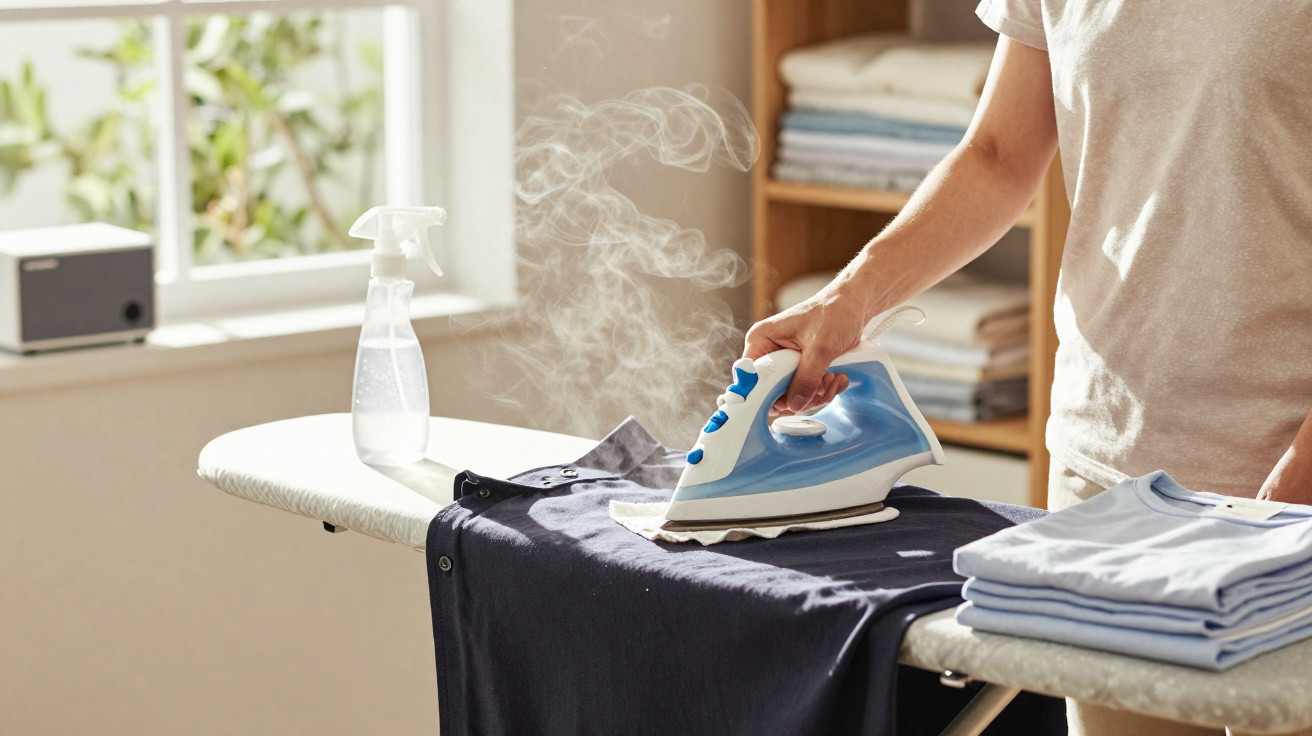
Marks left on clothes after ironing are a common everyday problem and often raise questions. At home, an iron can sometimes leave creases, shine on dark garments and even unusual stains, whereas professional laundries generally achieve a more consistent finish. This is not simply down to the equipment: it mainly depends on using the right temperature, keeping the soleplate clean and ensuring the fabric has controlled moisture while ironing. Together, these factors help protect your wardrobe more effectively.
How can the iron temperature mark and even distort fabric?
Temperature control is one of the most delicate aspects of ironing. Every fabric can withstand a particular heat level, and when an iron is hotter than recommended, its fibres may begin to distort and take on a “plasticised” appearance. Synthetic materials such as polyester and polyamide are especially vulnerable: they can soften or partially “melt”, leaving smoother patches that look different from the rest of the garment.
In professional laundries, the temperature is selected according to the fibre content shown on the care label, with garments sorted by material type. Heat is often paired with generous steam, which softens the fibres and shortens the time the iron must remain in direct contact with the fabric. At home, leaving the iron still on a garment or repeatedly going over the same spot is a frequent mistake and one of the leading causes of permanent marks.
Why is shine on dark fabrics not always dirt?
The “shine” that appears after ironing on smart trousers, suit jackets and other dark garments is usually not dirt. Instead, it results from scorching or excessive flattening of the fibres. Heat combined with the pressure of the iron changes the way light reflects off the material, producing lighter reflections in high-friction areas such as knees, pockets and seams. As this is a physical alteration, the effect is usually permanent and will not disappear in the wash.
To lower this risk, laundries use strong steam, pressing cloths placed between the iron and the fabric, and padded ironing boards to reduce direct pressure. At home, avoid passing the iron repeatedly in the same direction over one area, and test first on a less visible part of the garment. Tailoring fabrics and blends containing synthetic fibres require extra care when setting the heat.
Which laundry practices help prevent ironing marks?
Alongside the correct temperature, professional laundries follow routines that greatly reduce the risk of garments coming back marked. Moisture is central to this: rather than ironing items when they are completely dry, many are pressed while slightly damp or rehydrated with steam. This makes the fibres more flexible, requiring less pressure and less contact time with the iron.
Keeping the soleplate clean is another regular precaution, preventing residue from detergent, fabric conditioner, dust or previously scorched material from transferring to clothing. To achieve similar results at home, the following habits are particularly helpful:
- Sort clothes by fibre type and colour before ironing.
- Use steam and a spray bottle filled with clean water on heavily creased sections.
- Use pressing cloths on dark, delicate or sensitive fabrics.
- Clean the iron soleplate regularly, following the manufacturer’s instructions.
- Avoid applying too much pressure, allowing heat and steam to do most of the work.
How to iron clothes without marks using the right moisture and temperature
Ironing clothes when they are completely dry is among the most common reasons for visible marks and creases that are difficult to remove. Dry fabric has stiffer fibres, so it takes more heat and force to relax them, increasing the likelihood of localised shine and small pressed lines, particularly on shirts and smart trousers. Working with a slightly damp garment makes shaping easier and reduces the need for high temperatures.
For a more even finish, take clothes out of the washing machine soon after the cycle ends and hang them carefully stretched out. If they have already dried, lightly dampen the most creased areas with a spray bottle. Combining this approach with checking the care label, choosing the lowest effective temperature and inspecting the iron soleplate regularly helps extend the life of garments and minimise permanent marks.



Comments
No comments yet. Be the first to comment!
Leave a Comment