
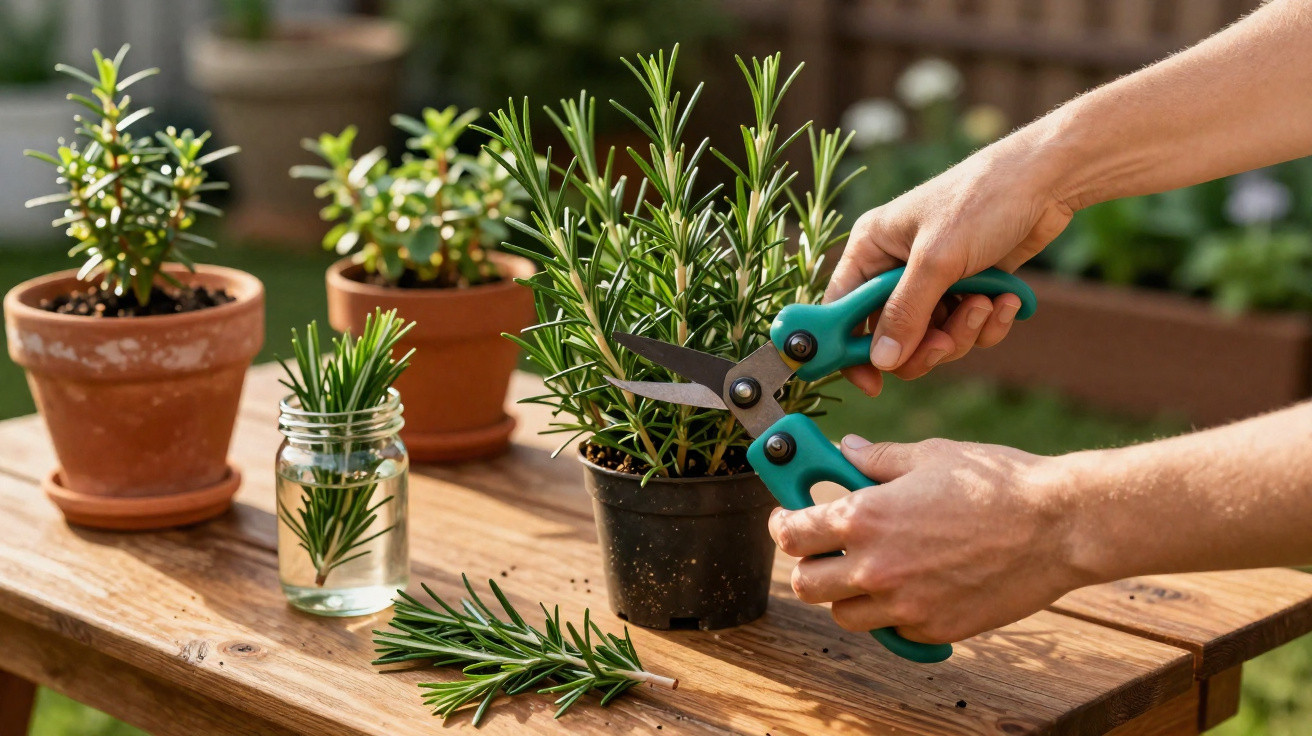
If you only harvest rosemary and never reach for the secateurs, you risk ending up with a scruffy, woody shrub that has lost its aromatic strength. Well-timed cuts in spring and autumn, however, can shape this Mediterranean plant into a compact, healthy and reliable supplier for the kitchen and garden. Success depends on timing, the right method – and knowing exactly where not to cut.
Why rosemary should be pruned at all
Rosemary is a tough perennial in a border, but without regular attention it soon becomes misshapen. Its stems turn woody, branches dry out and bare patches develop in the centre. By that point, it is obvious that the shrub needs more than sunshine and water.
“Regular pruning keeps rosemary youthful, dense and far more aromatic than neglected, ageing plants.”
A moderate maintenance cut offers several benefits:
- New growth: fresh, soft shoots emerge and are especially aromatic.
- Denser habit: the shrub stays compact rather than producing long, awkward branches.
- Better harvests: an even supply of young stems is ideal for cooking and drying.
- Plant health: dead material is removed, helping the plant remain resilient.
Whether it is growing in a pot on the balcony or in a front-garden border, rosemary gradually loses both its appearance and productivity over the years if it is not pruned.
The best time: when rosemary can be pruned
Spring pruning after flowering
Late spring is the key time for pruning. Once the flowers have faded and hard frosts are no longer expected – usually in March, or April in colder locations – it is time to use the secateurs.
Rosemary naturally grows more vigorously then, cuts heal quickly and the shrub responds with strong new shoots. Shorten the spent flowering stems by around one third. Always cut into green, living growth rather than hard brown wood.
“The period immediately after spring flowering is the most important maintenance window – it determines the plant’s shape and density for the whole year.”
In exposed, colder areas, it is wiser to wait a few extra weeks until night-time frost has genuinely passed. For very young plants, simply pinch back the tips by five to eight centimetres.
A light autumn cut before winter
A second, much gentler pruning session can be carried out in October. This is less about reshaping the plant and more about tidying it up:
- remove dry, dead branches
- correct shoots that have grown slightly out of shape
- thin the shrub lightly so air can reach its centre
Do not cut the plant back hard at this stage, as tender new shoots would have little protection from frost. Pruning wounds heal much better on sunny, dry days than in damp, chilly weather.
In very cold regions, spring pruning alone is entirely sufficient. A late autumn cut can expose fresh growth to frost there and weaken the plant.
Times best avoided
Certain periods are risky for rosemary:
- Hard frost: cut surfaces can freeze, tissue may die and fungal diseases can take hold easily.
- Midsummer heatwaves: heat combined with pruning causes stress, as the shrub must cool itself and heal at the same time.
- Wet spells: prolonged rain encourages fungi on fresh wounds.
- Peak flowering: a hard cut during abundant flowering drains the plant’s energy and removes food for pollinators.
If you want to take cuttings, wait until after flowering and choose a dry day that is not too hot.
Pruning rosemary correctly at every age
Shape young plants rather than cutting them back severely
Young rosemary mainly needs gentle training. The aim is to create a compact, bushy framework, not to use heavy pruning.
In practical terms, this means:
- trim only the green tips by 5–10 centimetres
- remove no more than one quarter of the total leaf mass at a time
- cut directly above a pair of leaves or a node so the shoot branches
This encourages the plant to branch repeatedly instead of forming one long, unstable main stem. Frequent small adjustments achieve far more than one major intervention every two years.
Rejuvenate old rosemary gradually
Older specimens with thick woody branches and bare areas require patience. Cutting them back radically in one go can kill the shrub. Instead, rejuvenate it over two to three years.
“Old rosemary does not become young again with one cut – it needs several careful steps.”
For old shrubs, proceed as follows:
- First, remove clearly dead, grey or cracked branches completely.
- Then shorten individual old stems to just above areas where green growth is still visible.
- Always allow the plant to grow for at least one season between interventions.
This leaves the rosemary with enough foliage to photosynthesise and rebuild its reserves. After two or three years, such a shrub often looks almost new.
Radical pruning as a last resort
Anyone inheriting a badly neglected rosemary plant from an allotment or a previous owner may be faced with little more than a gnarled skeleton. If individual buds or leaves are still visible on woody stems, a more substantial cut may be its last chance.
In this case, stems can be shortened by up to half – but only back to just above living sections. Afterwards, every aspect of care matters: loose soil, no standing water, restrained watering and plenty of light. New shoots may take months to appear. Patience is worthwhile here.
Pot or border: pruning technique for each location
Cutting back rosemary in pots
Rosemary has considerably less root room in a container, making every cut more sensitive. Therefore:
- make the pruning around one third less intensive than for plants in the ground
- cut only the flexible green ends and avoid hard wood wherever possible
- after pruning, ensure good drainage and do not allow water to sit in the saucer
As pots heat up faster and dry out more severely, plants in them react more sensitively. Gentle, frequent corrections work better than occasional heavy pruning.
Shape rosemary in the border more boldly
Rosemary growing in garden soil has more root space and therefore greater capacity to recover. It can be cut back more noticeably. On well-established plants, shoots can be shortened by half, and sometimes by up to two thirds – always within green wood.
“In a border, the strong root system allows considerably bolder cuts than in a pot.”
A clear structure is helpful:
- remove branches crossing in the middle, allowing air to flow through the crown
- lightly round the outer shoots if you want a ball-shaped form
- for hedges, make defined straight cuts across the top and along the sides
Special forms: trailing and ball-shaped rosemary
Ground-covering varieties that spill over wall tops or slopes need a different approach. Remove any shoots growing steeply upwards, as they disrupt the flowing, “cascade-like” appearance.
For a dense ball shape – perhaps in a herb bed or as a structural plant in front of a patio – shorten all shoots evenly by roughly one third, working all the way around the shrub. Two such shaping sessions a year are enough to maintain an almost perfect sphere.
Common mistakes when pruning rosemary
Cutting into old wood
The most important rule is that rosemary rarely, if ever, regrows from completely woody brown sections. Cutting back into these areas leaves dead, bare stubs.
| Characteristic | Young wood | Old wood |
|---|---|---|
| Colour | green to greenish-brown | grey-brown, dull |
| Scent when scratched | strongly aromatic | little or no scent |
| Flexibility | bendable, slightly springy | brittle, hard |
A quick scratch test with a fingernail is useful: there should be a green, moist layer beneath the bark. If everything is dry and fibrous, keep the secateurs away from that section.
Removing too much at once
Cutting away more than around one third of the overall plant mass in a single session puts the shrub under considerable pressure. Much of its stored energy then goes into wound healing, while new growth may fail to appear.
A staged approach is better: make several moderate cuts over two to three years rather than choosing “all or nothing”. This lets the shrub adapt to its new shape and remain stable.
Poor tools and unsuitable weather
Blunt secateurs crush stems instead of cutting them cleanly. This increases the wound area and encourages disease. Sharp, disinfected garden secateurs are sufficient for most jobs; hedge shears are only needed for very large shrubs.
Prune on dry, sunny days. A wet shrub, humid air and fresh cuts are an unfavourable combination. At least six hours of sunshine a day makes rosemary healthier, denser and much more aromatic overall – and better able to cope with pruning.
Propagating rosemary while pruning
Taking cuttings from prunings
Maintenance pruning often produces ideal cuttings. Fresh, non-woody shoots around 15 centimetres long are particularly suitable. Remove the needles from the lower part, leaving only a small “tuft of leaves” at the top.
For propagation, use an airy growing medium made from equal parts soil and coarse sand. Insert the stripped section five to seven centimetres deep into the pot, and keep the mixture slightly moist but never wet.
Rooting in water or directly in soil
Those who enjoy watching the process can place cuttings in a glass of water and change the water daily. Visible white roots form after a few weeks, after which the young plants are transferred into pots.
The more robust method is to plant them straight into the growing medium. This is especially effective for slightly woody summer shoots, as it produces a strong root system without the move from glass to pot.
Caring for young plants
Once a stable root ball has formed, move the small rosemary plants into slightly larger containers. They should again have loose, rather lean growing medium available, while waterlogging remains strictly off limits.
A bright, sheltered spot away from intense midday sunshine supports them during the first few weeks. When new shoots appear, the first small shaping cut will soon follow – beginning the cycle of care, harvesting and regular, careful pruning all over again.





Comments
No comments yet. Be the first to comment!
Leave a Comment