
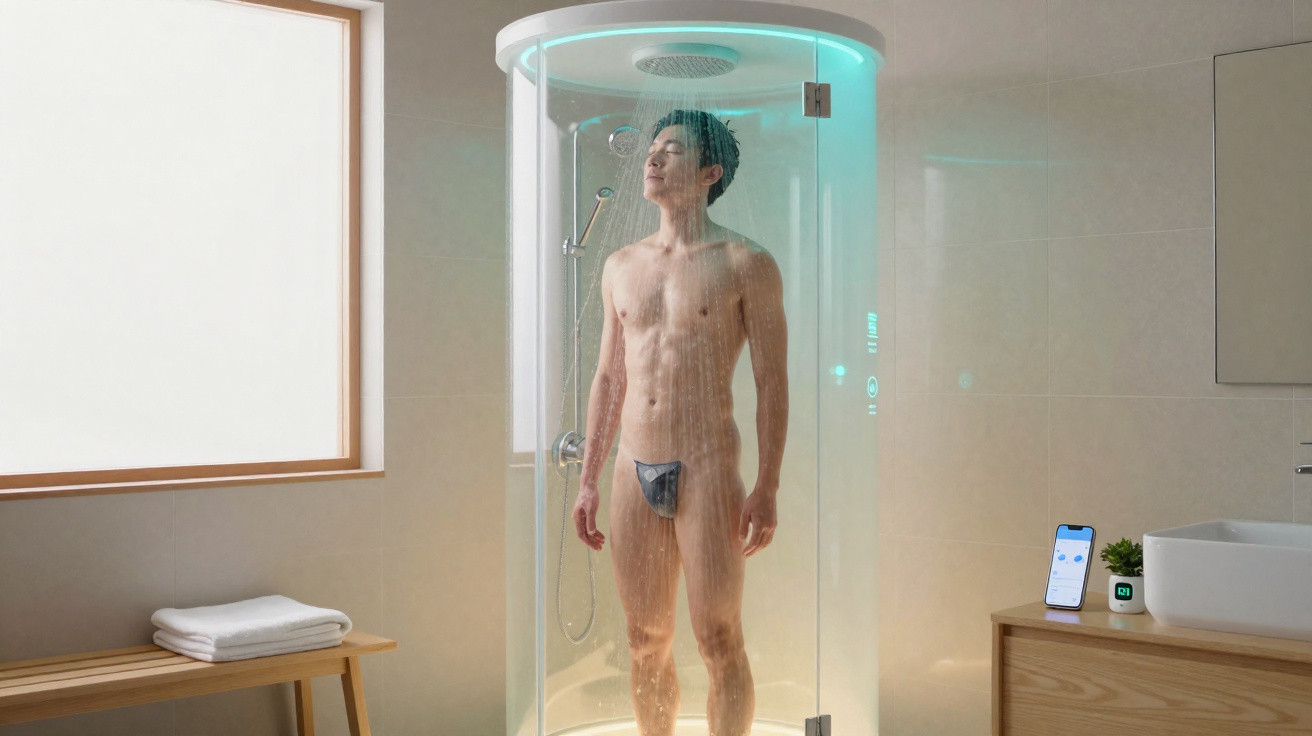
In Japan, an invention that sounds like science fiction is taking shape-and it fits this trend perfectly: a kind of “washing machine for people”. Rather than stepping into a shower, users sit inside a capsule, lean back and emerge clean, dry and relaxed around 15 minutes later. What sounds like something from a wellness lounge could fundamentally reshape personal hygiene.
A capsule rather than a shower cubicle: how the body-washing machine works
The system was developed by a company in Osaka. Its official name is “Mirai Ningen Sentakuki”, broadly meaning “washing machine for the person of the future”. In technical terms, it is an enclosed capsule where one person sits comfortably while the entire washing and drying process runs automatically.
Once the user has entered, the cabin closes, fills with water and activates a system of tiny microbubbles. These exceptionally fine bubbles are already used in spa and wellness treatments. They are intended to penetrate deep into pores and lift away dirt, without any need to scrub or use a sponge on the skin.
The machine promises: no more soaping yourself, no more scrubbing, no more drying yourself-everything happens fully automatically.
When washing is complete, an integrated drying system begins. Warm air circulates through the cabin and carries away moisture. The full process takes roughly 15 minutes, from entering the capsule to leaving it already dry and dressed.
Artificial intelligence adapts the washing programme to the body
The real innovation is not simply convenient washing, but personalisation. Several biometric sensors are fitted inside the capsule. They record, among other things:
- Pulse and heart rate
- Signs of physical tension or stress
- Skin temperature and other physiological parameters
This information is fed into an AI system. The built-in artificial intelligence evaluates it in real time and adjusts the process to suit the individual user. This affects not only water temperature and the intensity of the water jets, but also the interior lighting and soundscape.
Someone entering the cabin feeling stressed receives a calmer, gentler session with warm lighting and soothing sounds. Someone who appears tired may instead experience cooler temperatures, more dynamic jets and energising tones. In a sense, the machine responds intelligently, attempting to balance the user’s physical and mental condition.
What bathrooms, spas and health-tracking apps have so far provided separately is intended to merge here in a single device.
Clean, relaxed, monitored: personal hygiene meets a health check
The developers have a clear ambition: the capsule is designed to combine washing with hygiene, relaxation and health-related data. Throughout the procedure, its sensors continuously collect new readings. This creates a small health record of the body in everyday life, rather than only during a visit to the doctor.
Possible developments could include:
- Identifying persistently elevated stress levels
- Indications of cardiovascular problems based on unusual pulse data
- Changes in wellbeing over weeks and months
Such data could eventually be passed to doctors or integrated into apps. For now, this remains more of a vision, but the technology is already laying the foundations. The washing process therefore becomes a kind of micro check-up built into everyday life.
An idea with a history: from Expo prototype to high-tech cabin
The idea of fully automated body washing is not entirely new. A first prototype of a similar washing cabin for people appeared at the World Expo in Osaka as far back as the 1970s. At the time, however, it remained a futuristic exhibition piece.
The current version revisits the same core concept, but uses technologies that would have been unimaginable 50 years ago: high-resolution sensors, connected systems and AI algorithms that respond within milliseconds. What was once an unusual trade-show attraction is now becoming a serious product concept.
The cabin builds on a retro vision-except the technology now genuinely appears ready for it.
Fewer daily showers-and the role of this technology
At the same time as these developments, showering habits are changing worldwide. Many people are cutting back on daily showers for a range of reasons: dermatologists recommend gentler, less frequent washing, energy prices are rising, and more people are paying attention to water consumption.
This is precisely where the Japanese capsule fits into the picture. If a single highly efficient wash each day-or even every other day-is enough while using significantly less water, it could reduce the need for conventional showers. Anyone who feels thoroughly clean and relaxed after 15 minutes may feel less pressure to step under the shower several times a day.
Why people are generally showering less often
The move towards fewer showers has several drivers:
- Skin health: Dermatologists warn against showering too often or too hot, as it can damage the skin barrier.
- Resources: Water and energy use are becoming more important considerations, not only for younger people.
- Lifestyle: Working from home, fewer daily journeys and more flexible routines mean that many people no longer shower every morning out of habit.
A cabin that cleans very effectively, provides targeted care and also incorporates wellness elements could reinforce this trend-while easing the guilt some people feel about no longer showering every day.
Where could the body-washing machine be used?
Whether the capsule will one day become a normal feature of private bathrooms remains uncertain. Other settings are the more obvious starting point:
- Hotels and wellness facilities offering guests a futuristic extra
- Rehabilitation centres and hospitals, where patients need help with personal hygiene
- Care homes, helping to ease pressure on care staff while giving residents greater comfort
- Luxury flats or smart-home concepts aimed at technology-minded users
The potential could be particularly significant in care settings. People with physical limitations often need to be washed by someone else. An automated cabin could make this process more dignified and more pleasant-provided that it is intuitive to operate and meets high safety standards.
Risks, data protection and the question of convenience
However, every additional sensor and data analysis also increases the risks. The cabin gathers extremely sensitive health information. It remains unclear who could access it, how long it would be stored, and whether it might be used for advertising or insurance models.
There is also a cultural issue. If people become too accustomed to a machine doing everything for them, their awareness of their own body may diminish. Those who only step into a capsule could lose part of the conscious engagement with their body that naturally forms part of a traditional shower.
What this could mean for everyday life
From a practical perspective, combining less frequent showering with high-tech solutions of this kind could change a great deal. Possibilities include:
- New business models for “wash spas” in towns and cities
- Energy-provider tariffs that encourage efficient washing cabins
- Apps linking cleansing rituals with sleep and stress data
People who already shower less often could switch to a more intensive, data-based wash at selected times, relying on simpler washing routines for the rest of the time-such as a flannel, a quick wash at the basin, or washing only their hair.
How beneficial is the trend from a health perspective?
From a medical standpoint, the body needs to be clean, but it does not necessarily need the full daily routine under a hot shower. Many doctors advocate moderate personal hygiene tailored to skin type, activity level and the season. Technology such as the Japanese cabin could support this if it:
- Irritates the skin less than frequent soaping and scrubbing
- Reduces water use without compromising hygiene
- Lowers stress rather than creating extra rush or pressure
What remains important is that people do not hand over their habits blindly to a machine. Anyone using such systems should understand what the sensors actually measure, how reliably the AI responds and what weaknesses may exist.
Ultimately, the issue is less about whether people still shower every day, and more about how consciously they treat their own bodies. The high-tech washing cabin from Osaka points to a possible future: away from rushed, obligatory showers and towards shorter, more targeted and more personalised washing rituals-supported by technology, but not replaced by it.



Comments
No comments yet. Be the first to comment!
Leave a Comment