
Most people who burn wood think of the cosy appeal of a fireplace, flying sparks and crackling flames. What few realise is that a simple technique, applied consistently, can dramatically increase the heat output from their own logs – with no need for a new stove or costly conversion, simply by handling the fuel correctly.
Why well-seasoned wood delivers far more heat
Damp wood may seem harmless, but it is actually a serious drain on energy. Part of the energy contained in the wood is used first to evaporate its water content. Only the energy left afterwards can warm the room.
“The drier the wood, the higher the temperature in the firebox – and the stronger the heat released into the living space.”
Wet logs produce a great deal of smoke, are difficult to light and create very little ember bed. This results in:
- lower heating output despite using the same amount of wood
- heavy smoke and an unpleasant smell
- rapid blackening of the stove glass and firebox
- increased deposits inside the chimney
These deposits often contain what is known as creosote, a tar-like substance that ignites easily. Continually heating with overly damp wood raises the risk of a chimney fire – a situation firefighters know all too well.
How to identify genuinely dry firewood
Most occasional stove users rely on instinct: “The wood has been sitting there for a year, so it will be fine.” In reality, this assumption is surprisingly often wrong. Look specifically for these signs:
- Appearance: Dry logs tend to look greyish or pale, with visible cracks across their end grain.
- Weight: A properly seasoned log feels noticeably lighter than a freshly split piece of the same size.
- Sound: Knocking two dry logs together produces a bright, clear sound. Damp wood sounds dull.
- Smell: A strong resinous or musty odour is a warning sign. Mature wood has only a faint smell.
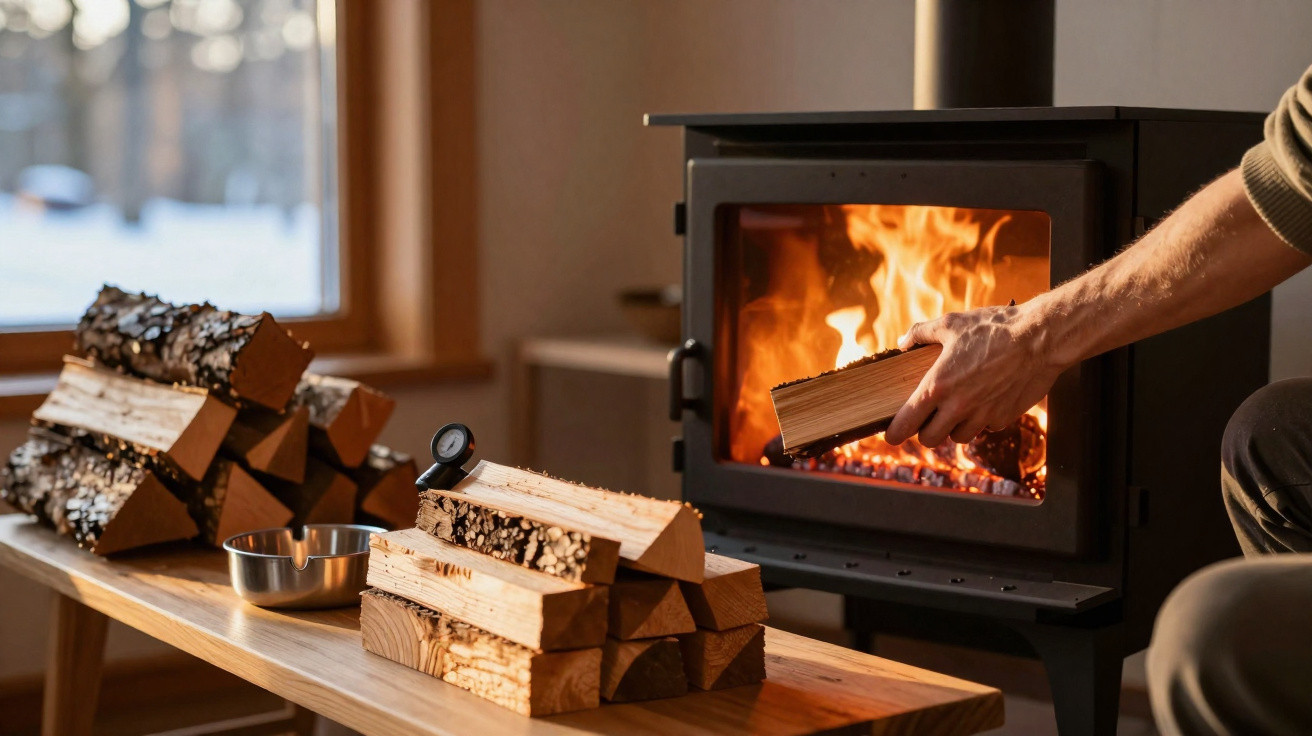
Anyone wanting a more accurate answer can buy a simple wood moisture meter. For efficient heating, the moisture content inside the log should be below 20 per cent. Insert the probe into the side and centre of the wood, rather than measuring only the surface.
The technique that makes the difference: split, stack and season wood properly
The real “secret trick” that can make heating performance feel twice as effective starts long before the first fire is lit: when the wood is split and stored.
Split wood early and into suitably small pieces
The key is to split wood as soon as possible after felling. Whole trunks dry only through the bark, while the interior remains damp for a long time. Every split piece increases the surface area, giving moisture more area through which to escape.
- recommended log length: around 30–50 centimetres, suited to the width of the stove
- cross-section: choose slimmer, easy-to-handle pieces rather than thick chunks
- avoid a bark shell: remove larger sections of bark where possible, as it retains moisture
“Anyone who splits fresh wood and cuts it into stove-friendly pieces will often halve the drying time – laying the foundation for significantly greater heating output.”
Stack correctly: air is the best drying tool
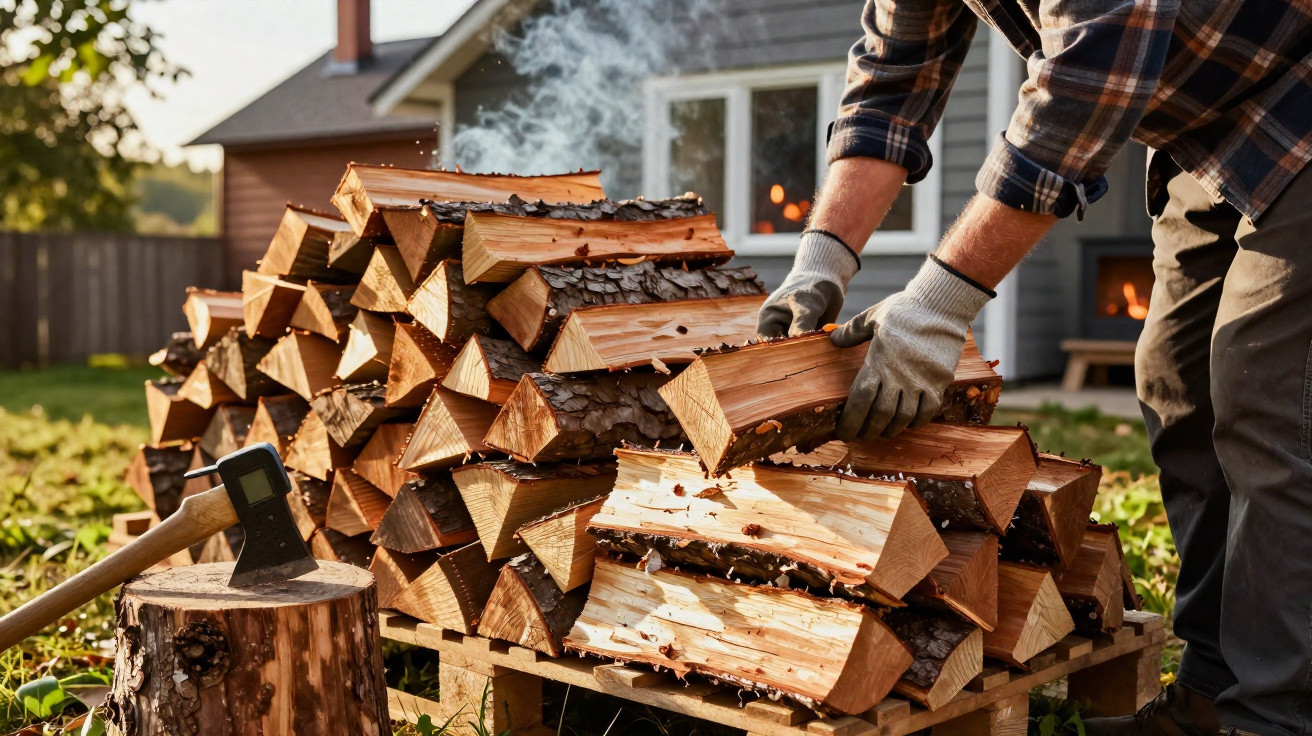
A pile of firewood simply tipped into a corner will dry poorly. Experts recommend creating an airy stack:
- keep wood off the ground by placing it on pallets, timber battens or old beams
- leave small gaps between rows so that wind can pass through
- make the ends of the stack stable by crossing logs alternately, creating both support and air channels
A tarpaulin or roof will keep off rain, but it should cover only the top. Leave the sides open; otherwise, moisture becomes trapped and the logs may start to go mouldy from within.
Choosing the location: sun and wind help for free
Where possible, place the wood store in a sunny and preferably breezy part of the garden. A south- or west-facing position is ideal. Sunlight gently warms the logs, while moving air carries away moisture. A sheltered, shaded north-facing wall slows the drying process dramatically.
Patience pays: realistic seasoning times
Even with ideal storage, wood needs time. A useful rule of thumb is:
| Wood species | Type | Recommended storage period |
|---|---|---|
| Spruce, fir, pine | soft coniferous wood | at least 1–1.5 years |
| Beech, oak, ash | hardwood | at least 2 years |
Many professionals use a rolling system: they fell and split wood now that they do not intend to use until at least two winters later. The wood currently being burned has then been stored for several years and is correspondingly dry.
Wood species determine heat, embers and burn rate
Not every tree provides the same heating qualities. Soft coniferous woods such as spruce and pine season quickly and light easily, but produce a relatively short-lived, fast flame. They are ideal for lighting a fire, but less suitable for heat that lasts throughout the evening.
Hardwoods such as beech and oak take longer to dry. In return, they provide considerably more energy per log and produce long-lasting embers. Anyone aiming for “double” heating output should clearly use these dense deciduous woods as their main fuel.
“It is the combination that works: fast-drying softwood for lighting, dense hardwood for lasting embers – that is how to get the most out of every evening by the fire.”
Keeping carefully seasoned wood genuinely dry
Many people do everything properly – until autumn arrives. They then hurriedly move their firewood beneath a fully sealed tarpaulin or into a damp garage. The remaining moisture content rises again, and the logs absorb water like a sponge.
A simple log store with a roof and open sides protects against rain and snow without preventing air exchange. If only a tarpaulin is available, lay it loosely across just the upper third of the stack. Rain will run off, while air can still circulate.
The practical benefits of better combustion
The effects of consistently dry, correctly stored wood can be seen in several ways that are immediately noticeable in everyday use:
- The stove reaches high temperatures more quickly.
- Less kindling and paper are needed.
- The glass blackens much more slowly.
- The ember bed lasts for hours, even after the flames have become smaller.
- Wood consumption falls while the room temperature remains noticeably the same.
Many fireplace owners report that, after consistently switching to properly seasoned hardwood, they need to add logs far less often. Subjectively, it can feel as though the fireplace suddenly heats “twice as well” – physically, this is due to making better use of the energy stored in the wood.
Practical measures for even greater efficiency
Alongside seasoning, there are several further adjustments that can improve the heating performance of wood even more:
- Use the right log size: Pieces that are too large smoulder rather than burn. Manageable logs with good air gaps between them create more flame and therefore more radiant heat.
- Pay attention to the air supply: The primary and secondary air settings on the stove should suit the wood species and load size. Too little air causes soot, while too much sends heat up the chimney unused.
- Clean the stove: A clean firebox and unobstructed flue improve combustion. Remove ash regularly, but not completely – a thin ash layer protects the grate.
Anyone new to the subject can ask a chimney sweep or heating engineer for basic guidance on operating their own appliance efficiently. Many specialists will assess the quality of the wood on request and advise whether it has been seasoned adequately.
Finally, it is worth understanding the term “moisture content”, which often appears on firewood invoices or in guidance articles: it refers to the proportion of the log’s mass made up solely of water. A log with a 50 per cent water content uses a considerable share of its energy simply on evaporation before any significant heat can reach the living space. Anyone who manages to reduce this figure to below around 20 per cent will notice the difference clearly on the first winter evening by the stove – the flame burns more steadily, the crackle becomes stronger, and heating output rises noticeably.





Comments
No comments yet. Be the first to comment!
Leave a Comment