
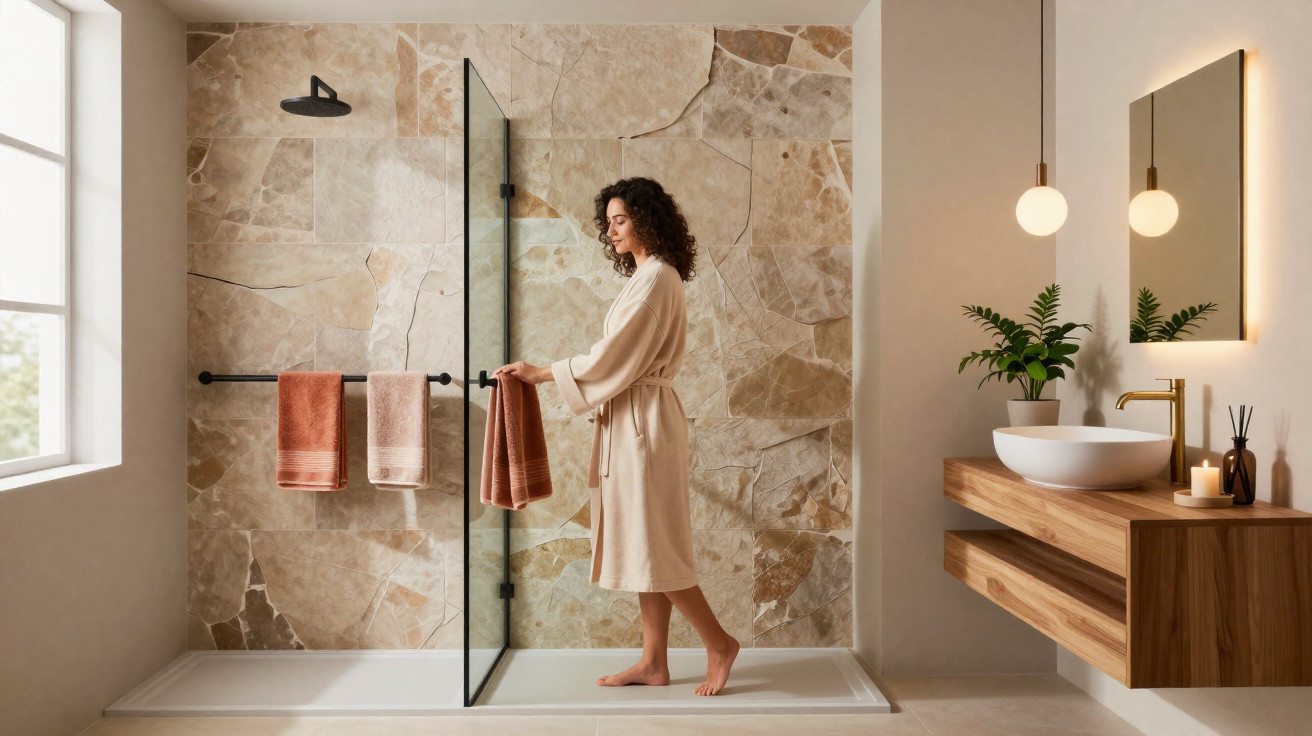
In 2026, the trend is taking a radical turn.
Rather than ripping out an entire bathroom, interior designers are increasingly relying on smart updates that are quick, create minimal mess and still deliver the effect of a full refurbishment. Crucially, existing tiles and pipework can often remain exactly where they are, yet the finished room can look as though it has just been designed for a boutique hotel.
Why bathrooms are becoming wellbeing spaces in 2026
For years, the bathroom was purely functional: have a quick shower, brush your teeth, and leave. With home working, everyday stress and rising hotel prices, more people want a small spa experience within their own home. This is precisely where the new bathroom trends for 2026 come in.
A wet “utility room” is becoming somewhere to switch off – without requiring a five-figure sum every time.
Designers are concentrating above all on five approaches that work in typical rented flats and terraced homes too, without creating a building site for months:
- low-grout surfaces instead of a patchwork of tiles
- large decorative panels with a hotel-inspired finish
- a boldly styled vanity area
- a level-access shower with clean lines
- characterful taps, lighting and textiles
1. Low-grout surfaces: keep the old tiles, change the look
The most welcome news for anyone dreading noise and rubble is that the existing tiled finish often does not need to be removed. Microcement, mineral skim coatings and technical panels can be installed directly over current surfaces.
This offers several benefits:
- Less disruption during the work: no hacking off tiles, barely any dust and a considerably shorter installation period.
- A more contemporary feel: expansive uninterrupted surfaces, without visible grout lines, look calmer and more premium.
- Easier cleaning: fewer grout lines mean fewer places where dirt and moisture can collect.
The result becomes particularly interesting when the floor is given a deliberately textured finish. Slightly rough ceramic or natural stone with a slip-resistant surface provides secure footing – an important consideration for children, older people, or anyone who has nearly slipped in the bathroom before. It can look highly refined when warm shades such as sand, greige or soft greens are used, rather than creating the feel of a typical “clinical floor”.
Slip resistance without a hospital feel
Anyone who wants to feel secure when barefoot can choose, for example, porcelain tiles with an R10 slip rating. These tiles feel pleasant underfoot, do not shine excessively and are hard-wearing. Paired with a simple low-grout wall finish, they create a foundation that will remain current for many years.
2. Decorative panels: a new shower area in one afternoon
Large-format wall panels are a game changer in 2026. Fixed directly onto old tiles, they can transform shower areas at speed.
With two or three panels, an outdated shower can suddenly look like it has a marble or concrete wall – with no filling and no painting.
Popular finishes include the appearance of:
- white or dark-veined marble
- soft exposed concrete
- natural stone textures
- wood-effect decors for a warm Scandinavian look
Many systems can conveniently be fitted with minimal grout lines, with silicone needed only at a small number of junctions. This lowers the risk of mould and reduces cleaning work. These panels also work exceptionally well as splashbacks behind the basin – visually like one continuous slab, yet as practical as a durable tile.
3. The vanity area becomes a feature, not merely a basin
Another emerging trend is to make the vanity area the focal point of the room. Narrow standard consoles are being replaced by units that resemble carefully designed sideboards.
What is in demand for vanity furniture in 2026
- Floating base units: Wall-mounted furniture leaves the floor clear, making the room seem larger and allowing faster cleaning.
- Slimline frames: Metal supports and open frames look light and contemporary without sacrificing all storage space.
- Natural worktops: Distinctive vanity tops in stone-effect materials, solid wood that has been properly sealed, or high-quality compact materials create striking accents.
Designers are increasingly considering the vanity area for the long term: it is better to select a piece that remains stylistically relevant for ten or fifteen years than a short-lived trend item. Small touches such as handleless fronts, visible grain or understated metal edges elevate the overall appearance.
Those with limited mobility, or people planning ahead, can opt for slightly lower, wheelchair-accessible basins. This does not have to resemble a “care bathroom” when the materials and shape are selected thoughtfully – quite the opposite: the result is more reminiscent of a boutique hotel than standard showroom furniture.
4. Level-access shower: streamlined, comfortable and accessible
The traditional shower tray with a raised edge is increasingly disappearing. The preferred choice is a level-access solution with as few interruptions to the floor finish as possible.
| Feature | 2026 trend |
|---|---|
| Entrance | level access, without a threshold |
| Screen | fixed glass panel or entirely open, with minimal profiles |
| Seating | built-in bench or integrated seat |
| Taps | rain shower plus hand shower for flexible use |
A built-in bench finished in a durable material such as marine-grade vinyl or porcelain tile can quickly become a favourite spot: shaving, applying cream to your feet or showering a child are all more relaxed than doing them while standing. These solutions can often be retrofitted even in small bathrooms, provided the drainage is planned carefully.
5. Taps, lighting and textiles: details make the difference
Even the most attractive basic layout can appear bland if the details look like standard DIY-shop fittings. In 2026, bathroom designers are moving more decisively towards statement pieces.
Taps with character
Instead of uniform chrome mixer taps, finishes such as matt black, brushed stainless steel, warm brass and bronze are becoming more common. Unlacquered brass in particular is sought after because it develops a patina over time. The appearance becomes softer and less “perfect”, which makes it feel more homely.
Using one consistent tap range at the basin, shower and bath creates a calmer overall look. Anyone looking to save money can limit the coloured accent to the vanity area and select a slightly simpler model for the shower.
Layers of light instead of a fluorescent tube
Poor lighting remains the biggest style obstacle in bathrooms. The direction is clearly towards several light sources:
- a mirror with an integrated or backlit edge for illuminating the face
- two wall lights at either side for soft illumination without harsh shadows
- indirect light strips beneath the vanity or at ceiling level for an evening atmosphere
Anyone who swaps “operating theatre lighting” for warm, dimmable light will literally see their bathroom in a new light.
Accent lights above a niche or a distinctive object – such as an old stool or a ceramic vase – make the room feel more lived-in. The bathroom becomes less technical and more like a small living space with a water connection.
Textiles: a quick route to a small spa
Towels and rugs are often the simplest elements to change. Thick terry towels in muted shades such as forest green, terracotta or dark blue immediately create a different impression from thin standard towels in stark white. A small vintage rug in front of the vanity brings warmth to the room; it is important to use a non-slip underlay and leave sufficient distance from the shower.
How to find your own bathroom style for 2026
Anyone now tempted to tackle their bathroom should not begin at the DIY shop, but first ask: what feeling do I want this room to create? An urban loft, a warm natural spa or a calm hotel bathroom? The answer will almost automatically guide the choice of colours, materials and forms.
It is useful to work with a mood board containing a few photographs, material samples and colour cards. This makes it possible to judge whether a concrete look genuinely suits a small period-property bathroom, or whether a soft sandy shade would be the better option.
Risks, budget traps and what is best left to professionals
However appealing quick solutions may be, water is still water. Waterproofing and connections in shower areas and around the basin should be professionally planned. Those doing some work themselves should at least seek advice, and should allow for a plumber on sensitive elements such as drainage falls and waterproofing.
Budget traps are often found in the details: specialist shower drains, made-to-measure glass screens and designer taps can drive costs up quickly. A straightforward cost plan that clearly identifies the major expenses and includes a contingency for surprises is sensible.
With careful planning and a phased approach, even an ageing 1990s bathroom can be brought step by step into 2026 using these five approaches – without a full strip-out, without hotel-level prices, but with a much greater sense of wellbeing on the first visit to the bathroom each morning.
Comments
No comments yet. Be the first to comment!
Leave a Comment