
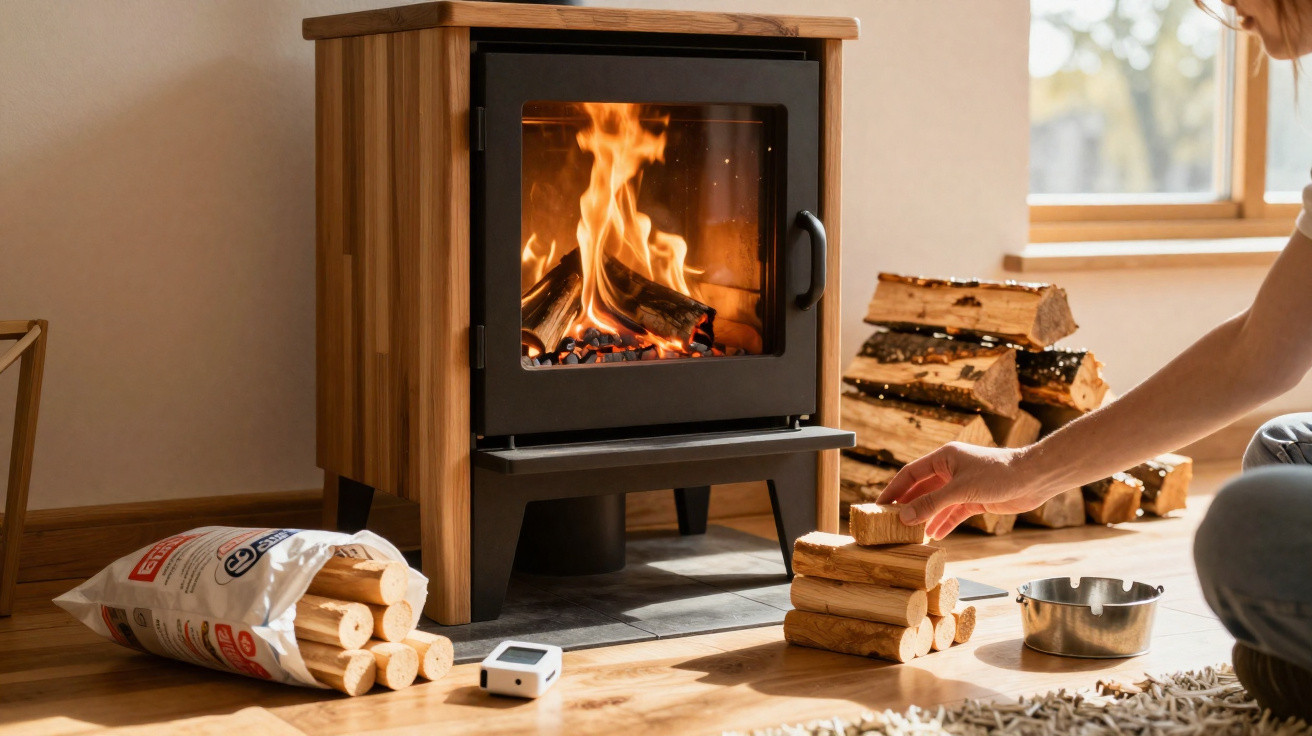
Anyone using a wood-burning stove or range cooker will usually think first of traditional logs. However, a comparatively new fuel is increasingly challenging this long-standing favourite: highly compressed wood briquettes made from sawdust and leftover wood. They are said to be up to three times as efficient as conventional firewood, while also being cleaner and taking up less storage space.
What compact wood briquettes are made from
The terms “wood briquettes” and “compressed logs” refer to a fuel manufactured from dry sawdust, wood shavings and other by-products of the timber industry. Rather than being thrown away, these materials are compacted under intense pressure.
The key detail is that high-quality briquettes generally contain no chemical binding agents. Lignin, a natural component of wood, binds the particles together during pressing. The result is a dense, uniform product with very little residual moisture.
Waste becomes a source of energy: compressed wood briquettes make use of leftover timber that would otherwise often remain unused.
Retailers sell briquettes in a range of shapes, including cylinders and rectangular blocks, with or without a central hole. Their shape matters less to heating performance than two factors: moisture content and compression density.
Why wood briquettes produce considerably more heat
High calorific value thanks to low moisture
Perhaps their greatest benefit is that briquettes normally contain less than ten per cent water. Even well-stored, air-dried firewood often still has a moisture content of 20 to 30 per cent. Every percentage of water consumes energy, as it must evaporate before heat can warm the room.
Good briquettes therefore achieve a calorific value of around 4.8 to 5.2 kilowatt-hours per kilogramme. Conventional firewood frequently reaches only two to three kilowatt-hours. For anyone heating their home, this becomes apparent in two ways: briquettes burn for longer and more evenly, while the stove delivers noticeably more heat.
The drier the fuel, the more of the energy paid for actually reaches the room as heat.
Cleaner combustion and less mess
Because their structure is consistent, briquettes burn more steadily than many logs of varying species and sizes. This creates a relatively even flame and reduces soot, smoke and flying sparks.
Typical day-to-day effects include:
- Fewer black deposits on the stove glass
- Less build-up of dirt in the chimney
- Less ash in the stove, meaning less cleaning
- More pleasant air, as fewer smoke particles escape
Clean combustion is especially relevant in densely built-up residential areas, where particulate limits are becoming stricter and neighbours are more sensitive to smoke.
Wood briquettes compared with traditional firewood
The differences are clear when the main characteristics are compared directly:
| Feature | Wood briquettes | Firewood |
|---|---|---|
| Calorific value | approx. 4.8–5.2 kWh/kg | approx. 2–3 kWh/kg |
| Moisture content | below 10% | 20–30% (even when well dried) |
| Storage space required | very low, around four times less | high, requiring large log stacks |
| Amount of ash | relatively low | significantly higher |
| Environmental balance | uses leftover wood, often with lower emissions | dependent on origin and forestry practices |
In practical terms, briquettes provide more heat from less material. In many cases, a considerably smaller amount is enough over a heating season to warm the same space. This is an important advantage for households that cannot expand their fuel storage, or can do so only to a limited extent.
Saving space in the cellar or garage
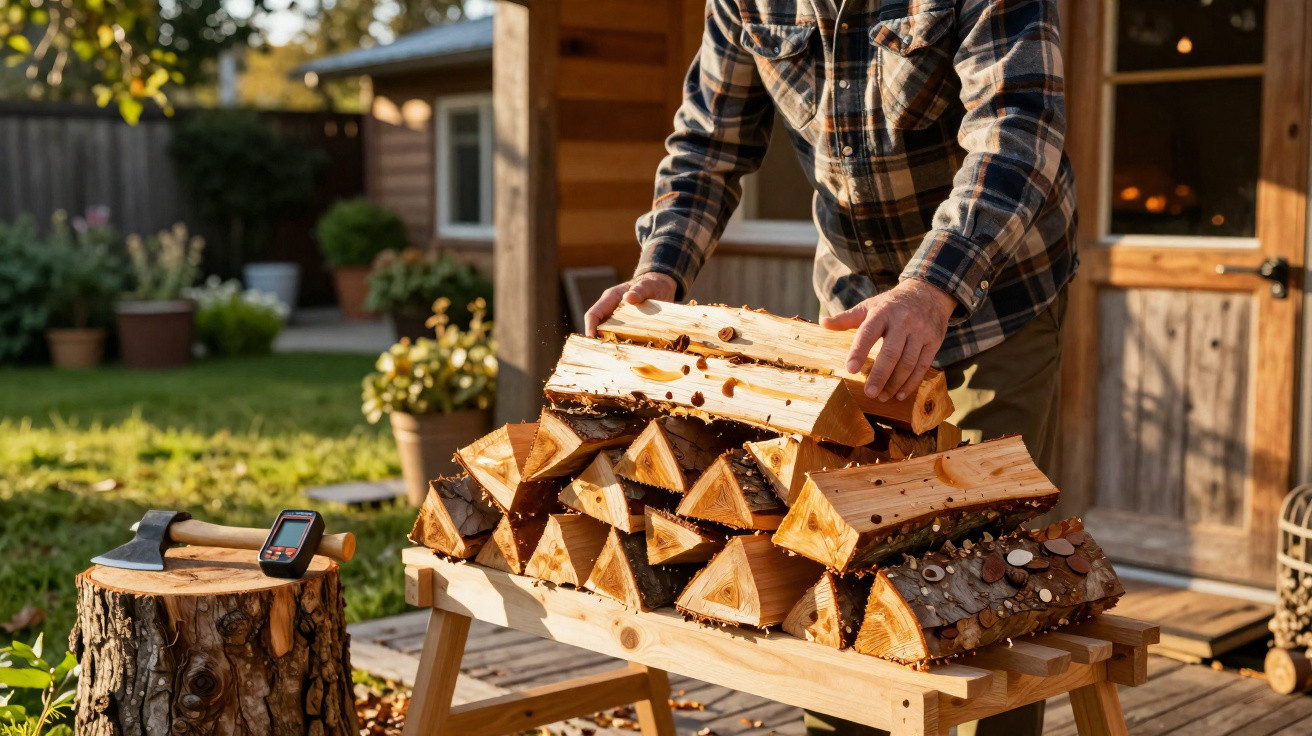
A conventional stack of logs can occupy several square metres, whereas compressed briquettes can be stacked in a much smaller area. They are generally supplied in manageable packs, wrapped in plastic film or packed in cartons.
This offers several practical advantages:
- A more predictable annual supply: units can be bought by the pallet rather than by the cubic metre of loose logs.
- Tidy storage: there are no loose logs, fewer spiders and no leaves.
- Protection from the weather: packaging protects the briquettes from brief exposure to moisture during transport.
Briquettes are particularly advantageous over roughly split logs in rented homes with a small cellar compartment or in terraced houses without a large shed.
How to use wood briquettes correctly
Anyone switching from logs to briquettes should adjust their heating routine slightly. Their high density and low water content change the way they burn.
Starting the stove properly
Wood-based firelighters or very dry kindling are suitable for lighting the fire. Placing a large briquette directly on the grate often works poorly, as the material needs a high initial temperature.
A sensible order is:
- Place a firelighter and fine wood or firelighter wool in the stove.
- Add a small amount of thin kindling or a broken-up briquette.
- Open the air vents fully until a strong fire is established.
- Only then add one or two whole briquettes.
Many users report that a little patience at the start makes the whole heating process much easier. Once a briquette has heated through, it often retains its embers substantially longer than a comparable log.
Manage the air supply carefully
As briquettes are so densely compressed, too much air can cause them to burn extremely quickly. Leaving the air control fully open all the time wastes the benefit of their higher calorific value.
A better approach is to reduce the air supply slightly after the lighting phase, until there is a calm, bright flame. This allows the stove to use the fuel efficiently while producing fewer emissions.
What are the disadvantages?
Despite their many benefits, these compact fuels also have drawbacks that consumers should take into account.
- Purchase price: Per tonne or pack, briquettes usually appear more expensive than logs. Once the heat produced is considered, however, the difference often becomes much less significant.
- Availability: In rural areas with plenty of privately owned woodland, log suppliers selling firewood by the metre still dominate. Briquettes are more commonly available from DIY retailers, fuel merchants or online.
- Sensitivity to damp: If water reaches briquettes, they swell considerably and break apart. A genuinely dry storage location is essential.
- A period of adjustment: Anyone who has heated with logs all their life will need to get used to the different burning behaviour.
How to identify good briquettes
Quality varies greatly. A few straightforward checks can help when buying them:
- Manufacturer information on residual moisture, ideally below ten per cent
- Certifications such as ENplus or DINplus standards
- No dark, scorched areas or sticky surfaces
- A solid structure: a briquette should not be crushable without tools
Anyone unsure should begin with a smaller trial quantity. This quickly shows whether their own stove works well with the fuel and whether the promised heating performance matches reality.
Environmental aspects and limitations
One major advantage is that briquettes use wood residues already produced in sawmills and joinery workshops. This reduces, at least in part, the need for additional firewood to be felled. As a result, their CO₂ balance is usually more favourable than that of imported wood varieties or fossil fuels.
Even so, burning wood is not emissions-free. Anyone heating in a sensitive urban area should have their stove and chimney checked regularly to ensure they meet current requirements. A modern stove set up correctly significantly reduces particulate matter, whether it is fuelled with logs or briquettes.
Who benefits most from switching?
The households likely to benefit most are those that:
- have very little room to store fuel,
- want to heat consistently and as cleanly as possible with a stove,
- are willing to spend a few pounds more in return for carrying less fuel,
- value a room temperature that is as even as possible.
By contrast, people with free access to their own firewood from woodland and ample storage space will be less likely to realise the cost advantages of briquettes. In many cases, a mixed approach is suitable: roughly split logs for lighting the stove and for cosy evenings, and compressed briquettes for longer heating periods overnight or on particularly cold days.
A close look at personal heating habits can help with the decision. Anyone who finds every winter that their log supply runs low too soon, or that their cellar is overflowing, may experience a far more relaxed winter with these newer briquettes.


Comments
No comments yet. Be the first to comment!
Leave a Comment