
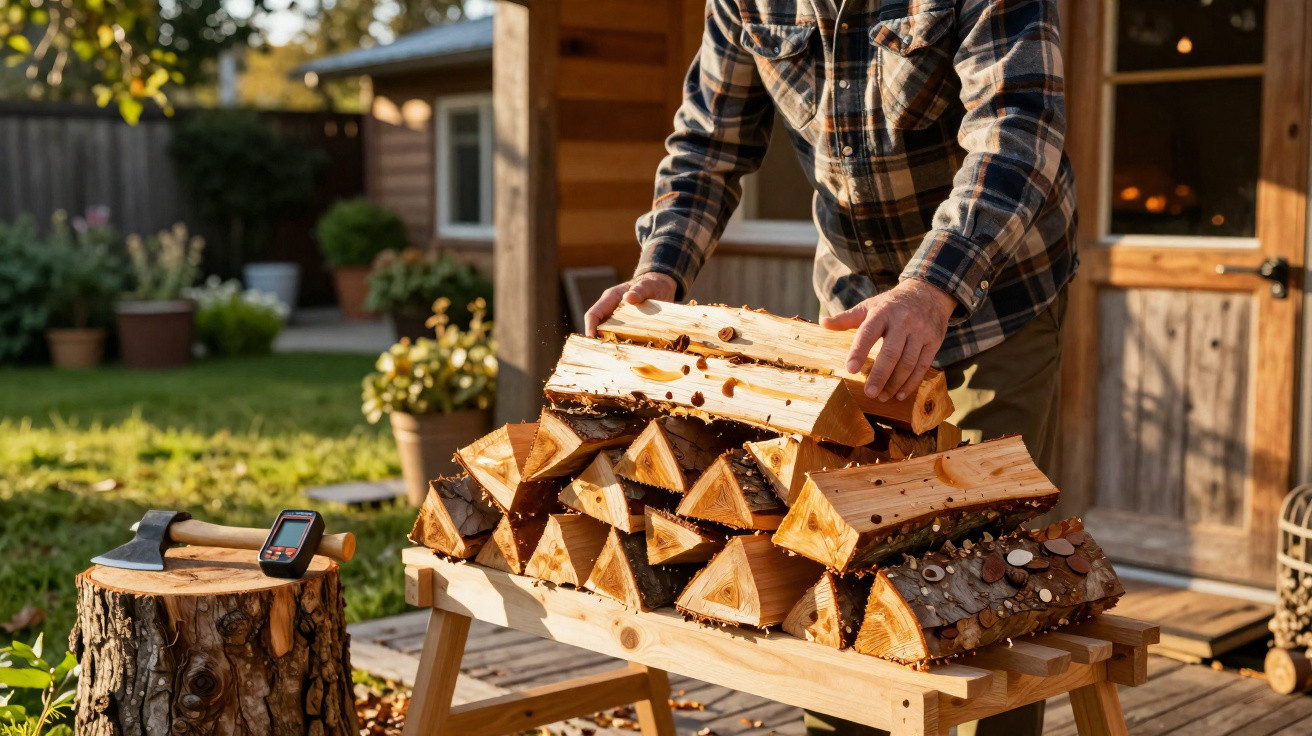
With a few straightforward measures, the heat output of firewood logs can be increased considerably.
Anyone heating with wood will usually consider the price and perhaps the type of timber. Yet the real game-changer is often a detail: drying it properly. Well-prepared wood burns hotter, more cleanly and far more efficiently – and this is where a simple method currently attracting attention in DIY forums comes in.
Why dry firewood delivers so much more heat
Freshly cut or poorly stored wood contains a surprising amount of water. When it burns, that moisture has to evaporate first. This uses energy that disappears up the chimney instead of warming your living room.
- Wet logs provide little heat.
- The flame appears sluggish and yellowish.
- More smoke and soot are produced.
- The fireplace becomes dirty more quickly, making cleaning more expensive.
Properly dried wood does the opposite: most of the energy reaches the room rather than the flue. Many fireplace owners say that, after switching to optimally dried logs, they use noticeably less wood while feeling substantially more warmth.
Properly dried firewood can almost double usable heat – without a new stove, simply through better preparation.
How to tell whether firewood is genuinely dry
Almost everyone has bought “dry” wood that later turned out to be damp. A quick glance is rarely enough. These signs offer dependable guidance:
- Colour: Dry logs tend to look greyish-brown, while the cut ends are dull and often slightly cracked.
- Weight: A dry log of the same size is noticeably lighter and feels “light and hollow” when lifted.
- Sound: When two dry pieces are knocked together, they produce a bright, clear sound; wet wood sounds dull.
- Smell: Fresh or damp wood has a strong resinous or woodland smell, whereas dry wood has almost no scent.
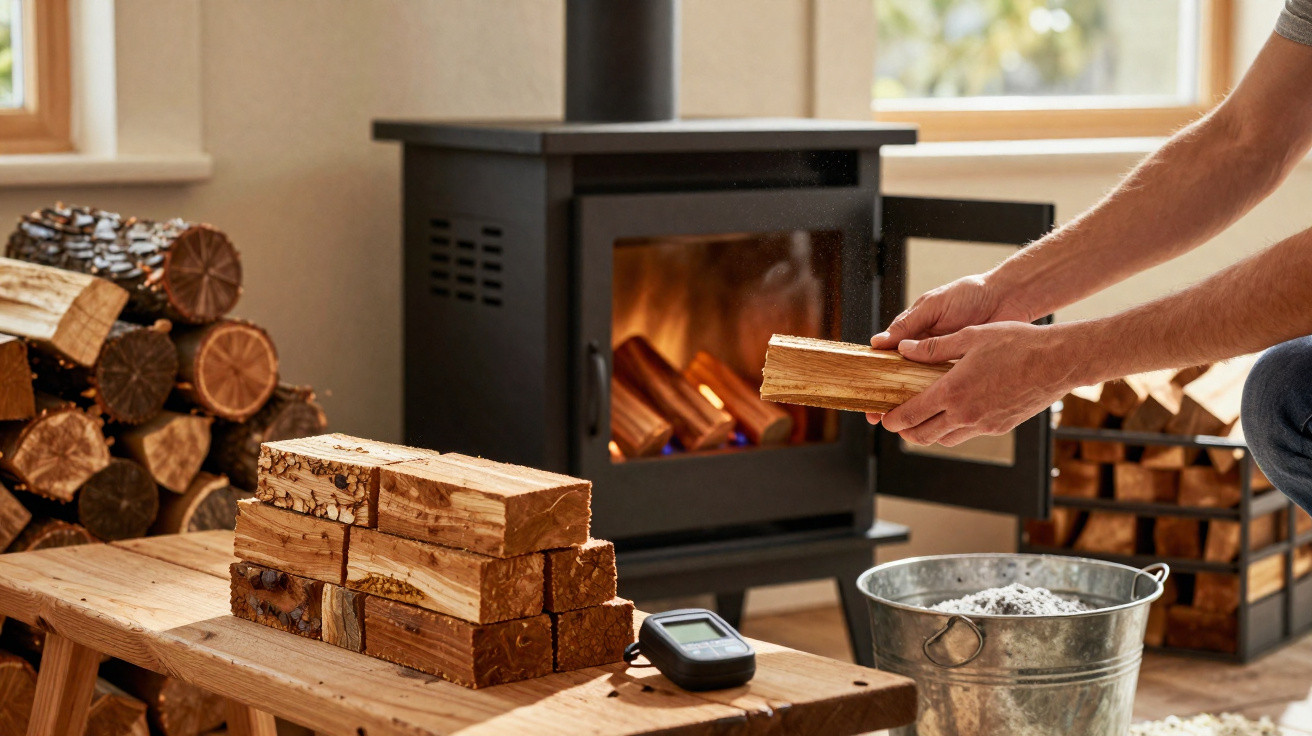
For an exact reading, use a basic wood moisture meter. The target is below 20 per cent residual moisture. These meters are available inexpensively from DIY shops.
The key method: split wood early and stack it with airflow
The crucial step does not begin in autumn, but immediately after fresh wood is felled or bought. This is why many users are currently enthusiastic about a simple change to their routine: they split logs much earlier, stack them more loosely, and notice initial differences in burning behaviour after just one week.
Fell, cut and split the wood straight away – do not wait
Unprocessed metre-long sections dry only through the bark, leaving the timber damp inside for a long time. Splitting it immediately after cutting greatly increases its surface area, allowing moisture to escape much faster.
- Cut trunks into rough lengths of 30–50 cm, suitable for the stove.
- Split every section rather than storing whole rounds.
- Produce more smaller logs instead: they dry faster and burn more evenly.
Many home wood-burners report that, since splitting and stacking all their wood in the same spring, it has burned far hotter with a steadier flame the following winter.
Stack firewood correctly: airflow matters more than tidiness
A traditionally neat store of tightly packed rows may look attractive, but it restricts airflow around the wood. The improved method addresses this directly: more gaps, more spacing and more ventilation.
- Place the bottom row on pallets or timber bearers, never directly on the ground.
- Leave a gap of two to three finger-widths between rows.
- Do not compress gaps within a row; uneven spaces are desirable.
Anyone who deliberately creates air channels while stacking halves the drying time and notices the effect immediately in the fireplace.
Location, sun and wind: turning wood into a source of heat
The ideal place for a wood store
The best location combines sunshine with wind. An unobstructed south- or west-facing house wall is ideal, as it receives afternoon warmth from the sun and moving air.
Key points:
- Leave the rear as open as possible so that wind can pass through.
- Close only the top with a roof or cover, keeping the sides partly open.
- Avoid wrapping it tightly in plastic, as condensation makes the wood damp again from within.
Covering: protect the stack without wrapping it up
Rain and snow must be kept out, but moisture needs to leave the wood. A breathable cover resolves this balance:
- Use a rigid board or heavy tarpaulin as a roof on top.
- Keep the tarpaulin at least 10–20 cm away from the edge of the wood stack at the sides.
- During prolonged rain, the weather-facing sides can hang slightly lower, but they should not be sealed completely.
This keeps the top of the stack dry without allowing it to “sweat”. That particular arrangement greatly strengthens the effect of the drying method.
How long firewood should really dry
Many suppliers advertise wood as “ready to burn” after only one summer. Specialists take a more nuanced view. These are broad guide times depending on the wood species:
| Wood species | Recommended storage time | Special characteristic |
|---|---|---|
| Spruce, fir | 1–1.5 years | Dries quickly and burns away rapidly |
| Pine | 1.5–2 years | Resin-rich and good for lighting fires |
| Beech | 2 years | High heat output and long-lasting embers |
| Oak | 2–3 years | Very energy-rich but requires patience |
Those using the splitting and stacking method described above often reach the target of less than 20 per cent moisture at the lower end of these ranges.
Which types of wood provide heat especially efficiently
For a cosy evening by the fire, robust hardwoods are the best choice. They provide sustained, even warmth.
- Beech: A classic choice with excellent ember formation, ideal for continuous use.
- Oak: Very high energy density, perfect for powerful stoves and long nights.
- Ash: Dries comparatively quickly and burns brightly and warmly.
Softwood such as spruce or pine is well suited to lighting a fire because it catches quickly. Hardwoods are more suitable for the main heating phase. Combining them intelligently means starting with a few softwood logs before adding beech or oak, making the best use of both easy ignition and heat output.
A cleaner fireplace and lower risk: the safety benefits of the method
Wet wood produces substantial soot and tar deposits that build up in the chimney. This creates creosote, a highly flammable coating. Combined with high flue-gas temperatures, it can lead to a chimney fire.
Well-dried wood and a strong, clean flame reduce this risk noticeably. The chimney sweep has fewer deposits to remove, flue passages remain clear and the stove works more efficiently.
Anyone who consistently burns dry wood protects not only their wallet, but also their home and family.
Practical additions for the greatest heating effect
The drying method becomes even more effective when combined with a few additional habits:
- Bring wood indoors in good time so that it can acclimatise before burning.
- Do not burn enormous logs; medium-sized pieces often provide more usable heat.
- Do not “choke” the stove: avoid reducing the air supply too early, so that the combustion chamber can become properly hot.
Anyone following these points will often notice a difference within the first week: the room warms up faster, logs glow for longer and the supply diminishes more slowly than usual. This is exactly what many users mean when they say: “I have been doing this since this week – and the heating output feels almost doubled.”




Comments
No comments yet. Be the first to comment!
Leave a Comment