
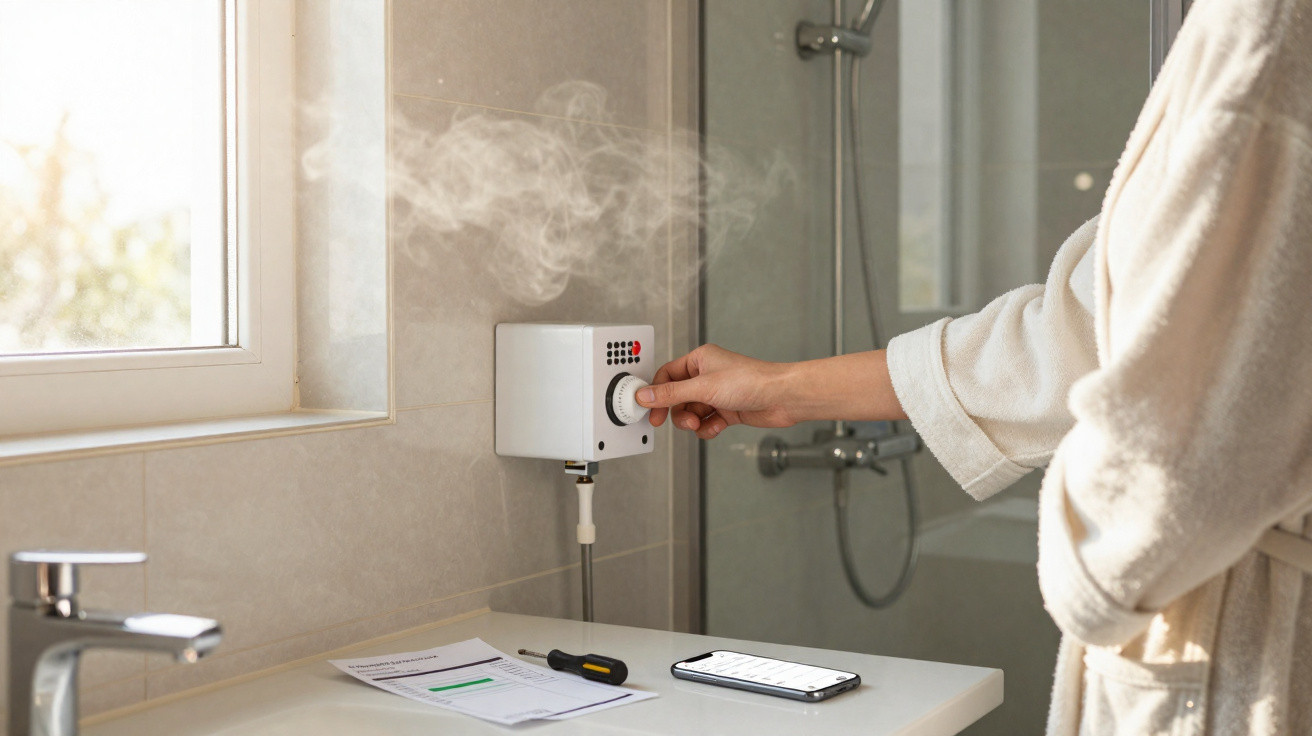
Electricity prices are climbing, and hot-water bills are rising relentlessly too – yet one often-overlooked small device could quietly make a major difference.
Many households pay more than necessary for hot water every month without realising it. The hidden expense is often an electric hot-water cylinder, sitting unobtrusively in a corner of the cellar or bathroom. A small control unit, known as a hot-water cylinder programmer, promises worthwhile savings without anyone having to forgo a hot shower. Here is how it works and what to consider.
Why an electric hot-water cylinder uses so much electricity
A conventional electric hot-water cylinder is among the most power-hungry appliances in the home. It continuously keeps the water in its tank at temperature, even when nobody is showering, washing up or washing their hands. This constant reheating is exactly what pushes energy consumption upwards.
Most hot-water cylinders operate in three basic modes:
- Continuous operation: the cylinder continually reheats and keeps water warm around the clock – convenient, but exceptionally costly.
- Automatic operation via an off-peak switch: the cylinder heats mainly at preset times, usually during cheaper tariff periods.
- Off mode: the cylinder remains cold until it is switched on again – generally impractical for everyday use.
The issue is that everyday routines rarely match rigid switching schedules precisely, while many systems run for far longer than they genuinely need to. This is where an external programmer comes in.
This small module takes control of the hot-water cylinder
A hot-water cylinder programmer is a compact control device fitted between the power supply and the cylinder. Rather than allowing the cylinder to run unchecked, it reliably disconnects it from the mains whenever no heating period has been scheduled.
“The device ensures that the cylinder heats only when hot water is genuinely needed – rather than staying ready 24/7 just in case.”
As a result, the cylinder does cool down slightly during these intervals, although far less than many people expect. For the user, comfort will usually feel exactly as it did before, but the electricity bill is lower.
Everyday benefits of a hot-water cylinder programmer
Controlling a hot-water cylinder deliberately offers several benefits at once. The key effects include:
- Less idle time: the device stops the cylinder reheating for hours when nobody is at home.
- Use of cheaper tariff periods: even without a dedicated off-peak tariff, the heating cycle can be scheduled for periods when demand on the grid is generally lower – something that could become relevant in future.
- Gentler operation: fewer heating cycles place less strain on the heating element and thermostat. This may extend the appliance’s lifespan.
- Noticeably lower electricity costs: depending on the starting situation, manufacturers and energy advisers cite electricity savings for the cylinder of up to around 30 percent.
It can pay for itself particularly quickly in households where nobody is at home during the day, or where no one showers for several consecutive days, for example during business trips.
How to check whether a programmer can be installed
Before clicking “Buy” in an online shop, it is worth examining your own electrical installation. Not every cylinder is connected to the mains in the same way.
Option 1: Cylinder with a standard plug
In some flats, the hot-water cylinder is simply plugged into an ordinary socket. While this may appear convenient, it can be marginal for high-output appliances. In these situations, professionals generally advise against using a basic plug-in timer because:
- cylinders create high continuous loads;
- sockets and cheap plug-in timers can overheat;
- the circuit may not have been designed for this form of control.
Anyone with this arrangement at home should ask an electrician whether a fixed, safe solution can be installed at the consumer unit.
Option 2: Cylinder connected directly to the consumer unit
In many modern installations, the hot-water cylinder is connected to its own miniature circuit breaker. This is the ideal scenario for a programmable switching actuator or a DIN-rail timer within the distribution board.
“If the cylinder is connected to its own circuit breaker, the control can usually be integrated neatly and permanently into the consumer unit.”
The programmer then controls the cylinder’s circuit directly, with no unreliable plug-in adapters or extension leads involved.
Choosing the right device: analogue, digital or smart?
Several types of hot-water cylinder programmer are available. The most suitable option depends on the desired level of convenience, budget and confidence with technology.
- Mechanical timer
A traditional dial with small switching segments. It is robust, inexpensive and easy to understand, making it ideal for simple, consistent daily routines. - Digital timer
Set using a display and buttons. It offers precise time intervals, weekly schedules and holiday timers. This is well suited to households with recurring but somewhat more complex patterns. - Connected programmer
Controlled through an app and often capable of integration with smart-home systems. It is useful for people who want to organise their routine flexibly and make changes at short notice.
In every case, the device must be able to handle the cylinder’s power rating. Most cylinders operate at between around 2,000 and 3,000 watts. If in doubt, check the cylinder’s rating plate or its documentation.
Step by step: what a typical installation involves
The precise fitting process depends on the property and the device, but the broad sequence is usually as follows:
- Switch off the electricity
Before working at the consumer unit, always turn off the relevant circuit breaker and, where possible, secure it against being switched back on. - Fit the programmer
The unit is incorporated into the cylinder’s electrical circuit, normally on a DIN rail in the distribution board. Ideally, this should be carried out by a qualified electrical contractor. - Set the heating times
Suitable examples include one heating window early in the morning and another in the evening, each lasting 1–2 hours depending on tank capacity and household size. - Test the operation
Once power is restored, check that the cylinder starts at the programmed time and that sufficient hot water is available.
Anyone who is uncomfortable carrying out electrical work should call an electrician instead. As well as ensuring safety, they can advise on the settings that suit the household’s own consumption.
Other ways to save on hot water
The programmer is only one part of the picture. A few technical measures around the cylinder can reduce consumption further.
- Set a sensible temperature
Many cylinders leave the factory set well above 60 degrees. Settings of around 55 to 60 degrees are normally enough to prevent Legionella while still saving energy. - Descale regularly
Limescale insulates the heating element. The thicker the build-up, the more electricity the cylinder needs. In hard-water areas, descaling every two to three years is worthwhile. - Use a water-saving shower head
Modern shower heads limit flow without making the spray feel weak. Less water automatically means lower hot-water use. - Insulate pipework
Uninsulated hot-water pipes running through cold cellar spaces lose a great deal of heat. Foam insulation sleeves are inexpensive but can make a clear difference. - Fit flow restrictors to taps
These small inserts add air to the flow and reduce litres per minute, making them ideal for bathrooms and kitchens.
How much difference the measure makes to your finances
The final level of saving depends on several factors:
| Factor | Effect on savings |
|---|---|
| Size of the cylinder | The larger the tank, the greater the impact of reduced heating times. |
| Number of people | Families use more hot water and therefore usually have greater potential to save. |
| Usage habits | Long showers, frequent baths and a requirement for constant availability reduce the effect. |
| Electricity price | The higher the price per kilowatt-hour, the more pronounced the saving in pounds will be. |
In many cases, the impact is in the double-digit percentage range, while poorly configured systems can achieve figures close to 30 percent. To measure the real effect, record the meter reading for several months before and after the change.
Risks, limitations and sensible combinations
This approach does have limits. If the cylinder is programmed too tightly, there may briefly be only lukewarm water on days with especially heavy use. In that case, slightly extend the heating windows or schedule an additional heating period when visitors are expected.
Hygiene also matters: to help prevent Legionella, the set temperature should not remain below around 55 degrees permanently. Many modern cylinders have anti-Legionella programmes that automatically heat the water to a higher temperature at regular intervals; this function should remain enabled.
The approach becomes particularly compelling when combined with solar photovoltaic power. Anyone producing their own solar electricity during the day can run the cylinder specifically during sunny hours, effectively “storing” the power as hot water. This reduces pressure on the electricity grid and lowers the amount of power drawn from the public network.
Changes in everyday behaviour are another factor. Shorter showers, fewer full baths, and using cold or only lukewarm water more often for washing up all strengthen the programmer’s saving effect. Technology and habits work together here.
Overall, a small box in the consumer unit can make a surprisingly large difference to electricity bills – especially when combined with a few straightforward measures involving temperature, descaling and water consumption.



Comments
No comments yet. Be the first to comment!
Leave a Comment