
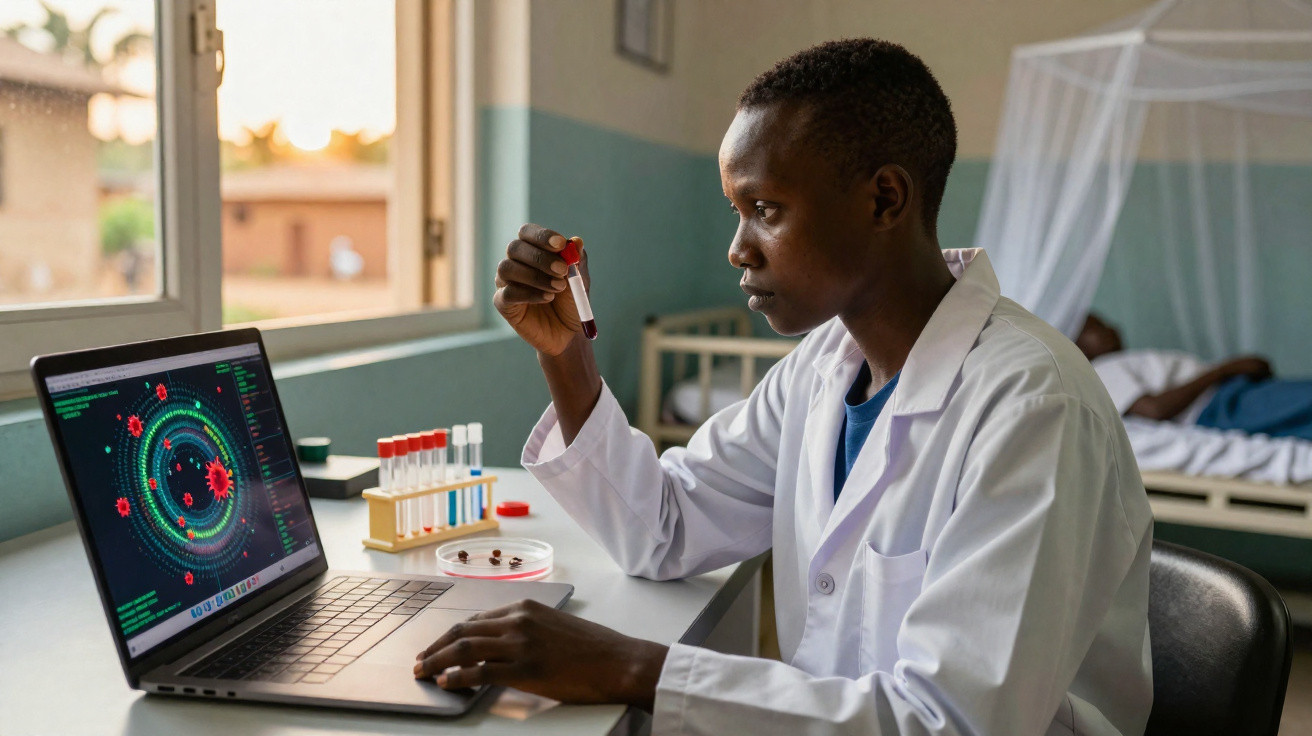
What started with one next-generation genetic sequencer has revealed that hazardous haemorrhagic viruses are present across Uganda much more extensively than clinical records had indicated.
This concealed transmission changes how everyday fever should be understood: rather than simply a routine complaint, it may be an early warning, particularly in settings where cases are commonly detected too late.
Fevers that would not quit
Unexplained fevers reported throughout Uganda provided the evidence that revealed how often high-risk viruses circulate in everyday communities.
After investigating hundreds of unresolved cases, researchers recorded viral infections that standard diagnostic methods had failed to identify.
Their findings connected mild, brief fevers with pathogens more usually linked to outbreaks, hospital isolation and emergency responses.
The results also showed the limits of what symptoms by themselves can disclose, directing attention to the scale of viral exposure that remains undetected.
Viruses hiding in plain sight
Subsequent survey findings identified exposure to Crimean-Congo haemorrhagic fever virus (CCHFV) in one in four people and nine in ten cattle.
These figures were obtained through antibody tests, which detect immune memory that persists after an infection, including where people had not felt seriously unwell.
CCHFV is chiefly transmitted through tick bites or through contact with infected animal blood, while its initial symptoms may resemble any ordinary fever.
The substantial exposure among animals allows the virus to continue circulating unnoticed, and the illness can be fatal in up to 40 percent of human cases.
Virus infections identified by sequencing
Rather than relying on tests aimed at a single target, the researchers used metagenomic sequencing, which reads every genetic fragment in a sample, enabling numerous viruses to be identified at once.
Computers compared these fragments with established viral sequences and highlighted unexpected results where the fragments did not match anything known.
In the Uganda fever investigation, this method detected respiratory viruses, hepatitis viruses and mosquito-borne viruses that routine screening had overlooked.
Since it does not require researchers to predict the correct test beforehand, metagenomic sequencing can expand surveillance when outbreaks begin on a small scale.
A false alarm in tubes
One sequence appeared to represent an entirely new virus, a result that could have altered how clinicians interpreted that outbreak.
Repeated extractions and focused genetic tests continued to produce the signal, leading the team to strengthen its controls and repeat the analyses.
The patients never developed seroconversion - the production of new antibodies by the immune system following infection - indicating that contaminated blood tubes were the likely source.
This incident highlighted that scientific advancement is seldom straightforward, particularly where surprising signals require rigorous confirmation.
Ticks kept the virus cycle going
Livestock tick collections repeatedly identified Rhipicephalus appendiculatus, a widespread cattle tick species, in the areas facing the greatest risk.
Within the tick-to-animal cycle, an individual tick may acquire CCHFV from one animal before transmitting it at a later point.
Sequencing of combined tick samples identified CCHFV genetic material in several pools, reinforcing the evidence that Rhipicephalus ticks drive transmission.
As animals may carry the virus without displaying clear signs of disease, farming practices represent an important protective measure for people.
When fever gets misread
At many clinics, fever without a definitive test result still leads to treatment with antibiotics or malaria medicines, even when a virus is causing the illness.
The Uganda fever analysis found that most confirmed viral infections had been treated as bacterial illnesses because diagnostic tools were insufficient.
This approach costs both money and time, while also increasing pressure for antimicrobial resistance as microbes evolve to withstand medicines.
Improved viral testing will not resolve every fever, but it can move care away from ineffective drugs and towards safer monitoring.
Skills that paid off
The same careful sequencing practices later enabled a report to identify adeno-associated virus 2 (AAV2) in children during a United Kingdom hepatitis wave.
AAV2 requires another virus in order to replicate, meaning co-infections can raise its levels sufficiently for it to be detected in blood.
Having learned to verify unusual results twice, the team was able to distinguish AAV2 patterns from laboratory noise within days.
Such speed is vital when children become ill, as rapid evidence can direct investigations while clinicians still have time to intervene.
Building local sequencing muscle
Sequencing capacity did not emerge in Uganda overnight; its initial work used Illumina MiSeq machines and patient samples.
Workshops developed into sustained mentoring, while UVRI staff acquired bioinformatics - computer-based work used to interpret genetic data - as well as laboratory bench skills.
Once the process was operating reliably, the laboratory could handle a higher volume of samples to the same standard, ensuring reproducible results.
This capability now allows UVRI researchers to identify unusual viruses earlier, without sending every sample overseas for answers.
Hemorrhagic virus threats
Among the fevers that had gone undiagnosed, sequencing found seven infections linked with haemorrhagic fever viruses, despite the absence of obvious bleeding in patients.
The infections included Crimean-Congo haemorrhagic fever, dengue, yellow fever and Rift Valley fever, which may be transmitted by ticks or mosquitoes.
Sequencing also identified Le Dantec virus in one child, a pathogen last reported in 1969 that continued to cause fever.
Results of this kind support routine genomic surveillance in hotspots, because rare viruses cannot be managed when they are not identified.
Uganda’s fever research demonstrated that stronger sequencing can transform routine clinical appointments into early alerts for broader outbreaks.
For this to have an impact, laboratories require reliable supplies and contamination-free workflows, as metagenomic sequencing remains too costly for use with every patient.






Comments
No comments yet. Be the first to comment!
Leave a Comment