
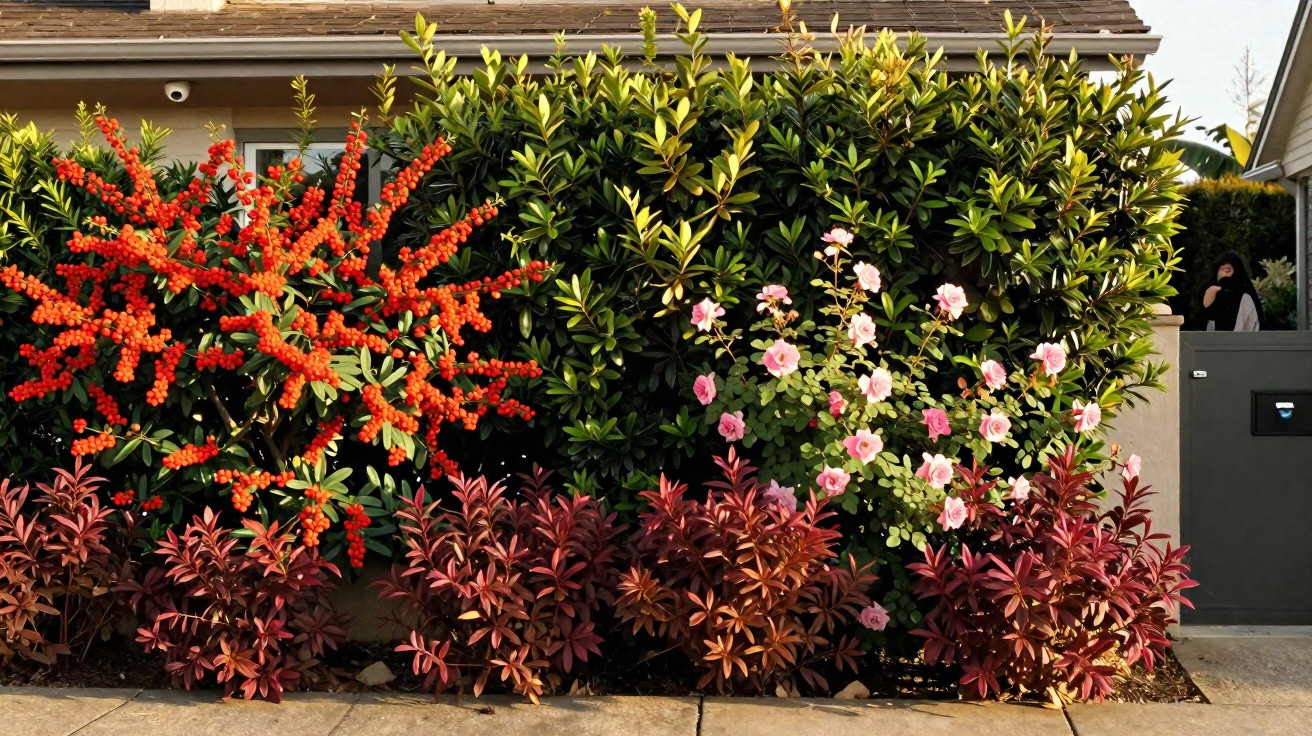
Many homeowners initially think of an alarm system, cameras and a security door. Less well known is that carefully chosen, unpleasantly thorny plants can turn a garden into a natural barrier that makes life harder for burglars without making the property feel like a fortress. Planting well before a trip can substantially raise the obstacle for unwanted visitors.
Why thorny shrubs genuinely deter burglars
Criminals usually choose the easiest target. They want to get in and out quickly, attracting as little attention as possible. Anything that takes time, creates noise or carries a risk of injury acts as a deterrent.
A densely planted, thorny hedge forces intruders to move slowly and conspicuously – exactly what they want to avoid.
A combination of three features is particularly effective:
- a dense thorn hedge that is difficult to penetrate
- crunching gravel or grit underfoot
- motion-sensor lighting along access routes
Anyone who has to climb over sharp shoots at night, makes loud noise with every step and may also trigger a floodlight will often prefer to find another property.
Even so, a “defensive garden” is not a replacement for an alarm system; it complements one. Neglected, overgrown shrubs may even have the opposite effect, providing excellent cover for reaching windows or the patio unnoticed. Plants should therefore be pruned regularly, while sightlines from the pavement or neighbouring properties must not be blocked completely.
The four most effective plants against unwanted visitors
Many shrubs have thorns, but four species are especially suitable for creating a deliberate protective zone around a home. They combine dense growth, vigour and unpleasant thorns while remaining decorative.
Pyracantha – firethorn as a thorny protective wall
Firethorn (Pyracantha) is a classic choice for anyone looking to plant a continuous, highly defensive hedge. Its thorns are tough, plentiful and closely spaced. Anyone attempting to push through it will quickly end up with bloody scratches.
Suitable locations include:
- alongside fences and walls
- beneath low windows
- as an impenetrable boundary around the property
Firethorn also offers bright berries that attract birds and bring autumn colour to the garden. For burglars, however, it remains a real nuisance.
Berberis – a small hedge with a major effect
Barberry (Berberis), often called common barberry, grows compactly but carries an exceptionally large number of fine, vicious thorns. It can reliably block even narrow passageways.
Berberis is ideal for:
- side passages between the house and garage
- concealed areas at the back of the house
- narrow approaches to basement steps or side doors
Planting a low, dense barberry hedge along these routes removes one of burglars’ favoured opportunities: the hidden side entrance.
Rosa rugosa – romantic blooms, ruthless thorns
At first glance, Rosa rugosa looks like an ordinary, slightly robust garden rose shrub. A closer look – or, better still, the first attempt to walk through it – reveals the difference: its stems are heavily thorned and its growth is dense and spreading.
This rose shrub is especially useful:
- beneath easily accessible ground-floor windows
- in front of basement windows with low sills
- as a wide, difficult-to-cross strip along the façade
With a mass of roses between a glazed patio door and the garden, many potential offenders will think twice about whether the route is worthwhile.
Cherry laurel – evergreen screening and a brake on burglary
Cherry laurel (often referred to as laurel cherry) has no thorns, but it forms a very dense, evergreen wall. From outside, it is difficult to see what is happening behind it. Combined with other plants, it provides privacy screening and creates an additional obstacle to access.
Suitable areas for cherry laurel include:
- in front of large glazed areas and patio doors
- for screening garden seating areas
- along property boundaries facing the road
Adding a gravel strip and effective motion-sensor lighting here creates an area that strangers will be reluctant to enter.
How to position plants without making the garden unattractive
Many homeowners worry that using thorny plants will make their property resemble a high-security site. With some planning, the garden can remain welcoming while still becoming a hurdle for burglars.
The skill lies in creating security zones without completely blocking entrances, paths and attractive views.
One straightforward layout that can be adapted to many properties is:
- Facing the road: a loose row of cherry laurel with a gravel strip at its base.
- At the sides: a dense firethorn or barberry hedge forming a clear boundary.
- Beneath vulnerable windows: wide planting beds of Rosa rugosa.
- Access to the house: a main path of gravel or grit, with good lighting.
The front door should remain visible from outside. A hidden entrance is not only attractive to burglars; it can also make a property seem oddly closed off to neighbours and passers-by. Clear visibility helps to prevent many crimes before they begin.
Spacing, maintenance and safety for residents
A few rules are important to ensure that this plant-based protection remains legally compliant. Hedges that grow taller than two metres should be planted at least two metres away from the property boundary. In densely built-up residential areas, it is worth checking local regulations to avoid disputes with neighbours.
Key practical points:
- Plant spacing: place firethorn and barberry 50 to 70 centimetres apart so that their shoots eventually grow together.
- Pruning: cut back at least once a year; two light trims are better than one drastic cut.
- Sightlines: keep entrances and exits visible from the street and neighbouring properties.
- Hazard zones: do not plant extremely thorny shrubs directly beside play areas or pool access points.
Households with children or pets should make paths wide enough and soften sharp corners. A well-designed hedge keeps strangers away without restricting the family that lives there.
Combining thorny shrubs with technology and typical burglary tactics
Experienced offenders avoid not only thorns but also unpredictable lighting. A simple motion sensor above the carport or by the patio can often put them under pressure. When paired with thorny plants, it creates an area where acting unnoticed is difficult.
Typical weak spots around a home that can be improved with plants include:
- rear areas with patio doors and large windows
- concealed basement stairways and light wells
- narrow passages between the house and an outbuilding
Combining thorny shrubs, gravel and lighting in these places removes many common starting points for attempted break-ins. Sturdy locks, tested fittings and secured windows also help. Plants offer what technology alone cannot: a physical obstacle and psychological deterrent in one.
How long protection takes to establish – and who benefits
Plant-based protection does not appear overnight. During the first one to two years, gaps only gradually close. Those who start early can have a highly effective, solid barrier after three to five years.
The greatest benefit is for:
- residents of detached homes with gardens
- corner plots with several access points
- houses left empty for extended periods, such as holiday homes
For tenants with a small front garden, individual shrubs placed strategically beneath windows or beside the basement entrance can also be suitable. Even one wide, heavily thorned rose bush can make an opportunistic entry considerably more difficult.
Benefits for nature and the neighbourhood
Defensive plants offer another frequently underestimated advantage: they provide habitats for birds and insects. Firethorn berries feed birds, dense rose hedges offer nesting sites, and cherry laurel provides green structure through winter. Rather than barbed wire or steel fencing, this creates a living, ecologically valuable boundary.
Informing neighbours about the idea – and perhaps planting together – can improve security for the entire street. Burglars generally avoid streets where several homes are visibly protected and neighbours appear vigilant. A green barrier around one property can therefore become part of a wider security network, while still remaining an ordinary, attractively designed garden boundary.



Comments
No comments yet. Be the first to comment!
Leave a Comment