
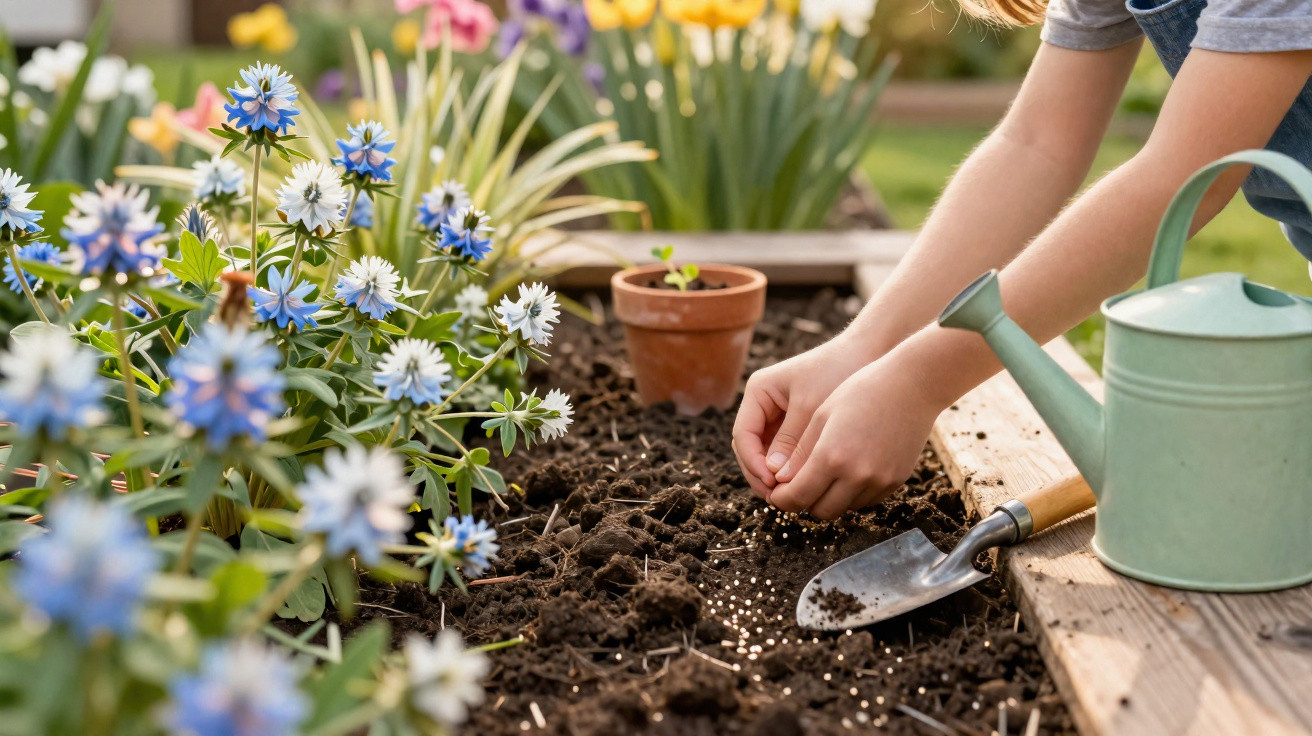
While many beds still look bare and dreary in March, this is already the time to create the foundations for a surprisingly flower-filled summer. One annual flower, with the delicate appeal of a wild perennial, can almost effortlessly keep beds, paths and even vegetable plots looking vibrant well into late summer.
The flower that does almost all the work: Nigella damascena
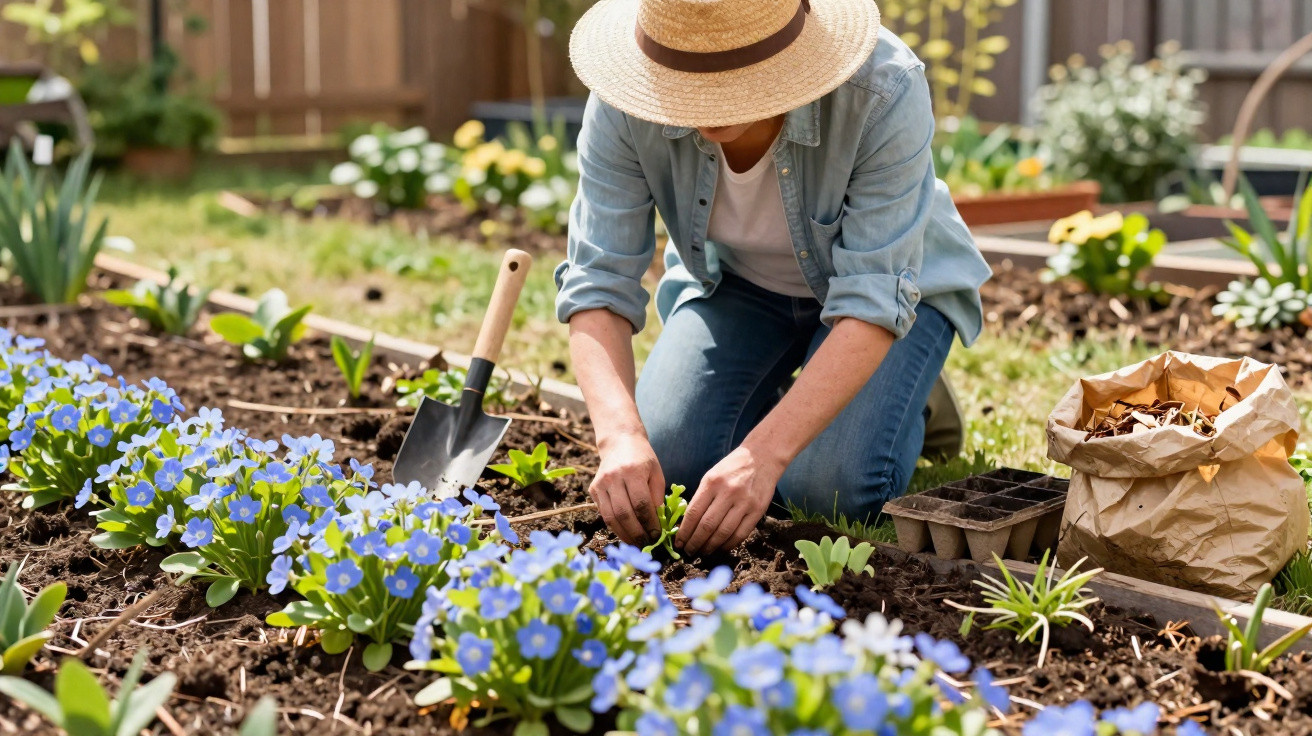
The plant praised by gardening professionals is Nigella damascena, more commonly known in the UK as love-in-a-mist. It combines the character of a wild meadow flower with the refinement of a delicate perennial. Its fine, star-shaped flowers emerge from soft, thread-like foliage that resembles a green veil.
It generally reaches 40 to 60 centimetres in height. Colours range from pale blue and white to gentle shades of pink. Its slightly random, “uncombed” appearance is precisely what makes it so popular for naturalistic and romantic gardens.
“Anyone who sows Nigella damascena in March will enjoy an almost continuous ribbon of flowers from mid-June to the end of August – and often even longer.”
Its greatest advantage is that it is a hardy annual. It grows rapidly, copes well with ordinary garden soil and forgives many beginner mistakes. For that reason, specialists regard it as an ideal starting point for anyone wishing to improve their garden without becoming a full-time gardener.
Why March is the ideal time
During March, the soil begins to warm up and prolonged hard frosts become less likely. These are exactly the conditions Nigella damascena prefers. Its seeds do not need high-summer heat; instead, they appreciate soil that is still cool but no longer frozen.
- Sowing in March: flowering usually begins from mid-June
- Flowering period: until the end of August, or into September in mild weather
- Ideal for: gaps in beds, mixed borders, cottage gardens and natural gardens
Gardeners who sow in March often see the same transformation: initially, seemingly nothing happens, but a few weeks later a previously uninspiring strip of bed suddenly fills with a light blue or white “veil”. Many amateur gardeners describe exactly this moment of surprise, then make the plant a permanent part of their garden planting scheme.
How to sow it successfully, step by step
The good news is that Nigella damascena does not require a greenhouse or complicated propagation trays. Sowing it directly into the garden is entirely sufficient.
1. Choosing the right spot
This plant thrives in sunshine. A position in full sun produces sturdy plants and plentiful flowers. It will tolerate partial shade, although flowering is often slightly less abundant there.
A loose, well-drained soil is important. Love-in-a-mist does not tolerate waterlogging at all. In most cases, standard garden soil is perfectly adequate; it has no need for a premium growing medium.
2. Preparing the soil
A little bed preparation before sowing is worthwhile. It takes only a few minutes, but makes a clear difference later on:
- Remove weeds thoroughly
- Loosen the soil and break up large clods
- Work in a small amount of well-rotted compost if the soil is especially poor
The finer and more crumbly the soil, the more evenly the seeds will germinate.
3. Sowing and watering correctly
Scatter the seeds straight onto the soil surface. As they are light germinators, they should not be buried deeply. A very thin covering of soil or fine growing medium is all that is needed.
Then gently firm the area with your hand and water carefully using a fine spray. A strong jet of water can easily wash the seeds away.
“Important: do not sow too densely. Although overcrowded growth may initially look lush, the plants weaken one another and produce fewer flowers.”
The most common mistake: insufficient spacing
Many amateur gardeners sow far too thickly because they worry about bare patches. This causes problems later. When young plants grow like a carpet, they compete for light and nutrients, resulting in thin stems and smaller blooms.
Once the seedlings have developed several true leaves, they should be thinned out. Spacing of 20–25 centimetres is ideal. Those seeking especially large, airy clumps can even allow 30 centimetres.
| Spacing | Effect in the bed |
|---|---|
| under 15 cm | too crowded, competition, smaller flowers |
| 20–25 cm | balanced, airy clumps, plenty of flowers |
| up to 30 cm | fewer but particularly impressive individual clumps |
Thinning may seem drastic at first. Nevertheless, it is worth doing, as the remaining plants become stronger and flower noticeably longer.
Keeping flowers going for almost the whole summer
Once love-in-a-mist has established itself, it largely looks after itself. In an average summer, occasional watering during extended dry spells is enough. Constant irrigation is unnecessary.
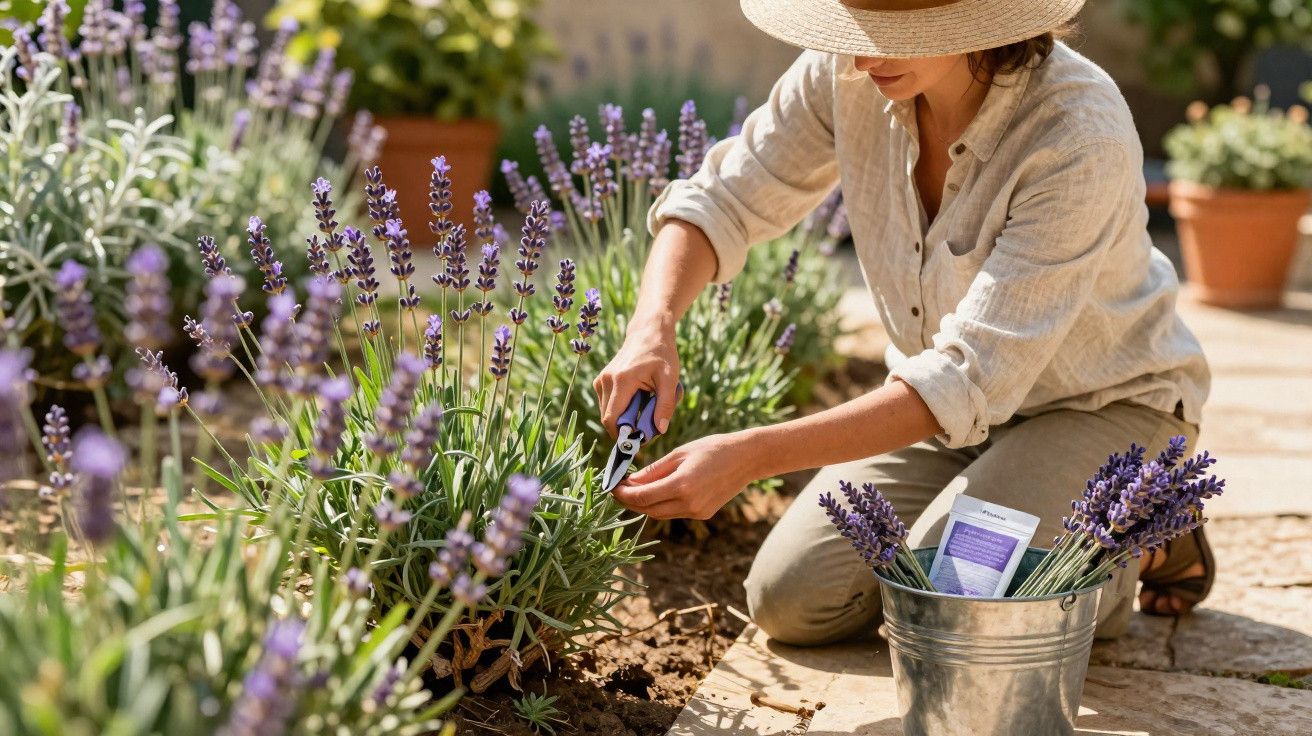
To enjoy the flowers for as long as possible, remove faded flower heads regularly. The plant will then direct its energy into fresh buds rather than seed production.
“Cut off the spent stems – and receive fresh flowers for weeks in return: extending the flowering season can be that simple.”
Many gardeners also grow Nigella damascena for cutting. Its delicate stems last in a vase for around ten days, sometimes longer if the water is changed regularly. They are particularly attractive when combined with:
- grasses
- gypsophila
- small-flowered roses
- other meadow flowers, such as cornflowers or cosmos
Self-seeding: the garden helps out next year
Towards the end of summer, the plant develops decorative seed pods. Leave these in place and they often provide a gift the following spring: the ripe pods split open, dropping seeds onto the ground to produce new plants.
Over the years, this creates a gently naturalised and lively garden feel. To keep its spread somewhat under control, cut off some of the pods and allow only a few to ripen in the most attractive spots.
Where Nigella damascena works especially well
Love-in-a-mist is more versatile than its delicate appearance suggests. It is suited not only to romantic beds but also to modern gardens when used deliberately.
- Between roses, it visually softens formal planting schemes.
- In the vegetable garden, it fills spaces after early crops and attracts pollinating insects.
- In gravel or dry gardens, it creates a soft contrast against stone.
- In pots on balconies and patios, it resembles a miniature meadow.
Striking effects can be achieved by combining it with other summer flowers. Bright yellow coreopsis creates an appealing contrast, while pastel snapdragons give a gentle, playful effect.
What beginners should also know
For families with children, Nigella damascena is especially interesting because it offers a clear way to explain how a flower becomes a seed pod and then produces new plants. The rounded pods look almost like tiny works of art.
At the same time, one point should be clear: despite its decorative seed heads, this plant is not suitable for eating. It is purely ornamental. Anyone with pets should ideally prevent them from chewing on harvested bunches, even though serious poisoning is rare.
Those who begin gardening later in the year can also sow Nigella damascena in autumn in some regions. Some seeds overwinter in the soil before germinating in spring. However, sowing in March remains the most reliable option for achieving a long summer of flowers.
This flower ultimately offers an unusual combination: little work, considerable impact and a natural look. Anyone who reaches for a packet of seed in March can relax in high summer and watch a garden that looks picture-perfect with very little effort.
Comments
No comments yet. Be the first to comment!
Leave a Comment