
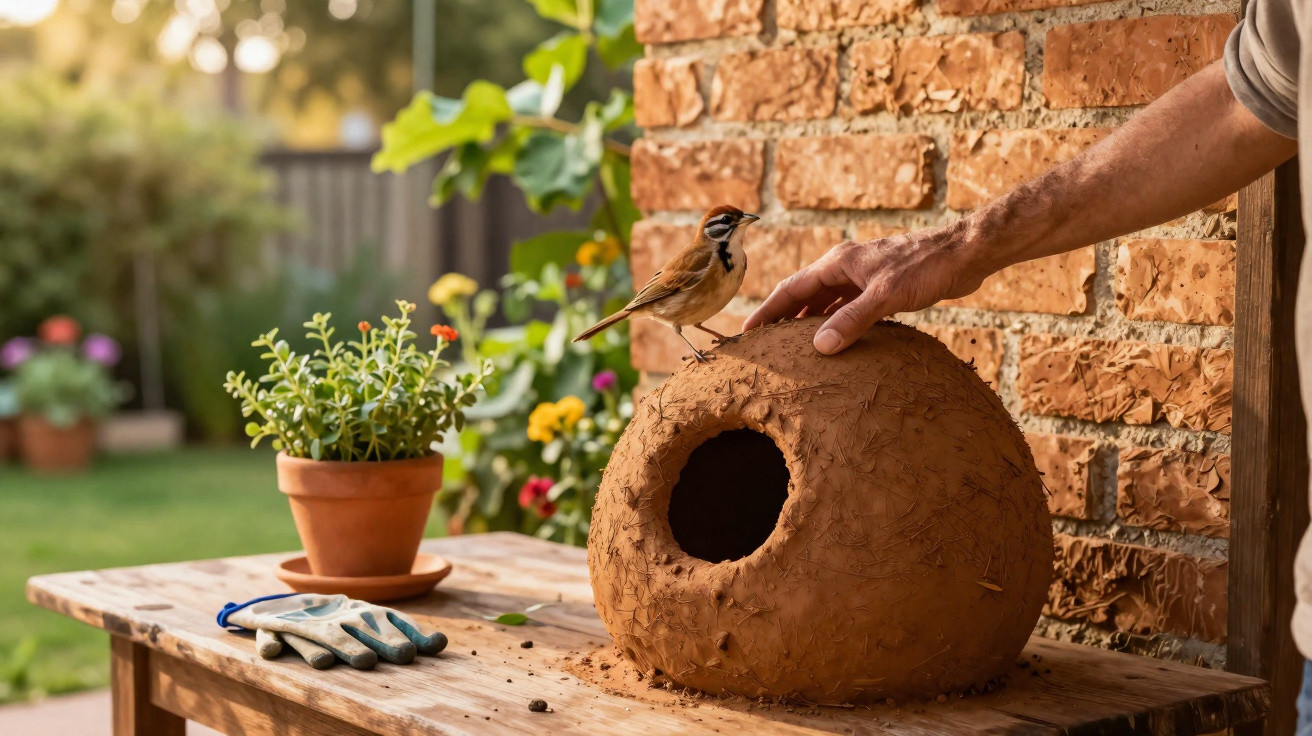
Finding a rufous hornero’s mud nest at your home or in the garden is often regarded as a positive sign. This bird selects peaceful places with insects, nearby vegetation and a secure structure on which to build, so its nest may point to a lively, balanced and welcoming setting.
Why does the rufous hornero choose particular locations?
The rufous hornero does not build just anywhere. It looks for sturdy branches, poles, roof edges and sheltered structures where it can create a durable nest without too much disturbance nearby.
The pair shares the construction work, using mud, straw and other natural materials. The nest is generally rounded, with thick walls and an entrance placed to offer greater protection from wind and rain.
What does the nest mean in popular culture?
In Brazilian tradition, the rufous hornero’s nest is linked with protection, prosperity and family harmony. Many people believe that the bird chooses only homes with good energy, peace and the safety needed to make its home.
This symbolism stems from the bird’s own behaviour:
- the pair builds the nest together;
- the mud structure represents protection and shelter;
- the bird’s presence suggests that the location is peaceful;
- its frequent song is seen as a sign of life in the surroundings;
- the nest strengthens the idea of caring for the home.
What practical benefits does the rufous hornero bring to the garden?
Beyond its symbolic meaning, the rufous hornero contributes to the balance of the garden. It feeds on insects, larvae and small invertebrates found in the soil, flowerbeds and vegetated areas.
The rufous hornero is a natural ally in the garden because it helps to control some insects without chemical products. Its presence also shows that the space provides food, shelter and the basic conditions required by wildlife.
What should you do if you find a mud nest?
The best approach is to watch from a distance and leave the structure undisturbed. Handling it, knocking it, attempting to relocate it or removing the nest may drive the pair away and interrupt the bird’s breeding cycle.
A few precautions can help safeguard the nest:
- avoid loud noise close to the structure;
- do not touch the mud or the nest entrance;
- keep cats and dogs away from the area;
- do not use poisons or insecticides nearby;
- retain trees, shrubs and support points in the garden.
Why is this nest a good sign for the home?
The mud nest suggests that the house or garden provides a degree of safety, food and stability for a bird that is careful when selecting a site. This makes the rufous hornero’s presence a real indication that the environment is more alive than it may appear.
The bird’s visit brings together natural beauty, insect control and strong symbolism of protection. When the nest is left intact, the garden gains movement, song and a small mud-built structure that quietly recalls the strength of nature close to home every day.




Comments
No comments yet. Be the first to comment!
Leave a Comment