
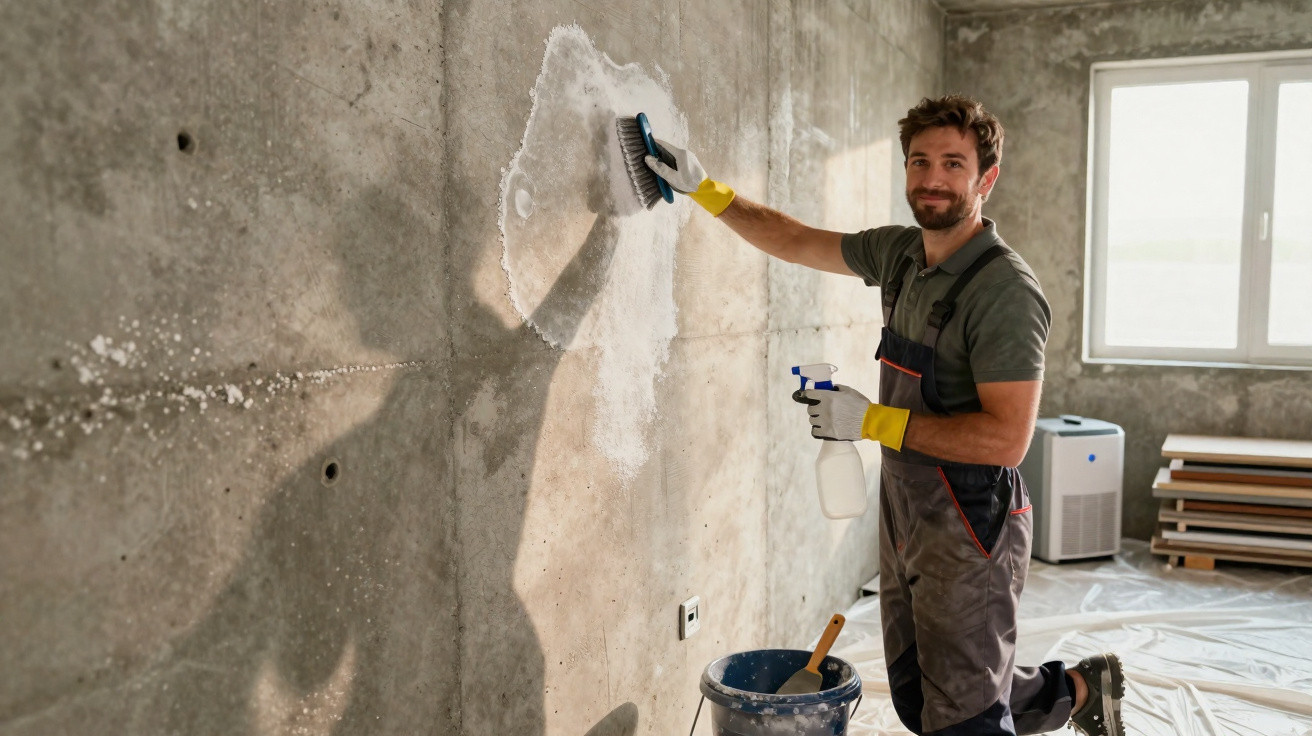
Saltpetre on concrete walls can show up as white marks, crusts or a fine powder that returns even after cleaning. This issue, called efflorescence, happens when water passes through cement, render or masonry, dissolves salts within those materials and leaves them on the surface as it evaporates.
Why do white marks appear on concrete?
Their formation requires three factors: soluble salts in the material, water, and a route allowing that solution to reach the surface. Once the moisture evaporates, the salts are left on the wall, creating the salt efflorescence seen on concrete surfaces.
The deposit is normally whitish and may return for as long as water continues to enter. Before cleaning it, look for signs that can help identify the source:
- Marks close to the skirting board may point to moisture rising from the ground;
- Staining beneath windows can suggest failed seals;
- Areas near bathrooms may indicate leaks;
- Spots that worsen after rain can reveal external cracks;
- Blistered paint indicates that water is present behind the finish.
How can saltpetre be removed step by step?
Removing salt deposits starts with dry removal and should only finish once the wall is entirely clean and dry. For small, superficial marks, follow this process:
- Protect your eyes and hands, and keep the area well ventilated;
- Scrape away loose paint and crusts with a filling knife;
- Brush off the powder using stiff bristles and collect the debris;
- Apply equal parts water and white vinegar only after testing an unobtrusive area;
- Gently scrub the surface and rinse away the solution;
- Allow the surface to dry fully before applying any finish.
Why does simply cleaning and painting not solve it?
Cleaning removes the visible crystals, but it does not stop salts travelling through the wall. Where there is a leak, water ingress through the façade or rising damp, further particles will reach the surface and cause paint applied over the affected area to peel.
The source of moisture must be fixed before painting. This may involve repairing pipework, sealing cracks, fixing gutters or applying waterproofing on the side from which water enters. Applying a waterproof layer only to the internal face may conceal the mark temporarily and shift the issue to another area.
What precautions prevent salts from returning?
After stopping water ingress, allow the concrete to release any retained moisture and select products suitable for the surface. Prevention relies on the following measures:
- Repair leaks and cracks before reinstating the finish;
- Improve ventilation in damp rooms;
- Avoid painting render or concrete that is still drying;
- Completely remove powder, loose paint and crumbling material;
- Apply a suitable primer to the dry substrate;
- Use a coating appropriate to that wall’s exposure.
Persistent deposits require a more careful assessment
If saltpetre returns quickly, the render breaks down or the wall remains wet, the cause extends beyond the surface. A professional can inspect pipework, rising damp, waterproofing and possible internal damage before new materials are applied.
A dry wall is the essential condition for a long-lasting repair. Brushing, washing and painting improve its appearance, but only correcting the water route stops salt migration and prevents white marks from coming through the finish again.





Comments
No comments yet. Be the first to comment!
Leave a Comment