
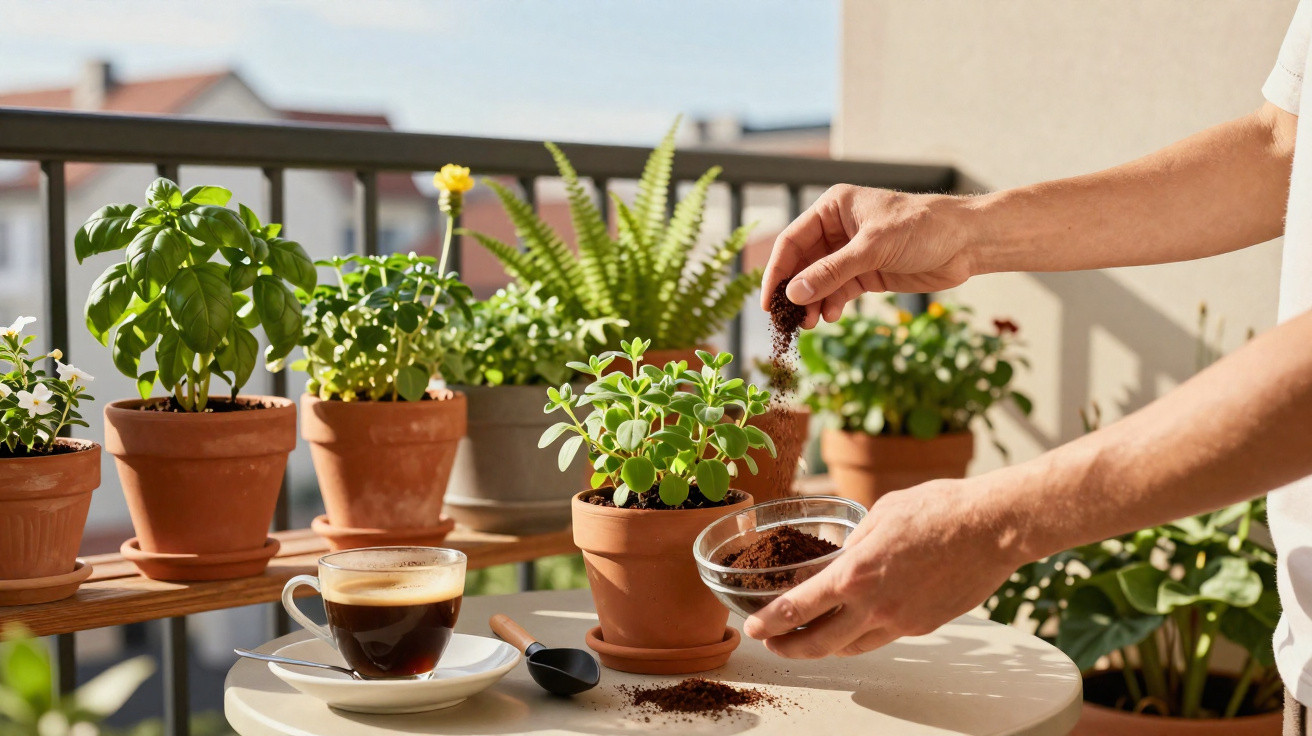
Sprinkling coffee grounds into balcony plant pots has become one of those household tricks that many people swear works wonders for plants. There is good reason for its appeal: it is easy, free and makes use of something that would usually be thrown away. However, it is important to understand how it affects the soil and roots, so it can be used sparingly without harming any plants.
How do coffee grounds work in potting soil?
When coffee grounds are scattered over the compost or lightly blended into the soil, microorganisms already present in the pot begin to break them down. These organisms feed on the organic residue and, in the process, release nutrients including nitrogen, a little potassium and traces of other minerals that support leafy growth.
Coffee grounds also act as organic matter, improving soil structure by making it looser and less compacted. They can help the growing medium retain moisture without becoming waterlogged. This is particularly useful in balcony pots, which dry out quickly in sun and wind, provided the grounds are used in small, evenly spread amounts.
What care is needed when adding coffee grounds to pots?
One essential precaution is not to create a thick layer of coffee grounds, especially while they are still damp, as this can form a hard, dark crust across the surface. This “lid” restricts water and air from entering, encourages waterlogging in the lower layers, damages roots, and raises the likelihood of fungal growth and rot.
It is also best to use grounds that are dry or almost dry, reducing the risk of mould and unpleasant smells, then lightly work them into the top layer of soil. To avoid overdoing it, use approximate quantities based on pot size, which can help establish a safe routine:
- Small pots (up to 2 L): 1 level tablespoon every 20 to 30 days.
- Medium pots (3 to 7 L): 1 to 2 tablespoons at the same intervals.
- Large pots (over 8 L): 2 to 4 tablespoons, spread evenly over the surface.
What is the ideal frequency and practical way to apply coffee grounds?
For most plants in balcony pots, applying coffee grounds every 20 to 40 days is generally enough time for them to decompose without overloading the soil. In areas with limited light or poor airflow, decomposition takes longer, so it is worth extending the interval and applying even thinner layers.
In practical terms, dry the grounds on a small plate, break up any clumps, measure the appropriate amount and distribute a thin layer over the compost. Mix it only lightly into the surface, then water as usual and check that water drains freely through the holes in the pot. If a dark, firm crust appears, gently loosen the upper layer with a hand trowel.
Which plants benefit most from coffee grounds in pots?
Plants that prefer mildly acidic soil rich in organic matter generally respond best to coffee grounds used in moderation, often producing greener leaves and active growth. Aromatic herbs such as basil, parsley and mint, as well as ferns, prayer plants, and flowering plants including geraniums and petunias, usually adapt well, as long as the growing medium drains properly.
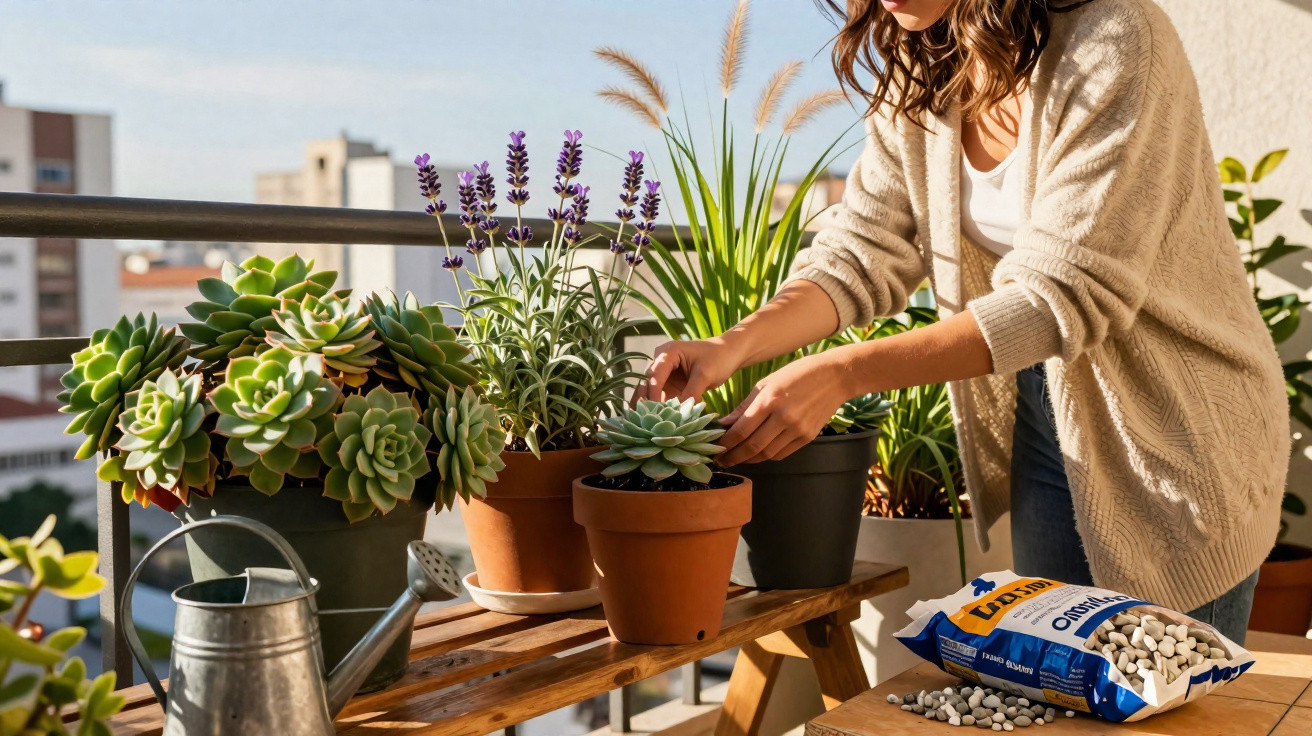
By contrast, succulents, cacti and species from arid climates favour drier soil, lower levels of organic matter and very sharp drainage, so coffee grounds are usually not a good choice for them. In all cases, grounds should be regarded as a simple, inexpensive supplement, alternated with other organic or plant-specific fertilisers. The most reliable signs that the approach is working will always be the appearance of the leaves, the smell of the soil and the plants’ overall behaviour over time.

Comments
No comments yet. Be the first to comment!
Leave a Comment